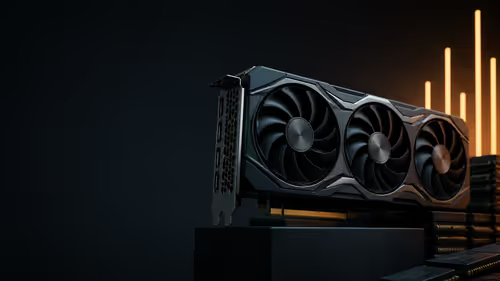
Paying extra for 16GB of VRAM can make sense in 2026, though the badge cannot tell you whether a graphics card is fast enough. The useful question is how long you plan to keep it, what resolution you play at, and whether the games or creative tools you use can fill more than 8GB.
Quick Answer
Choose 16GB when you want a card to carry 1440p or 4K textures through several years, use large mods, or work with memory-heavy creative projects. An 8GB model can still be the smarter buy for 1080p esports and a shorter ownership cycle.
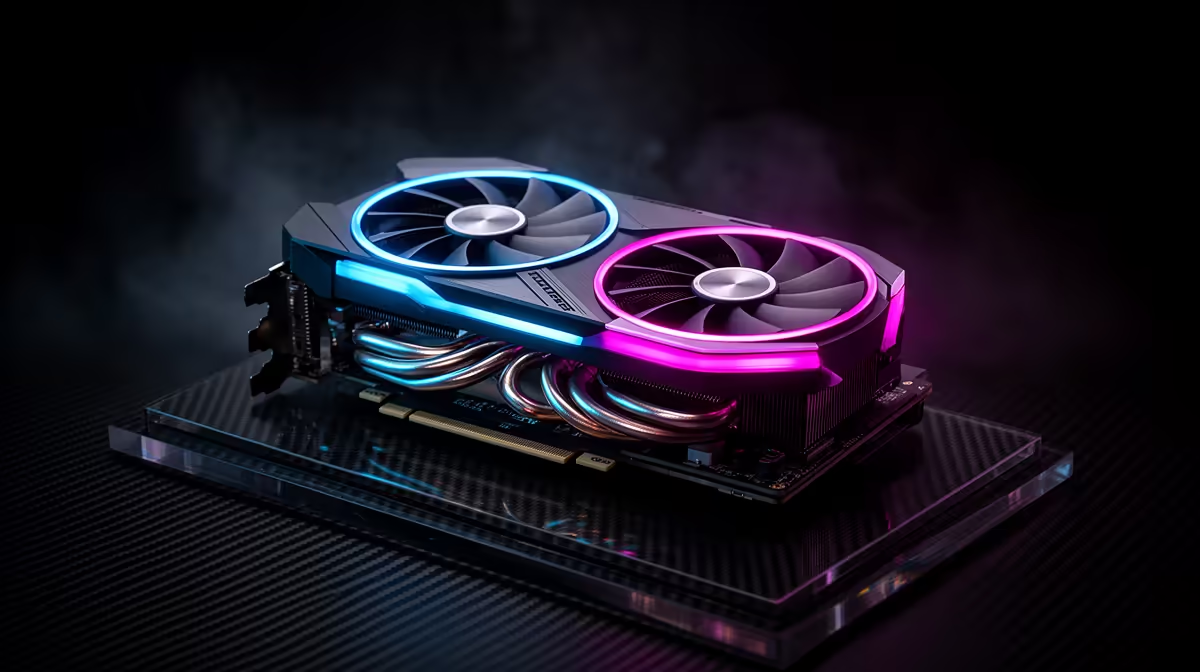
Browse current graphics card choices and compare them with popular GPU options. Keep the comparison model by model. A slower 16GB GPU does not become faster than a stronger 8GB one because its memory pool is larger.
When 16GB Pays You Back
High-resolution texture packs are the clearest reason. When a game runs short of VRAM, it may stream assets from system memory or storage, producing stutter, late texture loads or a forced texture reduction. Extra capacity gives those assets room to stay resident.
Ray tracing can add memory pressure, while 4K render targets consume more space than 1080p. Modded games can go further because creators are free to use assets beyond the original performance budget. If those are your habits, 16GB buys comfort as well as headroom.
Video editing, 3D scenes and local AI tools can also benefit. Check the recommended GPU memory for your actual software and project size. A gaming benchmark will not answer a workload question on its own.
When 8GB Still Works
At 1080p, many esports games and lighter releases run well within 8GB. Medium or high textures can keep image quality strong without filling the pool. If you upgrade every two or three years, paying a large premium for distant headroom may deliver little value.
Memory use shown by an overlay can be misleading because some games reserve spare VRAM. Look for symptoms such as poor frame-time lows, texture cycling and a large improvement after lowering texture quality. Those tell you more than an allocation number.
Compare the Whole Card
Put GPU processing power, memory bandwidth, upscaling support, ray tracing and power draw beside capacity. A 16GB version can carry a price premium while using the same core as an 8GB model. Decide whether the extra memory fixes a limit you expect to reach.
Use five demanding games or applications as your test list. Check 1 percent lows and texture settings at your monitor resolution. If the 8GB model already misses your frame target because the GPU core is saturated, more memory on the same core may change little.
Buy for Your Upgrade Cycle
For a four-to-five-year 1440p build, 16GB is a useful hedge when the price gap stays reasonable. For a value 1080p machine, spend first on enough GPU speed to reach the monitor's refresh rate. The right capacity is the one that supports the full life you expect from the card.
FAQ
Does 16GB make a graphics card faster?
Only when memory capacity is the active limit. Core performance and bandwidth still govern most frame-rate differences.
Is 8GB obsolete in 2026?
No. It remains workable for many 1080p games and esports titles with sensible texture settings.
Should a 1440p card have 16GB?
It is a strong target for long ownership, large textures and mods. Compare the price and speed of the complete card before deciding.
Compare named 8GB and 16GB cards at your resolution, then pay for the memory your games and upgrade cycle can use.