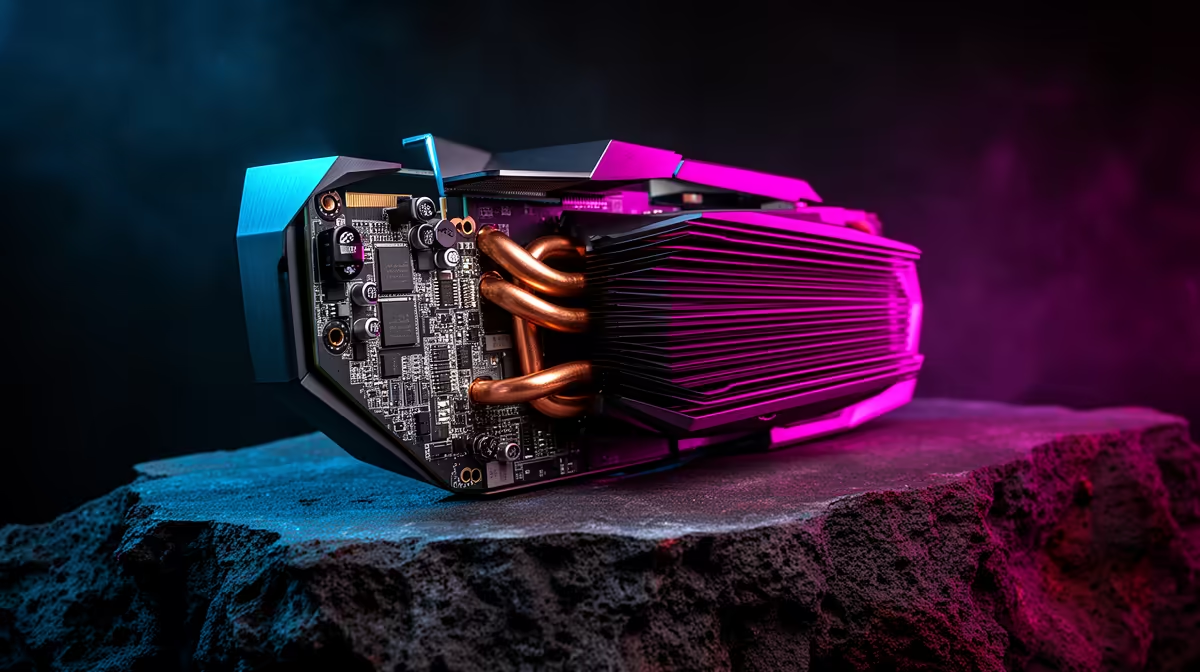
Somewhere around the fourth open project tab, a 16GB card starts running out of road, while a 24GB one still has margin left. That gap is exactly why a 24gb creator graphics card has become the safer default for anyone editing 4K footage or juggling several 3D scenes at once, rather than a nice-to-have spec bump. The ASRock Pro B60 Creator sits at R14,399 with that larger buffer built in.
Quick Answer
For creators working in 4K or handling multiple large scenes at once, 24GB of VRAM gives noticeably more headroom than 16GB, especially once several applications share the same GPU. At R14,399, the ASRock Pro B60 Creator's 24GB GDDR6 buffer leaves room for large scenes and several open projects rather than forcing a choice between them.
📊 Where the extra 8GB actually gets used
The difference between 16GB and 24GB rarely shows up on a single small project. It shows up when a 4K timeline, a handful of high-resolution reference images, and a background render are all competing for the same pool at once. A 16GB card can handle any one of those comfortably; running all three together is where the extra headroom on a 24GB card starts to matter.
Multitasking without swapping to system RAM
When video memory runs out, applications fall back to slower system RAM, which shows up as stuttering playback or sluggish viewport navigation. A larger buffer delays that fallback considerably, which is the practical benefit creators notice first.
🎬 4K editing and colour grading specifically
Colour grading and effects work on 4K footage tend to be more memory-hungry than a straight cut, since grading tools often keep multiple frame buffers and scopes active simultaneously. A 24GB card gives that kind of work more room to breathe than a 16GB equivalent, without needing to drop preview quality just to keep things responsive.
3D scenes with dense textures
Architectural visualisation and product renders with high-resolution texture sets can consume VRAM quickly once several materials are loaded at once. The extra capacity on a 24GB card means fewer forced compromises on texture resolution during the working stage of a project.
For anyone deciding between VRAM tiers, this ASRock creator card listing shows current pricing on the 24GB option. The workstation graphics card range has other capacities to compare against, and more ASRock GPU options covers the brand's full lineup.
📈 Planning ahead for growing project sizes
Project scope tends to grow over time rather than shrink, whether that means longer timelines, higher client expectations, or simply more layers stacked into a composite than a first draft ever had. Buying with 24GB rather than 16GB gives that growth somewhere to go without forcing a GPU upgrade halfway through a busy year.
Weighing the price difference against the risk of running short
The gap in price between a 16GB and 24GB card is usually smaller than the cost, in time and frustration, of hitting a memory ceiling mid-project. For anyone whose workload is trending toward heavier 4K or multi-scene work, the larger buffer is the safer starting point.
Frequently Asked Questions
Is 16GB enough for most editing work?
For single-project, standard-resolution editing, 16GB is often adequate. Larger 4K timelines with multiple concurrent applications benefit more from 24GB.
Does more VRAM make rendering faster on its own?
VRAM capacity prevents slowdowns caused by running out of memory rather than directly increasing render speed, though avoiding that fallback keeps renders moving smoothly.
What happens when a GPU runs out of video memory?
The application typically falls back to slower system RAM, which shows up as stuttering or delayed responsiveness in the viewport or timeline.
Does the ASRock Pro B60 Creator use GDDR6 memory?
Yes, its 24GB buffer is GDDR6 across a 192-bit memory bus, priced at R14,399.
Is 24GB overkill for smaller creative projects?
Not necessarily overkill, since the extra headroom simply sits unused on lighter projects and becomes useful the moment workloads grow.
Ready to settle the 24GB versus 16GB VRAM debate?
Consider the B60 Creator, ASRock's 24GB card part of Evetech's stock of creator GPUs for R14,399 ready to settle the debate with a full 24GB of VRAM instead of 16GB.