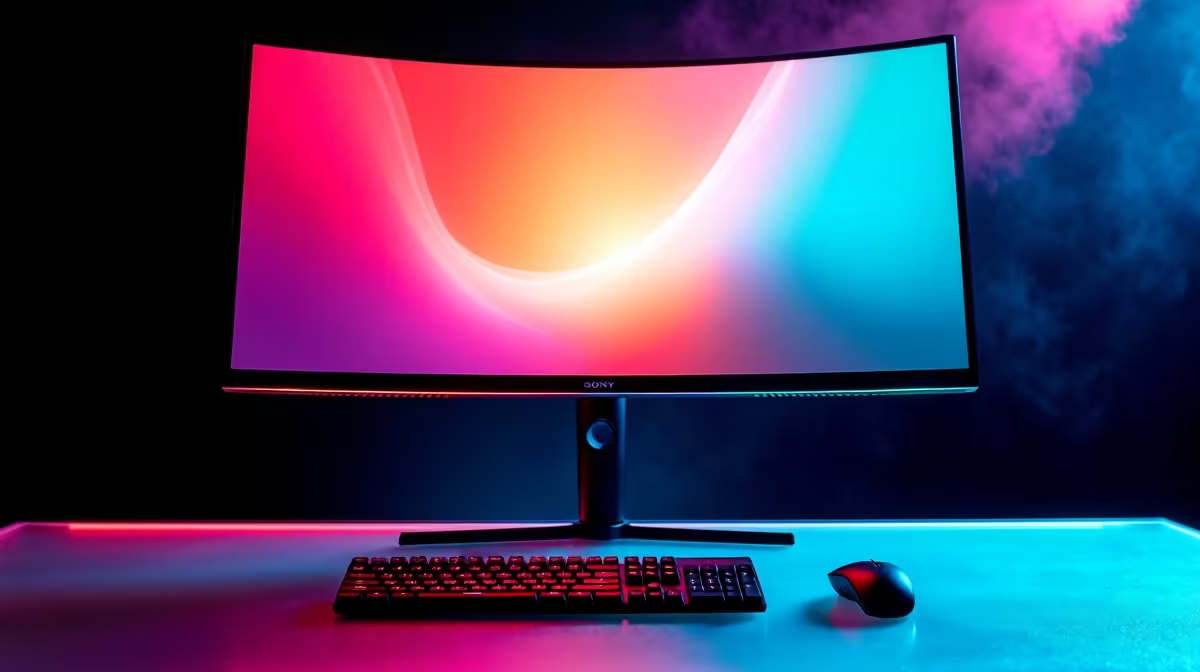
Screen size and resolution are only useful in combination -- a large panel at low resolution wastes the space, and a small panel at high resolution serves up density nobody benefits from at normal viewing distances. At the 27-inch diagonal, 1440p gaming rigs hit an alignment that is difficult to fault: the pixel density is high enough to look genuinely sharp, the screen area is large enough to be immersive, and the GPU demands stay within the range of a mid-range card.
Quick Answer
A 27-inch 1440p display delivers 109 pixels per inch -- crisp enough that individual pixels are invisible at normal desk distances, without the GPU cost of 4K. It pairs naturally with mid-range graphics cards and keeps both framerate and image quality in a useful range for most gaming setups.
🔆 Why 109 PPI Is the Practical Sweet Spot
Pixel density determines whether fine detail resolves cleanly or blurs. The human eye at 60 to 70 centimetres -- typical desk gaming distance -- can distinguish individual pixels below roughly 90 PPI; above that figure the grid disappears into a continuous image.
At 27 inches with 2560x1440, the density lands at 109 PPI. Text, fine in-game detail, and UI elements look clean without Windows display scaling, meaning no blurry scaled apps and no squinting at aliased font edges. By comparison, a 27-inch 1080p screen at 81 PPI sits below that threshold -- text looks coarser and distant objects softer. A 32-inch 1440p screen drops to 92 PPI, still acceptable but noticeably less sharp at close viewing distances.
🎯 GPU Demand That Stays Manageable
4K gaming at 27 inches delivers 163 PPI but multiplies the GPU rendering load by roughly four times compared to 1080p. The per-pixel improvement at 27 inches is marginal beyond 109 PPI, while the performance cost is substantial. 1440p pushes approximately 78 percent more pixels than 1080p -- an increase mid-range cards handle while still sustaining 100fps or higher in most titles. An RTX 4060 class card drives 1440p at high settings without heavy frame rate compromise, keeping the display and GPU requirements well balanced.
✨ The Full-Screen Fit at Normal Distances
The 27-inch size is also about how the physical panel fills the field of view. Sitting roughly 70cm back, a 27-inch screen covers approximately 40 degrees of the horizontal visual field. This is wide enough to feel immersive without requiring head movement to track the edges during gameplay, which is the point where larger panels become ergonomically uncomfortable for desk use without moving the seat back.
At 32 inches the same viewing distance starts to feel slightly wide and tracking fine detail near the edges introduces a subtle head-turn. Within the standard 16:9 panel category, 27 inches fills the gaming field of view correctly without expanding into that territory. Local pricing places capable 27-inch 1440p IPS panels with 144Hz around R5,500, a strong value point given the combination of density, refresh capability, and mid-range GPU compatibility.
Frequently Asked Questions
What pixel density does a 27-inch 1440p monitor deliver?
It produces 109 pixels per inch, which sits above the threshold where individual pixels are visible at typical gaming viewing distances of 60 to 70 centimetres. Text and detail render smoothly without requiring Windows display scaling adjustments.
Is 27-inch 1080p noticeably softer than 1440p at the same size?
Yes. A 27-inch 1080p panel sits at 81 PPI, below the perception threshold at close viewing distances, so pixels are individually visible and fine text appears coarser. The sharpness difference between 1080p and 1440p on a 27-inch panel is more obvious than the same resolution jump on a 24-inch panel.
What GPU handles 27-inch 1440p comfortably?
A current mid-range card, roughly the RTX 4060 or RX 7700 XT class, drives 1440p at high settings above 100fps in most titles. More demanding games or the push toward 144fps consistently benefits from a step up to the 4070 or 7800 XT range.
Why not choose 32 inches at 1440p instead?
At 32 inches 1440p falls to 92 PPI, where pixels become individually discernible at close viewing distances and text sharpness drops noticeably. A 32-inch panel is best paired with 4K to maintain density, which pushes the GPU requirement and cost substantially higher than the 27-inch 1440p setup.
Is 27-inch 1440p the typical price sweet spot locally?
Yes. Capable QHD IPS gaming panels at 27 inches with 144Hz sit near R5,500 in South Africa, a price tier that offers good value relative to the performance delivered. This positions the size and resolution combination as the most cost-efficient display upgrade for gamers moving from a 1080p setup.
Ready to upgrade to the display size that fits your desk and your GPU? Browse the 27-inch 1440p gaming monitor range at Evetech and find the panel that matches your rig.