Motherboard size decisions get made far too late in most builds, usually right after someone has already bought a case that only fits one format. Picking the right board size early matters less if your atx mid-tower case happens to support all three standards anyway, which removes one of the more common planning headaches before it starts.
Quick Answer
ATX, Micro-ATX, and Mini-ITX motherboards differ mainly in physical size and how many expansion slots they offer, with ATX being the largest and most flexible. The EINAREX Pulse P100 mounts all three formats at R1,499, so board size becomes a matter of preference rather than a compatibility constraint.
ATX: Maximum Expansion Room
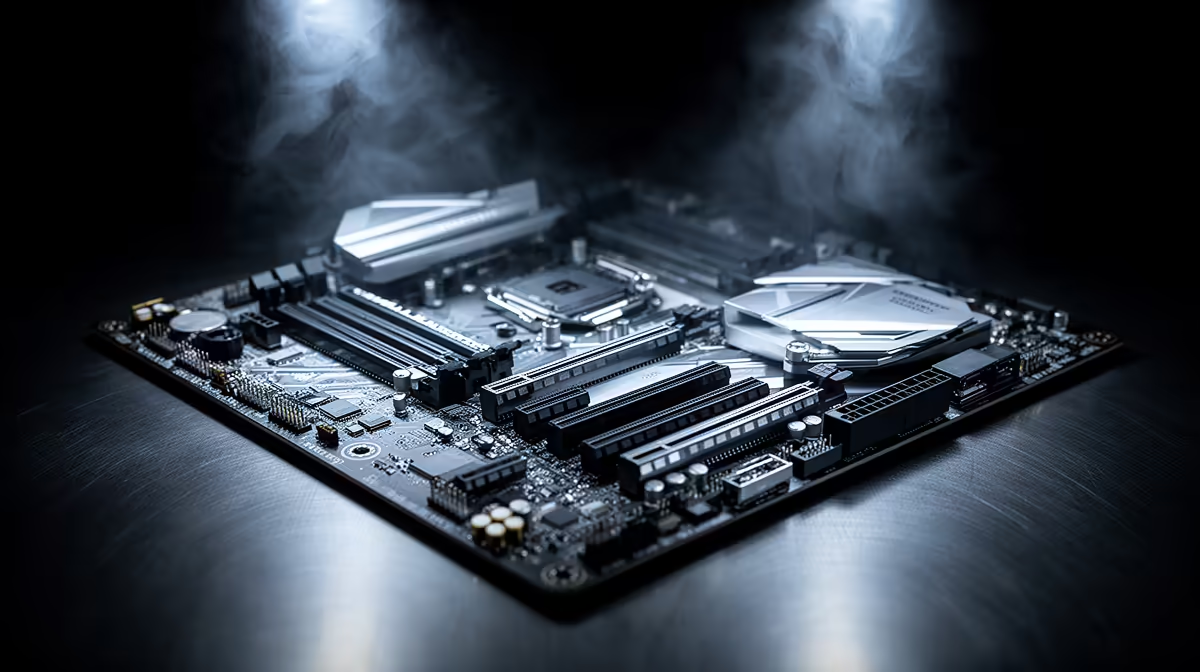
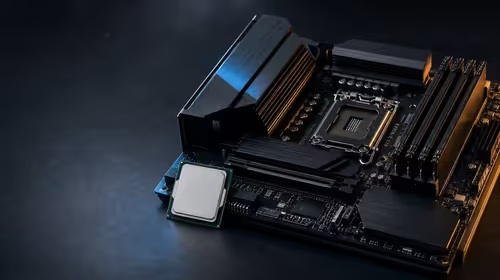
ATX is the largest common form factor, typically offering the most PCIe slots and RAM slots of the three. This suits builds planning multiple expansion cards, extra storage controllers, or simply wanting the most connectivity options available on a single board. It also tends to have the most spacious layout for cable headers, which pairs well with a case offering generous routing space.
Micro-ATX: A Practical Middle Ground
Micro-ATX boards are physically smaller than ATX but usually retain enough PCIe slots for a GPU and one or two additional cards. For most gaming builds that only need a graphics card and maybe an extra M.2 drive, Micro-ATX covers the requirement without needing the larger board's full expansion count. It also tends to cost less than an equivalent ATX board with similar core features.
Mini-ITX: Built for Compact Ambitions
Mini-ITX is the smallest of the three, fitting a single PCIe slot in most cases, which is enough for a graphics card but rules out additional expansion cards. Builders choosing Mini-ITX usually prioritise a smaller overall footprint over maximum flexibility, accepting the tradeoff in exchange for a more compact final build.
Why Case Compatibility Removes the Guesswork
Since the Pulse P100 fits ATX, Micro-ATX, and Mini-ITX boards, the decision comes down purely to how much expansion room you want rather than whether your chosen case supports the format. Full mounting specifications are listed on the case's product page if you want to confirm standoff positions for your specific board before buying. For comparing other case options across different form factors, Einarex's case range and Evetech's case fan selection are both worth a look when finalising the rest of your parts list.
Frequently Asked Questions
What is the main difference between ATX, Micro-ATX, and Mini-ITX?
Physical size and the number of expansion slots, with ATX offering the most and Mini-ITX the least.
Does the EINAREX Pulse P100 fit all three motherboard sizes?
Yes, it is built to mount ATX, Micro-ATX, and Mini-ITX boards.
Which motherboard size is best for a standard gaming build?
Micro-ATX suits most gaming builds that only need a GPU and a drive or two, while ATX suits builds wanting more expansion room.
Is Mini-ITX harder to build with?
It can be more cramped due to its smaller size, but a case with enough clearance, like this one, makes the process manageable.
Does motherboard size affect GPU compatibility?
No, GPU length compatibility depends on the case's clearance rating, not the motherboard's form factor.
Ready to settle on a motherboard size?
Visit the white Pulse P100 via Evetech.co.za at R1,499 sharp. It takes ATX, Micro-ATX and Mini-ITX boards, so board size stops being a worry.