Quick Answer
For cameras, the best SD card specs are V30/U3 minimum write rating, 128GB or 256GB capacity, and UHS-I bus for most consumer bodies. For drones, V30 UHS-I microSD with 64GB to 128GB covers all current DJI consumer models. Both applications benefit from buying a reputable brand with South African warranty support.
Camera SD Card Specs in Plain Language 📷
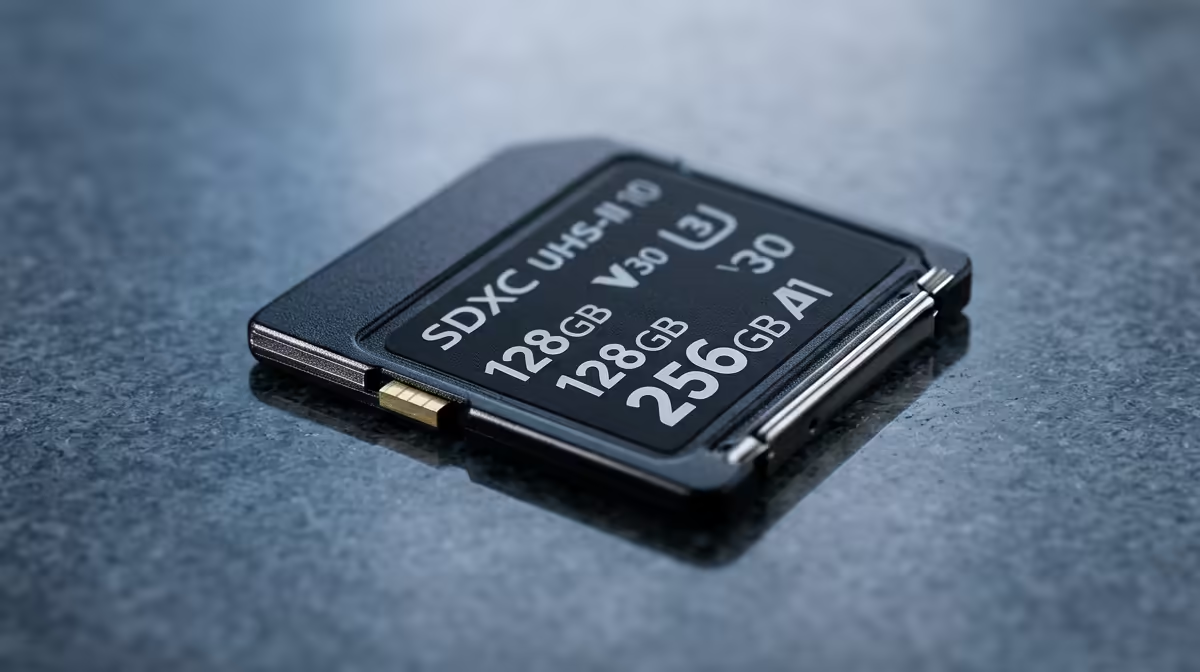
Capacity: how many photos or minutes of video fit on the card. 128GB holds roughly 4,200 RAW shots at 30MB each or 170 minutes of 4K at 100Mbps. Write speed: how fast your camera can save data to the card. V30 (or U3) means at least 30MB/s guaranteed, covering 4K recording at standard bitrates on any consumer mirrorless or DSLR. Read speed: how fast files copy to your PC, relevant only for imports. The bus standard (UHS-I or UHS-II): UHS-I is used by most cameras under R40,000 in South Africa. The practical buying specification for most South African camera users: 128GB or 256GB, UHS-I, V30/U3, from a reputable brand, with local warranty.
Drone MicroSD Specs in Plain Language 🚁
DJI drones use microSD cards. The DJI Mini 4 Pro, Air 3, and Mavic 3 series all require V30 UHS-I microSD as a minimum for 4K recording. The recommended format is exFAT (which all microSDXC cards use automatically for 64GB and above). Capacity: a 64GB microSD holds roughly 85 minutes of 4K drone footage at 100Mbps, a comfortable amount for 2 to 3 battery cycles. A 128GB card at R200 to R400 in South Africa is the better choice for full-day shoots. Fake microSD cards with inflated capacity labels circulate in South African informal markets; buying through a formal retailer is the safest route.
How to Choose Between Camera and Drone Specs 🔧
Full-size SD for cameras and microSD for drones are not interchangeable without an adapter, but the V-class requirements are similar. Both need V30 at minimum for 4K. Cameras benefit from 256GB capacity because they shoot longer continuous clips; drones rotate through 30-minute battery cycles with natural break points, making 128GB sufficient per battery. If you own both a mirrorless camera and a drone, the cleanest kit is one 256GB UHS-I V30 full-size SD for the camera (R600 to R950) and one 128GB UHS-I V30 microSD for the drone (R200 to R400), totalling R800 to R1,350. A microSD with a full-size adapter kept in the bag serves as an emergency spare for the camera.
Use a Card Wallet to Keep Specs Visible in the Field ⚡
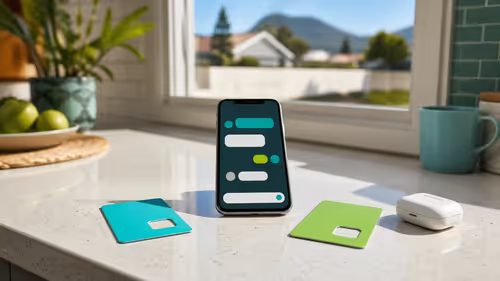
A small card wallet holding your SD and microSD cards with capacity and V-class labels visible on each slot prevents grabbing the wrong card under time pressure on a shoot. Credit card-size card wallets hold 8 to 12 cards, weigh almost nothing, and keep full and empty cards separated. At R50 to R150 locally, it is the cheapest organisational upgrade for any creator's camera bag.
FAQ
Can a drone microSD work in a camera with a microSD slot?
Yes. MicroSD cards are device-agnostic at the format level. Reformat in the camera before first use to create the correct folder structure. V30 microSD works in any camera accepting microSD or standard SD via adapter.
What does exFAT have to do with SD card specs?
exFAT is the file system used on SDXC cards (64GB and above). It supports individual files larger than 4GB, which all 4K video clips eventually produce. If a card ships with FAT32 formatting, 4K clips will stop at 4GB file size and restart a new clip automatically.
Do I need different SD cards for a Sony camera and a DJI drone in my kit?
Yes for form factor: the Sony uses full-size SD, the DJI uses microSD. A microSD with a full-size adapter bridges the gap as an emergency spare. For two-card professional kits, dedicated cards per device with device-specific formatting is cleaner and more reliable.
Outfitting a camera and drone kit in South Africa?
Browse SD and microSD cards at Evetech to find V30-rated options in full-size and microSD formats, with local warranty on every card.