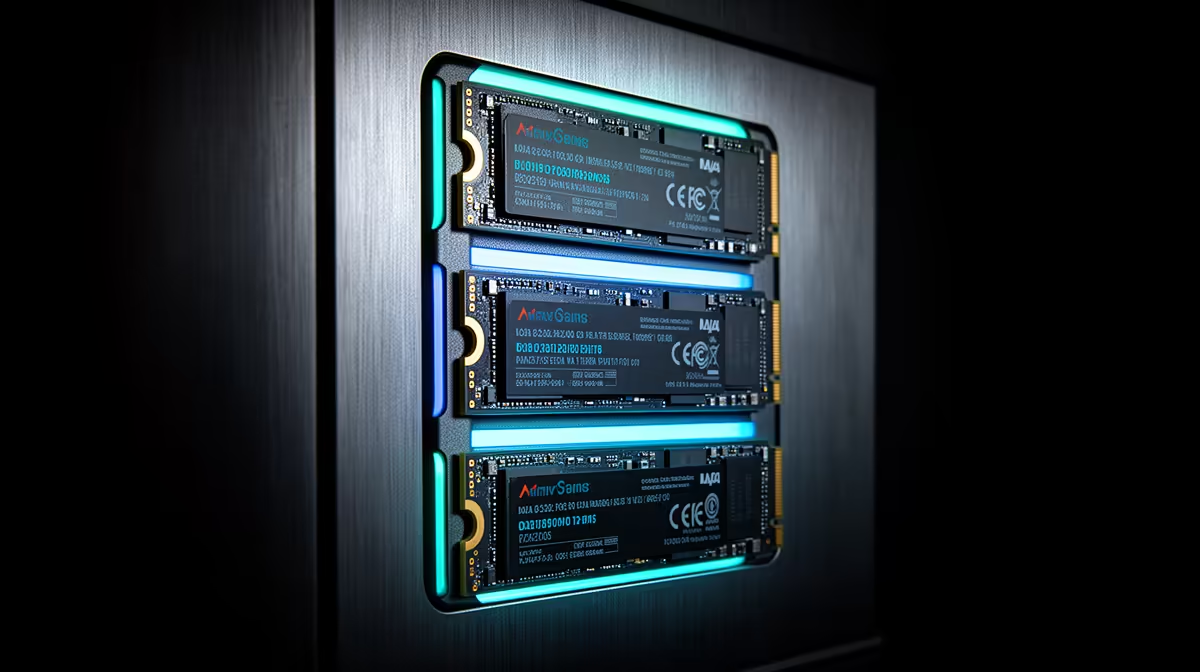
Three drives packed close together on the same board sounds like a recipe for a heat problem waiting to happen. Whether that fear is justified on a b860m motherboard comes down to slot spacing and how much airflow your case is actually giving those drives.
Quick Answer
Running three NVMe SSDs does generate more heat than one, but it becomes a real performance issue only when a drive is left without adequate cooling or airflow. The ASUS B860M MAX Gaming AX spaces its triple M.2 slots with heatsink coverage at R4,499, which keeps this manageable in a reasonably ventilated case.
Why NVMe drives heat up under load
NVMe SSDs draw more power and generate more heat than older SATA drives, particularly during sustained writes or heavy multitasking across several drives at once. Running three simultaneously multiplies the total heat the case needs to remove, even if no single drive is doing anything unusual on its own.
When this actually becomes noticeable
Short bursts of activity, like loading a game or copying a modest file, rarely generate enough sustained heat to matter. Extended heavy writes across all three drives at once, such as large file transfers or intensive editing work, are where temperatures climb enough to become relevant.
How the board manages this
The ASUS B860M MAX Gaming AX positions its triple PCIe 5.0 M.2 slots with physical spacing and heatsink coverage designed to help dissipate heat away from the drives rather than letting it build up under the covers. This does most of the work automatically without needing manual intervention from the builder.
Airflow considerations in your case
Motherboard heatsinks only do part of the job. A case with reasonable intake and exhaust airflow across the motherboard area helps carry that heat away rather than letting it stagnate around the M.2 slots. This matters more in smaller Micro-ATX cases where components sit closer together than in larger towers, so a case with at least one or two case fans positioned to move air across the board is worth prioritising.
When performance actually drops
Thermal throttling on an NVMe drive kicks in once its controller reaches a temperature threshold, at which point the drive intentionally slows itself to cool down. This is a protective mechanism rather than damage, and it is avoidable with decent heatsink coverage and case airflow, both of which this board and a sensibly chosen case provide. In practice, most gaming and general desktop use never pushes all three drives hard enough at once to trigger it. Compare heatsink coverage across the Intel B860 motherboard range if storage cooling is a priority for your build, and check the full Intel motherboard lineup for other options.
Frequently Asked Questions
Will three NVMe drives overheat my system?
Not typically, provided the drives have heatsink coverage and the case has reasonable airflow, both of which this board and a decent case supply.
Does thermal throttling damage an SSD?
No. Thermal throttling is a protective slowdown that prevents damage, rather than a sign the drive has already been harmed.
Do all three M.2 slots need heatsinks?
Having heatsink coverage across all active M.2 slots helps manage heat more evenly, particularly under sustained heavy use across multiple drives.
Does case size affect NVMe drive temperatures?
Yes. Smaller cases with tighter component spacing can run slightly warmer, so adequate case fans help offset that in a compact Micro-ATX build.
Should I worry about heat with light everyday use?
Not really. Casual gaming and general use rarely generate enough sustained heat to trigger throttling on a properly cooled drive.
Do I need to monitor drive temperatures manually?
Not routinely, though checking temperatures occasionally with monitoring software is a reasonable habit if you regularly do large sustained file transfers across all three drives.
Ready to keep three drives cool under load?
The ASUS B860M MAX Gaming AX lives within our Intel B860 motherboard selection, built to keep three NVMe drives cool with proper M.2 heatsink coverage.