Quick Answer
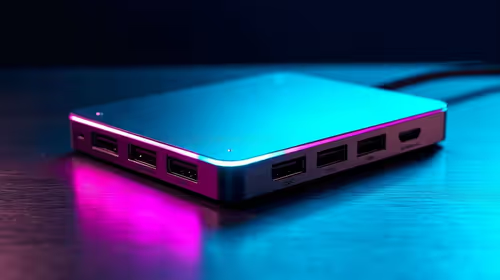
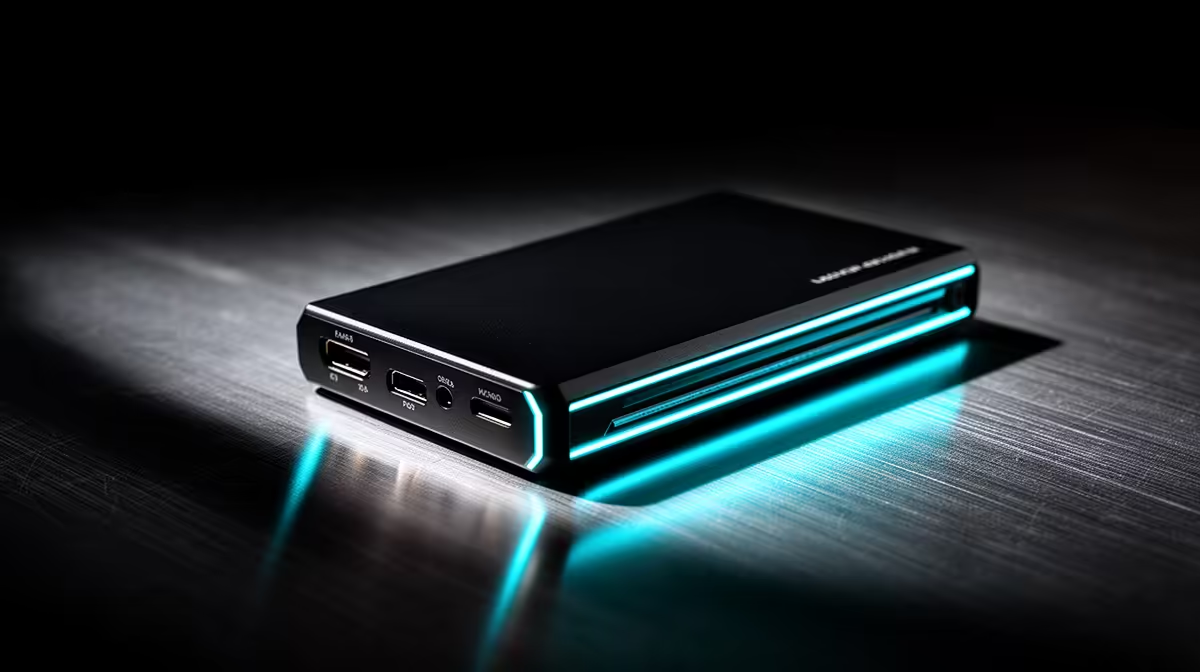
For SA streamers, an external USB capture card that records 1080p60 is the practical default and starts around R1,800 at Evetech, while 4K60 passthrough models run from about R3,500. Pick external USB for console capture and a faster internal PCIe card only if you stream 4K from a second PC.
A capture card sits between your gaming source and your streaming PC, so matching it to your resolution and budget keeps your stream smooth.
What the specs mean
1080p60 capture is plenty for most SA streams and keeps upload bandwidth manageable on local fibre. Step up to 4K60 capture with HDMI 2.1 passthrough only if you run a 4K console or a separate gaming rig. External USB cards are plug-and-play and portable, while internal PCIe cards cut latency for a two-PC setup. At Evetech, 1080p60 cards start near R1,800 and 4K-capable models run from roughly R3,500 to R6,500.
Stock and support in SA
Confirm the card carries a local warranty so support is straightforward if anything fails. Check your streaming PC has a spare USB 3.0 port or PCIe slot before you commit to a card type. A 1080p60 stream needs around 6 Mbps upload, comfortably within most SA fibre packages. Bundle a quality HDMI 2.1 cable for 4K passthrough so you do not lose signal at high refresh.
FAQ
Do I need a 4K capture card to stream?
No. Most SA streamers do well with a 1080p60 card from around R1,800, since the majority of viewers watch at 1080p or lower. Move to 4K capture only when you stream from a 4K source.
External USB or internal PCIe?
External USB is easiest and works with consoles and laptops. Internal PCIe cards suit a dedicated two-PC streaming setup where you want the lowest possible latency.
Will a capture card slow my game?
Used with passthrough on a two-device setup, a capture card adds no load to your gaming machine. On a single-PC setup, prefer software encoding offloaded to your GPU.
buy, log a 30-minute play session with the overlay on and note your lowest 1% frame rate so you have a real baseline.