Quick Answer
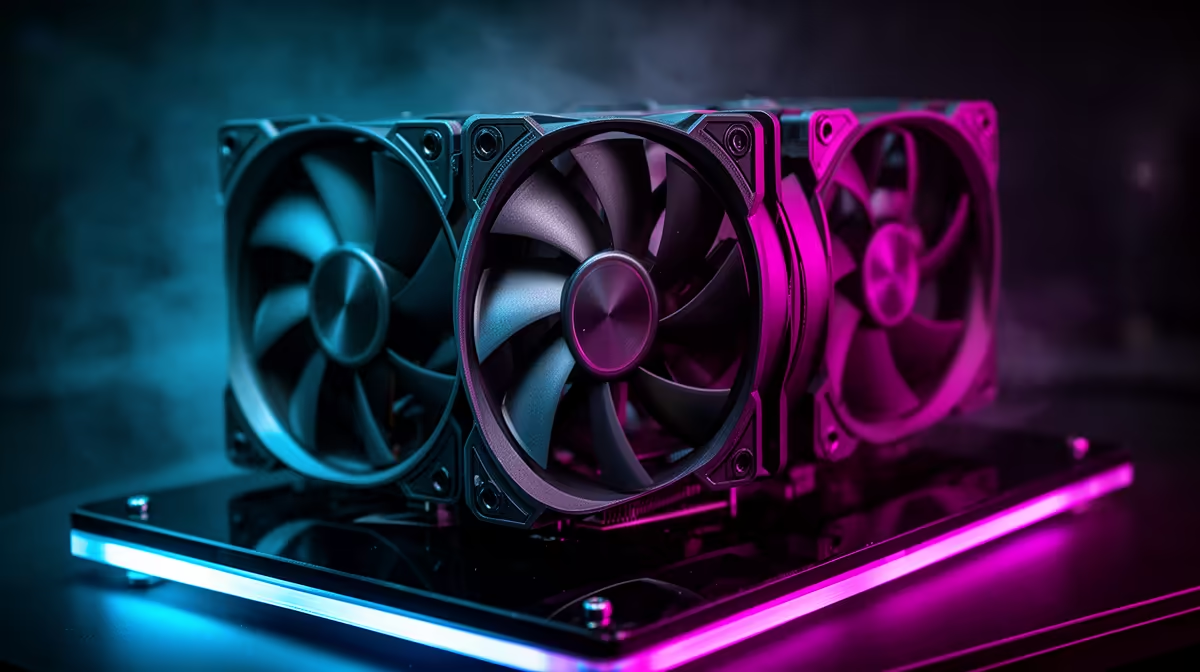
For console gamers moving to PC, the case-fan fan curve is worth paying attention to - a tuned curve keeps a desktop quiet at idle and cool under gaming load, something a console handled invisibly. PWM fans at R200 to R500 each let you set this in BIOS. A good curve trades a slightly louder gaming session for far lower idle noise and steady fps.
What A Fan Curve Does
A fan curve maps fan speed to temperature. Console fans ramped automatically; on PC you set the rule. A flat, always-high curve is loud; a flat, always-low curve overheats. A proper curve runs fans slow and quiet when browsing or idle, then ramps them as the CPU or GPU warms during gaming.
PWM (4-pin) fans are required for smooth curve control - 3-pin fans only do crude voltage steps. Set the curve in BIOS or your motherboard software and tune it once.
Why It Matters For A New PC Gamer
Coming from a console, the noise difference can surprise you. A badly set desktop drones constantly; a well-tuned one is near-silent until you load a game. The curve also protects performance - letting fans ramp under load stops the GPU heat-soaking and throttling, which holds your fps in long sessions.
Start with two intakes and one exhaust, all PWM, and a gentle curve that stays quiet until about 60C, then ramps.
Spend Bands
Basic PWM 120mm fans run R200 to R300. Quiet high-airflow 140mm PWM fans sit at R350 to R500. A three-fan PWM kit is R700 to R1,200.
FAQ
What is a fan curve and why tune it?
It maps fan speed to temperature. Tuning it keeps the PC quiet at idle and cool under gaming load. A console did this automatically; on PC you set the rule yourself in BIOS.
Do I need PWM fans for a fan curve?
For smooth control, yes. PWM (4-pin) fans adjust speed precisely along a curve. Older 3-pin fans only do crude voltage steps, so curve tuning is far less effective.
Will a fan curve quiet down my new PC?
Yes. A good curve runs fans slow and near-silent at idle, then ramps only under gaming load - far quieter overall than fans stuck at a constant high speed.
-pin PWM fans and set a curve that stays quiet below about 60C, then ramps - your new PC will be near-silent for browsing and only audible under gaming load.