


Quick Answer
Pay more only when the feature changes placement, reliability, speed, or comfort in a way you notice every week. For quiet-build buyers who care about fan noise and late-night use, check 120mm or 140mm PWM fans with the right bearing, static pressure, and low noise at normal RPM. Use R120 to R350 per fan is common, while premium quiet fans and RGB packs can cost more as the SA spending band and ignore upgrades that do not affect the result.
Airflow and bearings
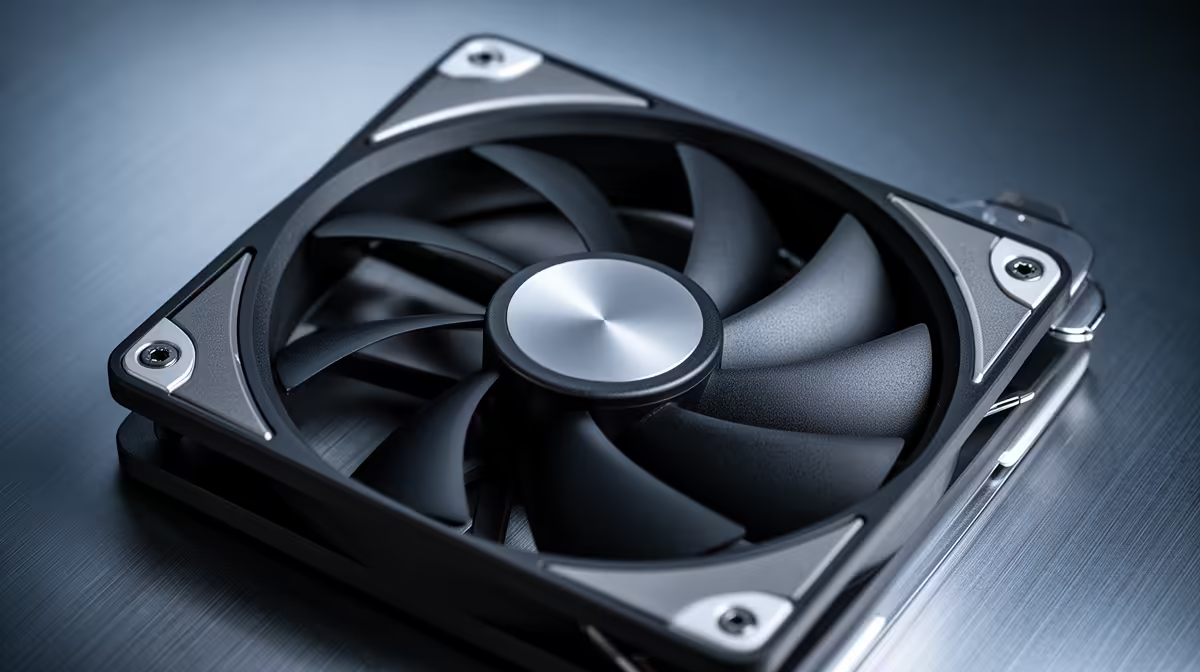
Start with the parts that can be checked on a spec sheet. The baseline is 120mm or 140mm PWM fans with the right bearing, static pressure, and low noise at normal RPM. For quiet-build buyers who care about fan noise and late-night use, this matters more than a flashy bundle because the device must survive daily use without becoming another thing to troubleshoot. Use numbers such as 65W, 1Gbps, 1080p 30fps, 60Hz, 120mm, or 16GB where they fit the product.
Quiet gaming value
The upgrade earns its cost when it removes a repeated bottleneck: dropped peripherals, noisy 900rpm cooling, weak audio, cramped mouse space, unstable Wi-Fi, or 60fps to 120fps gaming that does not feel consistent. Work from R120 to R350 per fan is common, while premium quiet fans and RGB packs can cost more. That range is broad because live prices move, but it keeps the comparison honest.
Where cheap fans fail
Use named models as reference points, not live-stock promises. Arctic P12 PWM, Corsair AF120, Cooler Master SickleFlow 120, and Noctua NF-A12x25 are useful references. Compare warranty path, cable needs, adapter cost, room size, and whether the item moves between home, campus, office, or LAN sessions. The right pick meets the spec target without rare extras.
FAQ
What is the safest starter spec for a case fan?
Choose the starter spec that covers the daily job without risky workarounds. A measurable anchor such as 65W, 1080p, 1Gbps, 60fps, 120mm, or 16GB makes the comparison clearer.
When should quiet setup builders spend more?
Spend more when the upgrade fixes a repeated failure such as slow setup, weak battery life, poor capture quality, cramped space, or unstable connections. Skip features that will stay unused after the first week.
How should SA buyers compare prices without live pricing?
Use broad ZAR bands and compare the full basket, including cases, mounts, cables, adapters, storage, or stands. If accessories push the total past the next better model, the cheaper pick is no longer the value option.
Compare the daily problem, measurable spec, and full ZAR basket before deciding whether this case fan deserves upgrade spend.











