A cramped desk in a shared room and a full tower case rarely get along, and that mismatch is exactly why compact builds exist in the first place. Picking a gaming mini pc over a traditional desktop tower comes down to one real trade-off once marketing noise is stripped away: how much space you have versus how much room you want to leave for swapping parts later.
Quick Answer
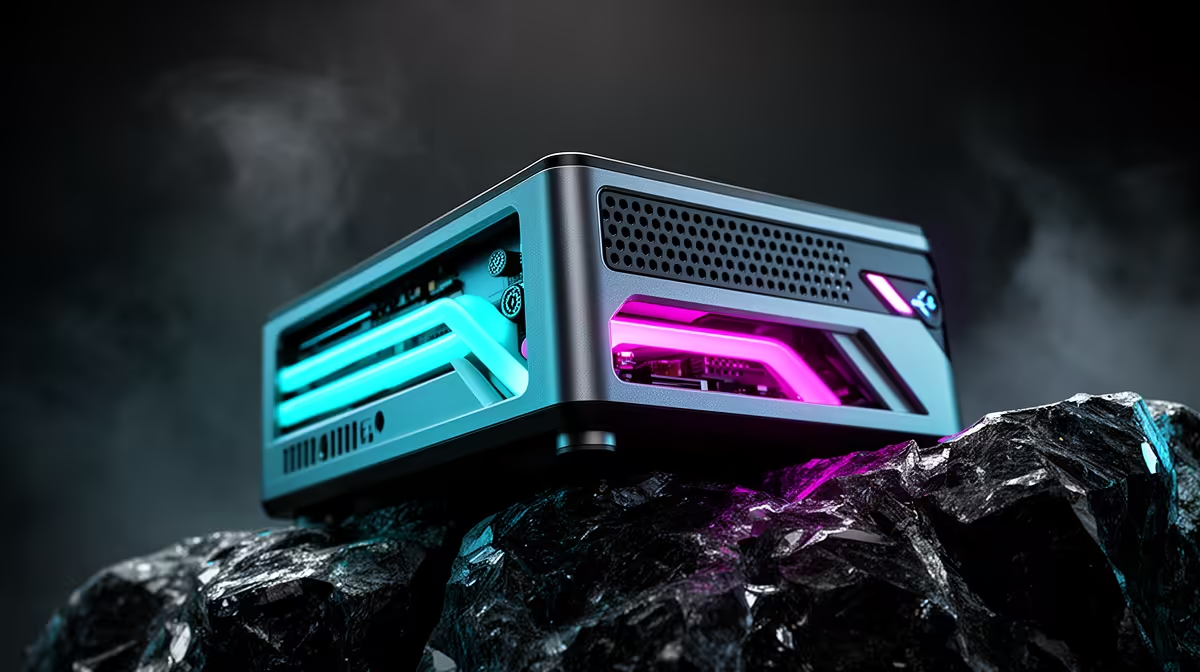
The GR70 (R66,399) packs a sixteen-core Ryzen 9 9955HX and an 8GB RTX 5070 into a footprint far smaller than a standard tower, trading some future upgrade flexibility for a desk presence that barely takes up room at all. Full desktops still win on long-term part swapping, but a compact build like this one answers the space question outright.
📏 Where Compact Builds Win
Desk space is finite, and a full ATX tower can dominate a small room whether it sits tucked under a desk or beside a monitor. A compact build solves that immediately, and this one packs a genuinely capable configuration, sixteen Ryzen 9 cores, an 8GB RTX 5070 and 32GB of memory, into a chassis that would look out of place next to a typical mid-tower. For shared bedrooms, small home offices or anyone simply tired of a bulky case, the space savings alone often settle the decision before performance even enters the conversation.
🔧 Where Full Towers Still Have an Edge
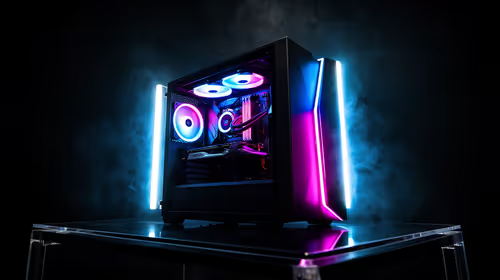
Swapping a graphics card, adding extra drives, or upgrading memory down the line is generally simpler in a full-size case built around standard component sizing. Compact systems trade some of that flexibility for their smaller footprint, since space constraints inside the case limit what can physically be swapped later. Anyone planning frequent hardware upgrades over several years should weigh this trade-off carefully rather than focusing on space alone.
🏠 Matching the Choice to How You Actually Use the Space
The right answer depends less on raw performance, since both formats can run the same games well, and more on your living situation. If desk or room space is genuinely limited, a compact build removes that constraint entirely without meaningfully compromising on current-generation gaming performance. If you have the space and expect to upgrade components individually over time, a full tower keeps that door open. You can review the exact footprint and full spec sheet on the product listing, or browse the broader mini PC lineup if you want to compare compact options side by side. For anyone still undecided on GPU tier regardless of case size, looking at what graphics cards cost right now helps put the RTX 5070 in context against other cards.
Frequently Asked Questions
Does a mini PC perform worse than a full tower with similar specs?
Not necessarily, since this build pairs a sixteen-core processor with an 8GB RTX 5070, delivering gaming performance comparable to similarly specced towers, though thermal headroom in a smaller case can differ.
Can I upgrade the GPU in a compact build later?
Upgrade options are more limited than in a full tower due to space constraints inside a compact chassis, so it is worth choosing your initial spec with less reliance on future swaps.
Is a mini PC quieter than a full desktop?
Noise depends more on the specific fans and cooling design than on case size alone, so this varies by model rather than being a fixed rule.
Who should choose a full tower instead?
Anyone planning to swap components individually over several years, or who has ample desk space and prioritises maximum future flexibility over a small footprint.
Ready to pick between a mini PC and a full desktop?
Look at the ASUS GR70 Mini PC part of Evetech's small-form PC lineup, selling at R66,399 that will help you weigh a compact build against a full tower.