Quick Answer
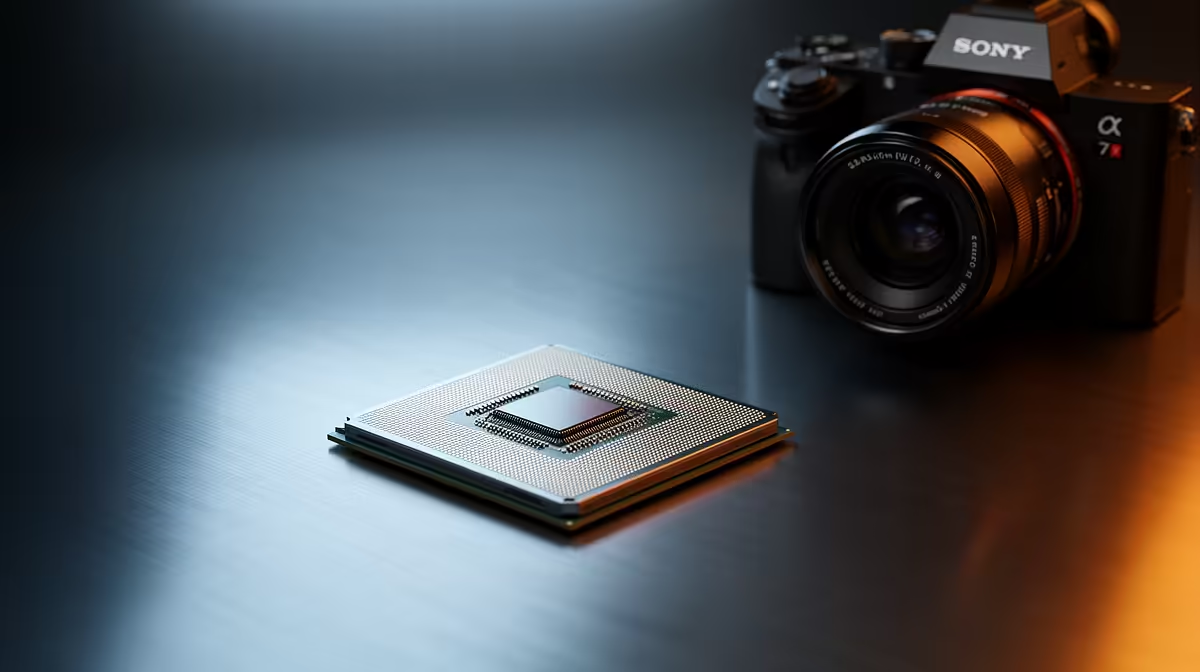
For data students, the most common SA buying mistake is overspending on a high-core gaming CPU while skimping on RAM. A Ryzen 5 or Core i5 with 6-8 cores plus 32GB RAM handles Python, pandas and Jupyter far better than a pricey 16-core chip with only 16GB. Budget around R12,000-R16,000 for a capable data-student laptop or build.
The core mistakes to avoid
The biggest error is chasing core count for data work that is often single-threaded or memory-bound. Loading large datasets in pandas eats RAM, so 32GB matters more than two extra cores. The second mistake is ignoring storage speed; a slow drive bottlenecks dataset reads, so an NVMe SSD of at least 512GB is essential. A third trap is buying a gaming-tuned CPU with high clocks but poor sustained performance under long training runs, where steady all-core throughput wins.
What to actually prioritise for SA builds
At Evetech, a Ryzen 5 7600 or Core i5 build with 32GB DDR5 and a 1TB NVMe SSD sits comfortably in the R12,000-R16,000 range and outperforms a costlier CPU starved of memory. For data students running models locally, prioritise RAM and SSD capacity first, then CPU. A modest GPU helps only if you plan deep-learning work; for most coursework, integrated graphics or an entry card is fine. Keep 30% headroom on the power supply for future upgrades.
FAQ
How much RAM do data students really need?
Aim for 32GB, since pandas and large datasets are memory-hungry. This matters far more than extra CPU cores for most data-science coursework.
Do I need a powerful GPU for data work?
Only for local deep-learning training. For typical coursework in Python, SQL and pandas, integrated graphics or an entry-level card is enough.
What storage should I choose?
A 1TB NVMe SSD is ideal, as fast reads prevent dataset bottlenecks. Avoid slow drives that stall loading large files during analysis.
RAM and a 1TB NVMe SSD over a pricey high-core CPU; that order delivers smoother data work per rand.