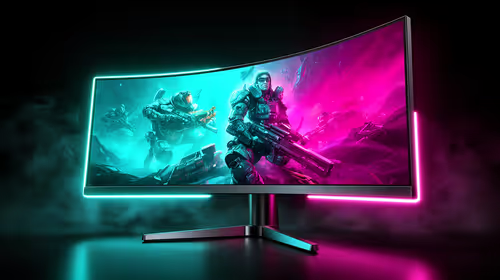
OLED power draw follows the image because black pixels can switch off while bright pages light most of the panel. OLED vs IPS monitor power use should be measured with the content and brightness you use.
Quick Answer
OLED power use changes with picture content because each pixel produces its own light. Dark scenes can use less power than bright full-screen content on the same OLED. An LCD monitor's backlight creates a steadier base load, but local dimming, brightness control, size, refresh, and model design still change its draw.
Compare exact energy specifications in the PC monitor range, current choices among monitor best sellers, and named products in the OLED monitor range. Do not claim OLED or IPS always wins without matching size, brightness, content, and mode.
Test the same workload
Set both monitors to a comparable calibrated brightness and native resolution. Disable showroom modes. Measure a dark game, bright desktop, mixed video, and full workday with an enclosed compliant energy meter.
OLED can draw little for black pixels and more for large bright areas. Automatic brightness limiting can reduce full-screen brightness on some models, changing both image and power.
An IPS LCD keeps its backlight active and modulates pixels. Power can still change with brightness, refresh rate, local dimming, HDR mode, USB charging, and internal processing.
Compare complete models
A 32-inch 4K high-refresh OLED and a 24-inch 1080p IPS do not form a panel-technology test. Match screen size, resolution, refresh, brightness, ports, USB hub, and intended use.
Read the energy label and specification under their stated conditions. Then measure your content. A standardised figure helps comparison and may not predict a dark-themed creator desk or bright spreadsheet day.
Include standby and maintenance behaviour. OLED compensation cycles can use power after apparent shutdown. Let them complete according to the manual rather than cutting wall power to save a tiny amount.
Reduce power without harming the experience
Set brightness for the room, enable sleep, close unused HDR mode, and turn off USB charging or decorative lighting when the monitor supports it and you do not need it.
Dark themes can reduce OLED use and uneven wear in some workflows. They may not suit readability for every person. Accessibility and comfortable contrast come first.
Calculate monthly cost from measured kilowatt-hours and your current tariff. A few watts of difference may matter less than the price, image quality, warranty, and lifetime fit.
Repeat the measurement after changing HDR, refresh, USB charging, or brightness. Those settings can move the result enough that the old comparison no longer describes the desk.
FAQ
Does OLED always use less power than IPS?
No. Content, brightness, screen size, refresh, HDR, and model design decide. OLED tends to vary more with image brightness.
Why does a white screen raise OLED draw?
Many pixels must emit substantial light at once. The panel may also limit full-screen brightness to manage power and heat.
Should power use decide the monitor?
Include it in the complete comparison with image quality, motion, text, size, price, care, and warranty. Measure the workload you use.
Match brightness and workload, measure complete named monitors, and calculate the real monthly cost before choosing OLED or IPS on power alone.