Voltage Fluctuations in SA Complexes and Estates Explained
Quick Answer
Flickering lights and PC restarts in a complex can come from supply variation, a shared distribution problem or a fault inside one unit. A busy evening does not prove that a shared transformer is overloaded.
Record when and where the symptoms happen, ask whether other residents see the same event, and report the pattern through the body corporate, managing agent and relevant electricity supplier. Hot outlets, burning smells, tingling equipment or repeated trips need a qualified electrician.
Work Out the Scope
Start with one outlet, one unit or several units. If only the PC outlet is affected, move the diagnosis towards that circuit, plug and connected equipment. If lights in several homes dip at the same time, the shared supply route deserves investigation.
Keep dates, times and duration. Note lifts, pumps or other large shared equipment starting nearby. Those observations help an electrician or supplier decide where measurement should begin.
Do not open a distribution board or common electrical room yourself.
Treat Flicker as a Clue
LED lamps can react to dimmers, lamp drivers and small voltage changes. Flicker does not identify the cause on its own.
A UPS event log can add input-voltage and transfer evidence, but its displayed reading is not a full power-quality survey. Repeated events may justify professional logging over several days.
If the PC restarts, record whether the router, screen and other rooms also lost power. That separates a broad event from a desktop fault.
Protect the PC While the Cause Is Checked
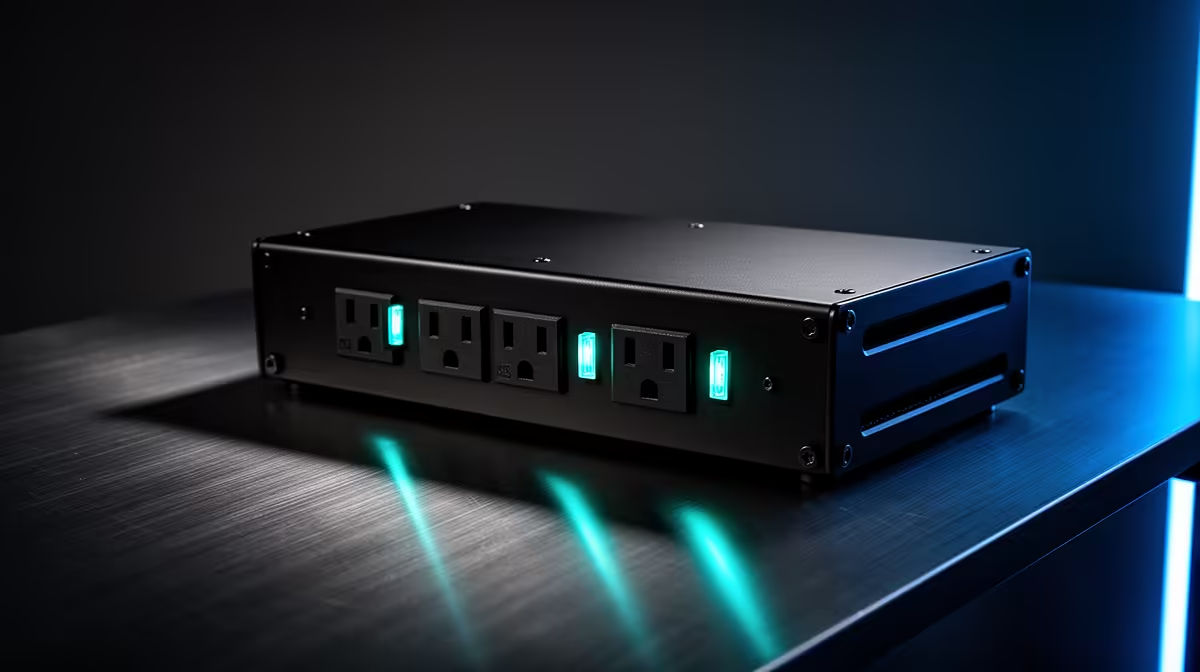
A line-interactive UPS with automatic voltage regulation can boost or trim input within its specified range and provide shutdown time. It cannot repair building wiring or a utility fault.
Measure the tower and required monitor before sizing. Check accepted input range, output waveform, watts, VA and runtime by exact model.
The PC PSU remains the first conversion stage. If testing shows it is faulty or unsuitable, compare Corsair power-supply models and current PSU favourites by exact specification rather than replacing it from suspicion.
Report Through the Right Route
Give the body corporate or managing agent a concise log and ask whether common-area systems or other units show the same timing. They can coordinate access to shared infrastructure.
The electricity supplier handles the supply area within its responsibility. The electrician, body corporate and supplier may each own a different part of the path, so keep fault references and findings together.
A renter should notify the landlord or agent under the lease process and avoid unauthorised electrical changes.
FAQ
Are evenings always the worst time?
Demand can rise in the evening, but timing alone does not prove the source. Measure and report the repeated pattern.
Can one resident fix a building-wide issue?
No. A resident can protect selected equipment and provide evidence, while shared infrastructure needs the responsible party and qualified contractors.
Does reporting help?
A clear log across several units can help the body corporate, electrician or supplier locate the affected part of the system.
Should renters worry about PC damage?
Treat recurring restarts or electrical safety signs as a fault to investigate. Use backups and suitable shutdown protection while the cause is assessed.
Log the timing and affected areas, report shared symptoms through the property route, and use measured evidence to size any temporary PC protection.