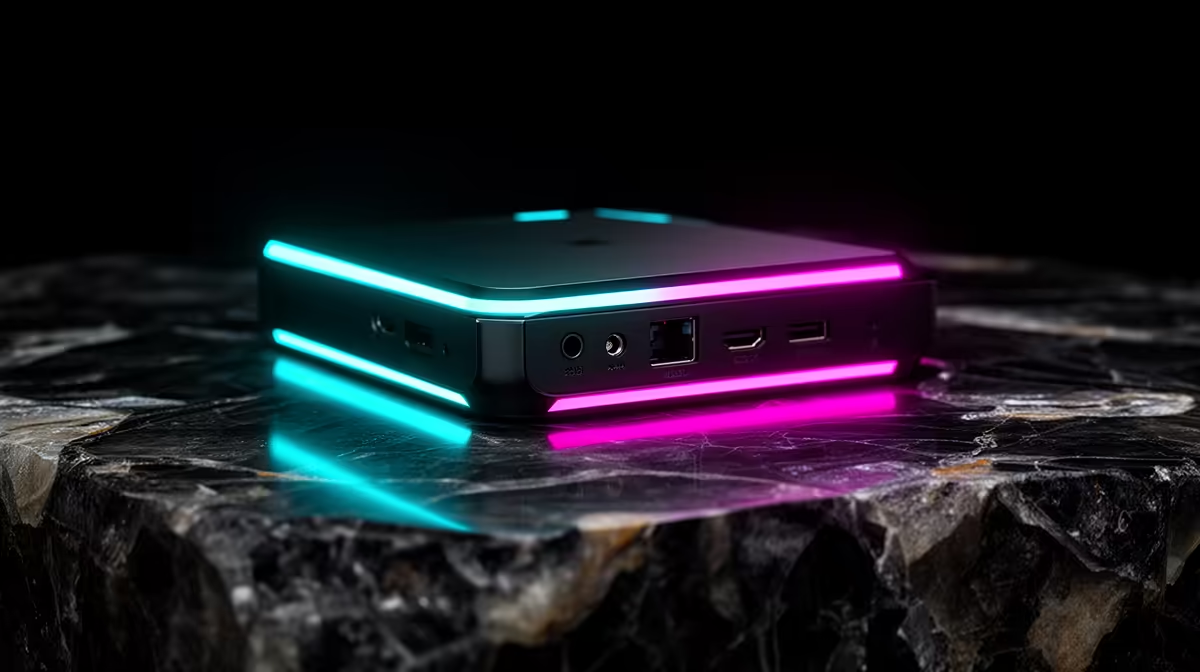
A dock can turn a handheld into a lounge console, but only if TV play becomes part of your routine. A handheld gaming dock should provide the video, power and USB support your exact device needs.
Quick Answer
A dock is worth it when your handheld spends enough time on a TV that connecting power, display, controller and network one by one becomes annoying. It does not add GPU performance. Higher TV resolution can reduce game frame rate, and a dock's power-delivery label cannot make the handheld accept more power than it supports. Choose the dock by video mode, USB bandwidth, Ethernet, charger compatibility and physical fit. The Lenovo Legion Go S 16GB/512GB Z2 Go was R12,799 as of July 2026, a named handheld reference while you decide whether TV hardware belongs in the complete setup.
Start with the TV mode you need
Write down 1080p or 4K output, refresh, HDR, VRR and colour depth. Check that the handheld, USB-C port, dock, cable and television all support that combination.
A dock advertising 4K may mean 4K60 without VRR or another limitation. Read the exact mode table. For gaming, 1080p or 1440p can deliver steadier performance than rendering at TV-native 4K.
Power is a negotiated path
The dock, charger, cable and handheld negotiate USB Power Delivery. Use a charger with the required supported profile and a cable rated for the power. The handheld accepts only its designed amount.
A dock can reserve some input power for its own ports. If the handheld reports slow charging under load, test the approved charger directly and remove high-draw USB devices.
Ports share a connection
Video, Ethernet, storage and USB devices can share the dock's upstream bandwidth. An external SSD copy may affect another device. Check controller polling and network stability with the full couch setup connected.
For wireless controllers, place receivers away from crowded USB ports and keep a clear radio path.
Physical support protects the port
The cradle should not block intake or exhaust, pinch a case or put cable weight on the USB-C socket. Handheld thickness varies, especially with protective covers.
A simple hub can work when you do not need a stand. A dock earns more when it routes cables, supports the screen and stays beside the TV.
Test the couch routine
Wake the handheld, connect the controller, launch a game, switch TV input and return to sleep. Some docks recover display or audio poorly after sleep, which turns a one-cable promise into repeated unplugging.
Confirm the television receives the intended sound format and that Windows or SteamOS does not keep sending audio to the handheld speakers. Set text scaling for couch distance and keep a small keyboard or touchpad plan for launchers that need desktop input.
If this routine happens once a month, a direct cable may be enough. A dock earns its place when the setup stays connected and removes friction every week.
Browse handheld gaming systems and popular PCs for complete device specifications.
FAQ
Does a dock make a handheld faster?
No. It adds connections and power delivery. Display resolution and the handheld's own power profile shape performance.
Can any USB-C dock output VRR?
No. Support must exist across handheld, dock, cable and TV for the intended mode.
Should the dock include a charger?
It is convenient, but check the exact PD profile and whether enough power reaches the handheld with accessories attached.
Compare handheld docks by tested TV mode, power negotiation, shared bandwidth and vent clearance.