Quick Answer
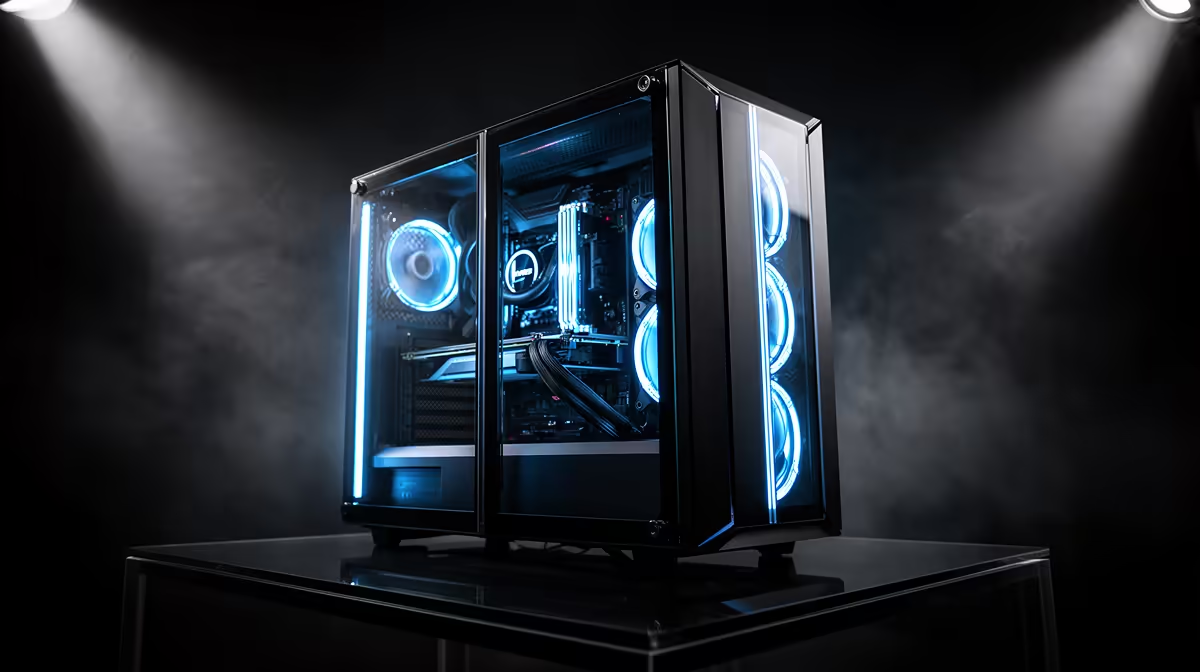
Dual tempered glass panels prioritise visibility and aesthetic impact at the cost of slightly restricted top exhaust if the top panel is also glass. Mesh panels prioritise maximum airflow with no visibility. For a showcase build, glass wins clearly. For a thermally demanding high-performance rig focused on quiet operation, mesh is the better choice.
Airflow Differences Between Glass and Mesh Panels 🌬️
A glass top panel blocks top exhaust entirely, forcing all heat out through the rear exhaust and remaining mesh openings. In a high-end build running an RTX 5080 and Ryzen 9 9900X, blocking top exhaust raises CPU and GPU temperatures by 4 to 9 degrees Celsius under sustained load compared to an open mesh top. Cases that use glass only on the side panels and mesh on the top and front avoid this penalty entirely. A fully mesh case with perforated front and mesh top delivers the best airflow of any design and is preferred by builders where thermals and noise control take priority over visual impact. A mesh case with quality PWM fans and a 360mm AIO typically runs 5 to 12 degrees Celsius cooler under full gaming load than an equivalent glass-topped case.
Visibility and Build Style Considerations 🖥️
Dual tempered glass panels transform a PC into a display piece. Cases with glass on both sides require immaculate cable management on both sides of the motherboard tray and eliminate the option of hiding cable clutter behind the tray. ARGB components glow through glass without distortion, and premium glass panels have optical clarity close to display glass. The trade-off is that fingerprints and dust accumulation inside the case are immediately visible. For South African homes with open-plan living areas where the PC tower is on display, a dual-glass case makes the build a feature of the room. For a garage or workshop workstation, mesh gives you thermal resilience without the maintenance overhead.
Finding the Middle Ground 🔧
Many premium cases now offer a configurable panel approach: a mesh front for intake airflow, a tempered glass side for visibility, and either glass or a vented metal top. This hybrid solves both problems simultaneously and is the most practical choice for a South African gamer who wants reasonable thermals and enough visual appeal to appreciate ARGB lighting. Cases at R3,000 to R5,000 in this hybrid category typically outperform pure-glass cases thermally by 4 to 8 degrees Celsius while still providing a full side-window view of the hardware inside.
Consider Dust Accumulation With Glass Panels ⚡
Glass side panels show interior dust accumulation visually within two to four weeks in most South African homes. A case with mesh panels develops the same dust internally but hides it from view. If you choose glass panels, schedule a compressed-air clean of the interior every four to six weeks to maintain the visual clarity that justified the glass choice.
FAQ
Does a glass top panel make a significant thermal difference?
Yes, if your build relies on top exhaust for heat removal. A glass top that fully blocks top airflow forces more heat through the rear exhaust fan, which is insufficient for a high-TDP build. Choose a case with a mesh or vented top even if you prefer glass side panels.
Are mesh panels aesthetically inferior to glass?
Not necessarily. High-quality mesh in a fine hexagonal or diamond pattern on a dark case looks industrial and premium. Premium mesh cases look intentional and distinctive.
Can I swap panels between glass and mesh configurations?
Some cases offer interchangeable front panels as either included accessories or optional purchases. Check the case manufacturer's product page before buying. Having both options available for the same chassis gives you flexibility to adjust aesthetics or thermals as your priorities change.
Choosing between glass and mesh for your next build? Browse Evetech's case range, which includes pure mesh, pure glass, and hybrid configurations to match any build style or thermal priority.