Footsteps do not live in one universal frequency band. Their useful cues change with game, surface, distance and sound mix. A gentle cut to masking bass and a small presence lift can help, while a large 1kHz to 4kHz boost makes gunfire harsh and can hide vertical or distance cues.
Quick Answer
Start from a neutral headset profile. Reduce low bass by two or three decibels if explosions mask movement, then try a broad two-decibel lift around the upper mids. Use a practice replay with known footsteps, match loudness before and after and stop when voices or gunfire become tiring.
Evetech's peripheral best sellers and gaming-accessory catalogue help compare headsets and audio hardware. Look for measured frequency response and comfort rather than a claim that one factory EQ is tuned for every shooter.
Cut Masking Before Boosting Detail
Explosions, engines and music often carry strong low-frequency energy. Lowering a broad bass shelf can create room for quieter cues without pushing the total volume higher.
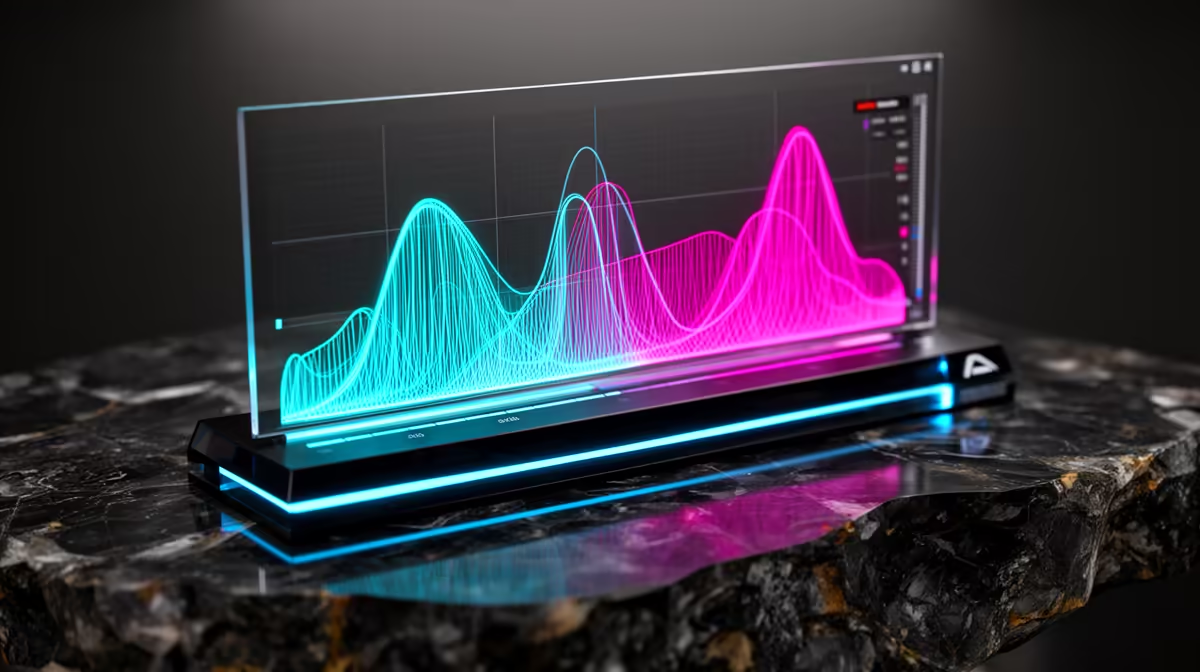
Footstep attack and texture can reach through the mids and lower treble, but the exact peak depends on the title and headset response. Sweep a narrow test filter to locate an area, then replace it with a gentler broad adjustment.
Avoid stacking game EQ, headset software and an operating-system enhancer. One documented EQ makes the result easier to hear and undo.
Use the Game's Spatial Mix
Select Headphones or the game's intended binaural mix. Do not combine its headphone spatial renderer with a second virtual-surround layer unless the developer recommends it. Double processing can blur direction and room cues.
Dynamic-range controls matter. A night or compressed mode can lift quiet steps relative to explosions, though it also reduces distance contrast. Compare it with the normal competitive preset in a replay.
Set music lower when the game allows separate sliders. Keep effects at a comfortable level and protect your hearing; louder is not a substitute for a cleaner mix.
Match Loudness for the Test
EQ boosts can make the adjusted profile seem better because it is louder. Lower the preamp by the size of the largest boost to avoid digital clipping, then match perceived volume between profiles.
Use the same replay, character path and surface. Test front, side, behind and above or below. Keep the profile only when it improves detection without harming location or causing fatigue.
Account for the Headset
A headset with a strong bass shelf needs a different correction from a lean open-back model. Start with an independent frequency-response measurement for the exact unit where available, then make small changes by ear. Do not copy ten-band values from another headset bearing the same gaming brand.
Fit affects bass. Seal the ear pads around glasses and hair before EQ, and replace compressed pads when left and right balance or low-frequency response changes. EQ cannot repair a poor seal or failing driver.
FAQ
Are all footsteps between 1kHz and 4kHz?
No. Useful energy depends on the game, surface, distance and mix.
Should I boost treble as high as possible?
No. Large boosts can add harshness, clipping and fatigue while masking other cues.
Does virtual surround always improve direction?
No. Use the game's supported headphone path and avoid stacking spatial processors.
Cut masking bass first, add one gentle presence filter and loudness-match a known replay before saving the EQ for competitive play.