Quick Answer
GPU clearance specs cover three dimensions: maximum GPU length (front-to-back, typically 300 mm to 420 mm), maximum GPU slot width (1 to 4 slots, where a triple-slot card uses about 58 mm), and maximum GPU height from the motherboard PCIe slot to the side panel (usually 155 mm to 175 mm). Understanding all three prevents the most common build compatibility failures.
GPU Length: The Primary Clearance Spec 📐
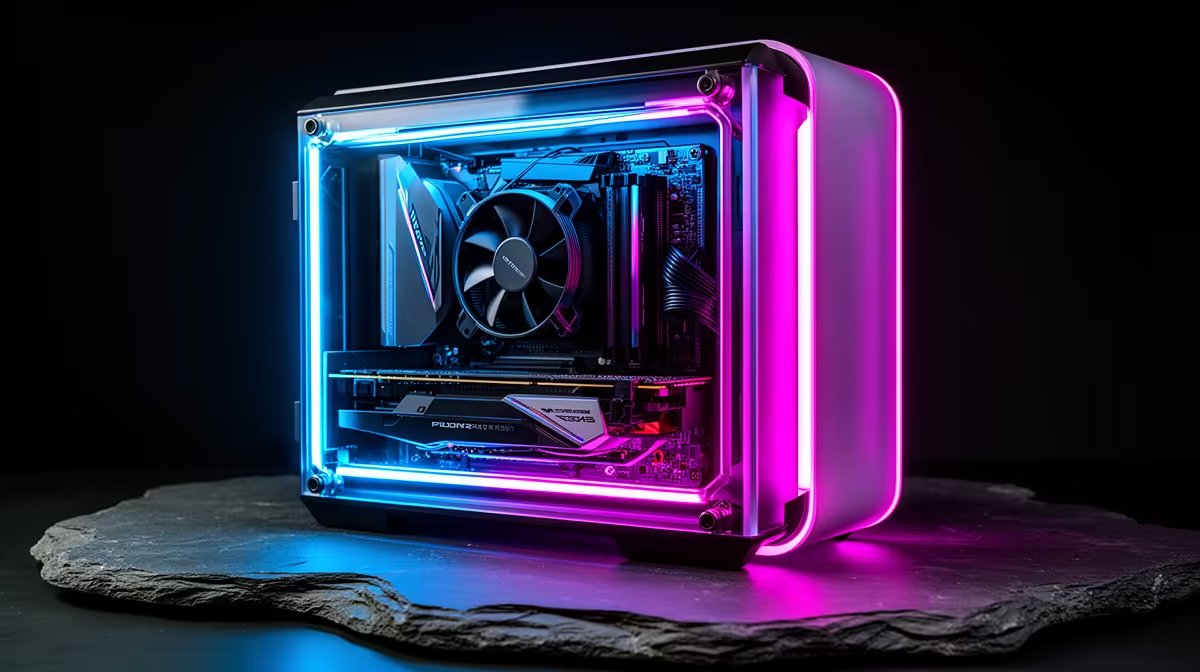
Maximum GPU length is measured from the rear expansion bracket to the front obstacle inside the case, usually the front fan bracket or radiator mount inner edge. For flagship cards in 2026, the RTX 5090 Founders Edition measures 336 mm, while AIB partner variants like triple-fan designs reach 340 mm to 380 mm. A case listing 400 mm GPU clearance has adequate room for these cards without a front radiator, but that clearance shrinks to 340 mm to 350 mm with a 360 mm front radiator installed. Always request the "GPU clearance with front radiator" figure from the manufacturer spec sheet if you plan liquid cooling. Standard ATX mid-towers typically offer 310 mm to 350 mm; full-towers provide 380 mm to 430 mm.
GPU Slot Width and Height Clearance 🖥️
Slot width clearance determines how many physical expansion slots the GPU occupies. Modern flagship cards are triple-slot (58 mm to 62 mm wide) with some premium AIB designs extending to a 3.5-slot (68 mm to 72 mm) profile. A case with seven expansion slots can fit a triple-slot GPU and still leave four usable slots below it. GPU height clearance, measured from the PCIe slot to the inner face of the side panel, is usually listed as a secondary spec. Triple-slot cards measure 120 mm to 140 mm in height, well within the 155 mm to 175 mm most cases provide. The constraint appears when using a vertical PCIe riser: the GPU is then oriented parallel to the side panel, and 30 mm to 40 mm of gap between the cooler's exhaust side and the glass is the minimum for adequate airflow.
Reading Case Spec Sheets Accurately 🔧
Case specifications published by manufacturers are measured under idealised conditions: no radiator, no cables, and often without a PSU shroud in place. Real-world clearance is consistently 10 mm to 30 mm less than stated due to cable bundle routing near the front intake and PSU shroud protrusions. The most reliable method is to check community build logs in forums for your specific case paired with your specific GPU. SA builders can find these build reports on local PC enthusiast communities. If no community data exists, contact the local distributor for a build compatibility confirmation before placing an order.
The Three-Number Check ⚡
buying any case for a flagship GPU, confirm three numbers: (1) GPU clearance with radiator installed, (2) GPU slot width versus available expansion slots, and (3) GPU height versus side panel distance. A case that passes all three numbers for your specific card eliminates 95 percent of build compatibility issues before a single component arrives.
FAQ
Why does GPU clearance matter if my card fits when I check online?
Online specs often reflect the PCB length, not the total installed dimension including the front fan overhang or cooler edge.
Do GPU clearance specs change if I remove drive cages?
Yes. Many mid-tower cases have removable 3.5-inch drive cages positioned near the front panel, and removing them can free 30 mm to 60 mm of additional GPU clearance. This is a documented workaround that case manufacturers often mention in their own build guides.
Is a GPU riser cable a reliable solution for clearance problems?
A quality PCIe 4.0 or 5.0 riser cable is electrically reliable when purchased from a reputable brand. Budget risers can introduce signal degradation at PCIe 5.0 bandwidth, so allocate R600 to R1,200 for a known-good riser if you go this route.
Spec-checking a case before your flagship GPU arrives?
Evetech stocks a broad range of gaming cases with detailed clearance specs, alongside the full RTX 50-series and RX 9000-series GPU lineup.