Quick Answer
GPU clearance is the maximum graphics card length a case can physically accommodate. 320mm covers mainstream cards, 380mm to 400mm handles most current triple-fan flagships, and 450mm is required only for the longest factory-overclocked variants like some RTX 5090 models. Always subtract 20 to 30mm from stated clearance for cable connector headroom.
GPU Clearance Tiers Explained 📏
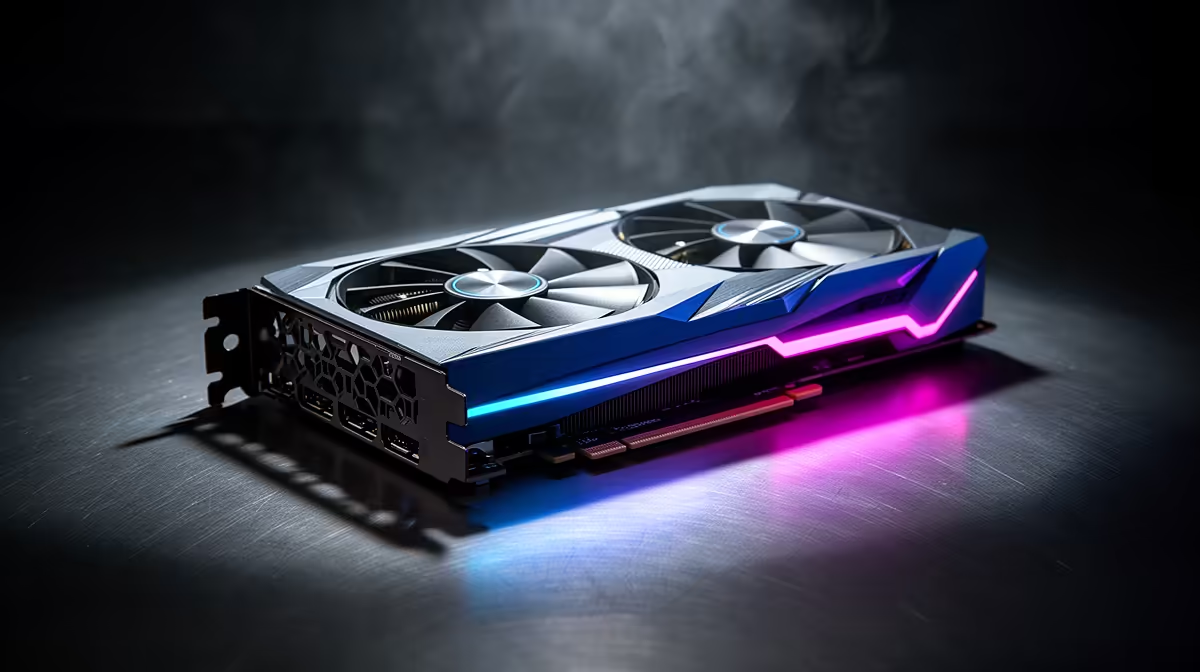
Case manufacturers publish GPU clearance in their specifications, but the figures need context. A 320mm clearance value means the case fits cards up to 320mm including PCB, cooler bracket, and fan overhang. At this tier you accommodate most budget and mid-range cards: RX 9060 XT and RTX 5060 Ti variants typically measure 230mm to 300mm. At 360mm to 380mm clearance you reach upper-mid cards like the RTX 5070 Ti and RX 9070 XT, whose triple-fan AIB variants land between 310mm and 360mm. At 400mm to 420mm you fit most RTX 5080 triple-fan cards at 340mm to 390mm. At 450mm and above, extreme factory-overclocked RTX 5090 variants measuring 420mm to 440mm fit without forcing.
How Drive Cages Change the Clearance Calculation 🔧
Many cases publish two GPU clearance figures: one with the drive cage installed and one with it removed. These numbers can differ by 40mm to 80mm. An entry-level mid-tower might list 400mm clearance with cage removed but only 320mm with cage installed. Most modern builders use only NVMe SSDs and have no need for a 3.5-inch hard drive cage, so cage removal is painless. The further complication is the 16-pin power connector on RTX 50-series cards, which adds 25 to 40mm of connector depth beyond the PCB edge, meaning a 360mm card effectively needs 390mm to 400mm of physical space for the connector to seat without bending sharply.
Matching Card Length to Case in SA 💰
For South African builders, aligning GPU clearance to case spend prevents costly mistakes. Mid-tower cases at R1,200 to R1,800 typically offer 320mm to 360mm clearance with cage installed, suitable for RTX 5060 Ti builds at R7,000 to R12,000. Mid-towers at R1,800 to R2,600 push to 380mm to 420mm with cage removed, matching RTX 5070 Ti or RX 9070 XT builds at R16,000 to R24,000. Full-towers from R2,800 to R4,500 deliver 440mm to 500mm clearance, covering the full RTX 5090 range at R25,000 to R40,000.
Check Connector Orientation Too ⚡
Some AIB partners position the 16-pin 12VHPWR connector on the side of the GPU rather than the rear, adding clearance in one direction but creating height conflicts with the PSU shroud. Look up your specific GPU model's connector orientation before assuming standard length figures apply.
FAQ
Does the GPU clearance figure include the power connector?
Usually no. Manufacturers measure from PCIe slot to front panel or drive cage face. The connector adds further depth beyond the PCB tip, so add 30mm to your GPU length before comparing against stated case clearance.
What happens if my GPU is 5mm longer than the stated clearance?
The card will not seat correctly, or will press against the drive cage or front panel, causing permanent damage to both. Never force a card that exceeds the case's clearance rating.
Are GPU clearance specs measured consistently across brands?
No. Some brands measure from the PCIe slot face to the inner front wall, others to the drive cage face. This inconsistency makes user review photos and community build logs more reliable than spec sheets alone.
Need to match your GPU to the right case clearance? Evetech's case listings include GPU clearance specs so you can verify fitment before you order.