Glossy and silk are useful shopping labels, but they do not replace looking at a printed surface. Glossy PLA vs silk PLA should be compared through highlight shape, colour movement and the geometry of the intended model. A finish that looks striking on a broad vase may behave very differently on a tiny mechanical form.
Quick Answer
Pick the finish whose real sample supports the model, rather than assuming glossy and silk mean the same visual result across brands. The ELEGOO Galaxy spool provides 1kg of glossy 1.75mm PLA for R499, producing dynamic shimmer and colour shifts at changing angles. Compare a named silk filament separately before drawing conclusions about it.

🔦 Watch how highlights move
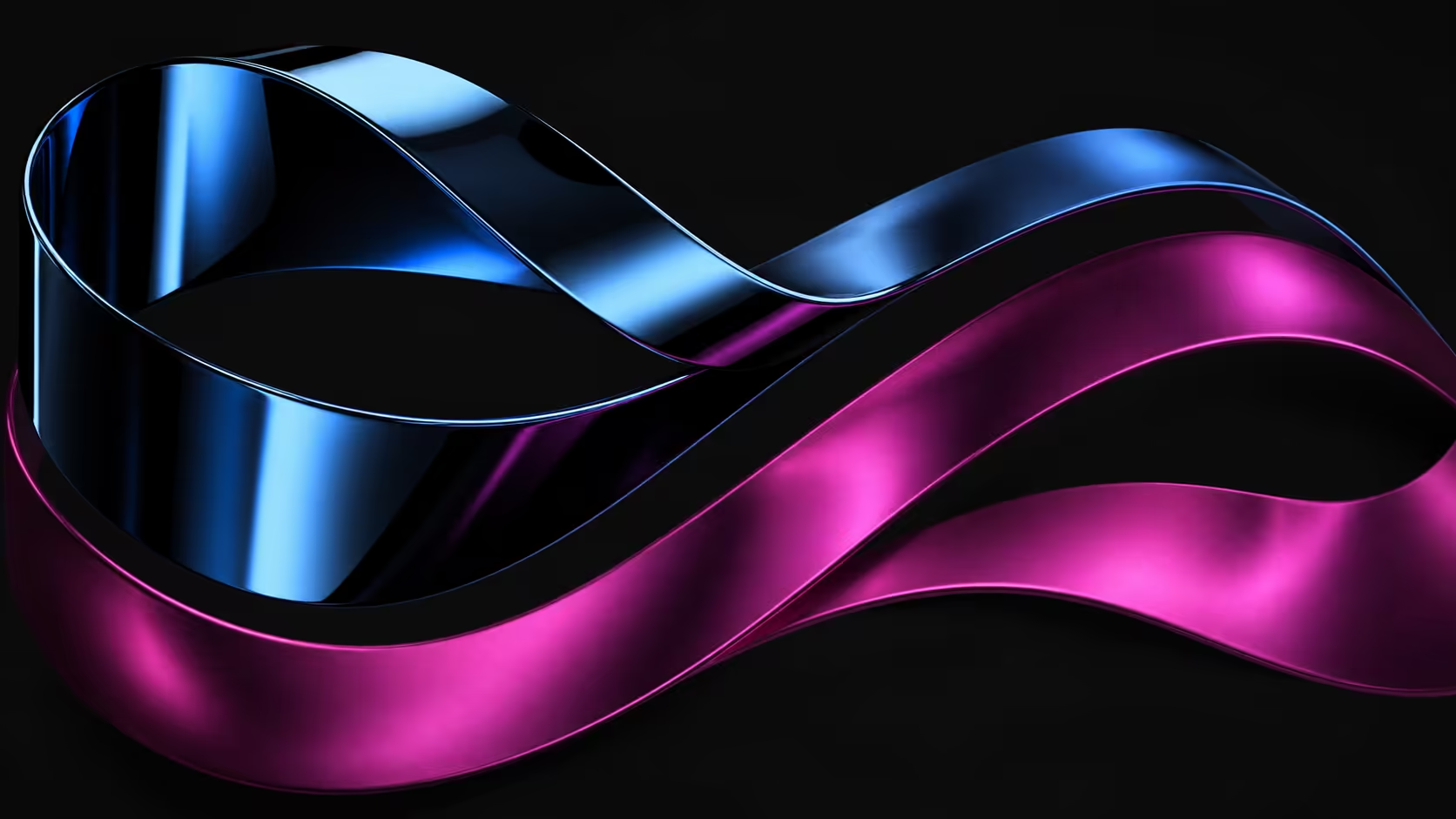
A glossy surface reflects defined highlights that travel as either the light or object moves. ELEGOO Galaxy PLA adds shifting colour to that behaviour, so rotation reveals more of the space-like effect. Curves provide a continuous path for the highlight, while facets can produce distinct flashes across separate planes.
Silk PLA is commonly chosen for a decorative appearance, but the label does not specify the exact gloss, colour response or print behaviour of every spool. Use a physical sample from the candidate material. The goal is not to rank two words; it is to discover which surface communicates the shape more clearly.
Evetech's 3D printing filament pages provide a practical starting point for assembling that real shortlist.
🧱 Match the finish to geometry
Broad decorative walls give moving highlights room to develop. Fine texture, small lettering or closely spaced details may compete with a highly active surface, depending on the design and light. Print a reduced section that contains the most important geometry instead of a generic object with no relation to the final piece.
Assess the sample from the expected viewing distance. A close-up can exaggerate small layer marks, while a distant view may merge colour and gloss into a single impression. Turn the part through several angles and note which features remain legible.
🎯 Keep the comparison fair
Use the same model, printer and evaluation light for both filaments where practical. Begin each material with appropriate PLA guidance rather than forcing one profile across unrelated spools. Compare surface character only after both objects are geometrically acceptable.
The 3D printers section can help when machine capability is also under review. For a printer already on the desk, its operating instructions and a preserved baseline matter more than a setting copied from a different setup.
📷 Document movement, not just one hero angle
If the finished model will be shown online, capture several consistent views or a short turn sequence. One dramatic reflection can exaggerate what a customer or collaborator will see from every position. A balanced set of angles communicates the changing surface more honestly.
Keep camera exposure, background and light placement stable between glossy and silk samples. The purpose is to compare surface behaviour, not photography skill. Include a neutral view where geometry remains easy to read and a second view where decorative highlights appear. This record becomes useful when the physical samples are no longer beside each other.
Ask a second viewer to describe what attracts attention first. One person may notice the moving highlight, while another reads silhouette or fine detail. A short independent observation can reveal when the finish overwhelms the design brief. Keep the question neutral and avoid naming the preferred material in advance. The aim is not a popularity vote but evidence about how the surface communicates outside the maker's own expectations.
Galaxy PLA gives the glossy side of this comparison a concrete character. Its sheen is paired with deep-space lustre, rich transitions and reflections that change as the print turns, rather than a single flat highlight. Silk PLA must be judged from the exact alternative because that label alone does not define an identical colour path. Place both samples under the intended display light and decide whether the project benefits from Galaxy's visual depth or the other spool's particular surface.
Repeat the comparison with the objects in hand, not only through a photograph. A physical turn reveals colour movement that one frozen camera position can miss, while also showing whether either surface obscures fine modelling.
Frequently Asked Questions
What finish does ELEGOO Galaxy PLA create?
It produces a glossy dynamic shimmer with vivid colour movement that changes across viewing angles.
Does the word silk define every visual result?
No. Each actual filament needs a printed sample because the label does not establish one universal level of shine or colour response.
Which shapes reveal moving highlights well?
Curves, facets and broad exposed faces give the light visible paths across the model. Hidden or internal surfaces cannot use the effect.
What belongs in a fair finish test?
Keep geometry, viewing distance and lighting consistent, then assess only after each sample has formed cleanly.
Ready to compare decorative PLA with your own geometry?
Explore Evetech's filament range, choose real candidates and print the section of your model where highlight behaviour matters most.