Quick Answer
A fluid dynamic bearing (FDB) replaces the metal-on-metal contact of ball bearings with a pressurised oil film. This film eliminates mechanical friction as the noise source, reducing operational noise by 3 to 8 dBA compared to equivalent ball-bearing fans and producing near-zero noise degradation over the fan's lifespan.
The Mechanics of Fluid Dynamic Bearings 🔧
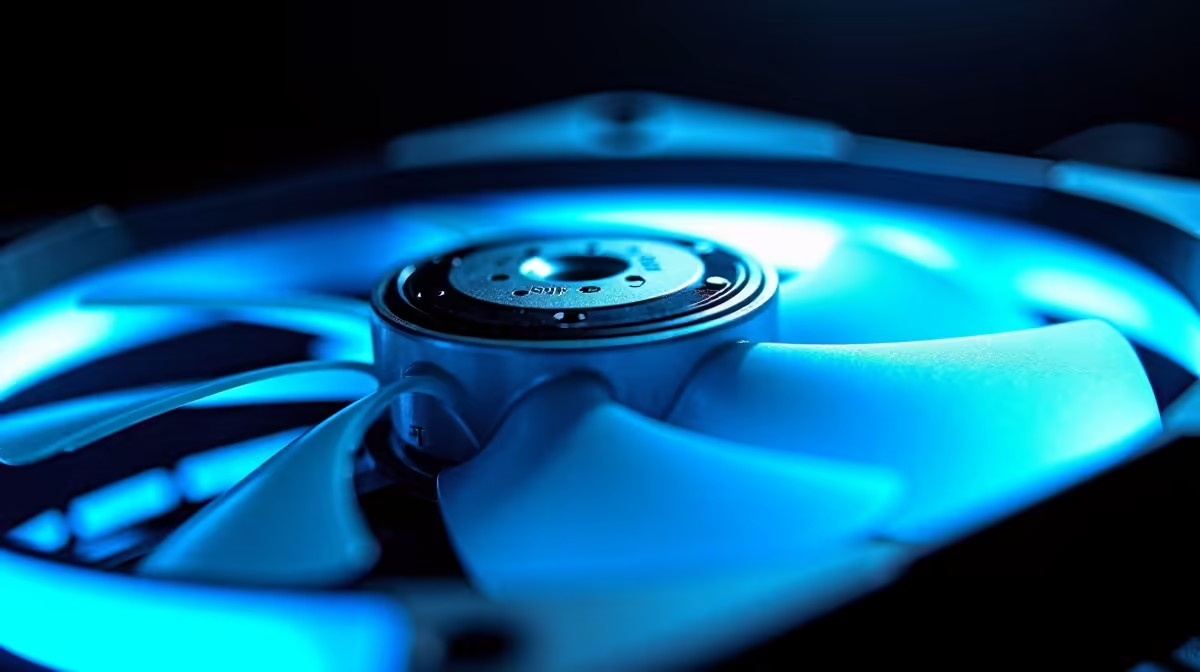
In a standard sleeve bearing, the fan spindle rotates inside a metal sleeve with only a thin layer of grease between them. As the grease dries over time, metal contacts metal and friction increases. Ball bearings solve the contact problem but introduce rolling-element noise, a characteristic mid-frequency hum. Fluid dynamic bearings work differently: grooves machined into the spindle pump oil from a reservoir into the gap between spindle and housing as the fan spins. Above 300 RPM, oil pressure exceeds the shaft load, lifting the spindle off the bearing surface entirely. The spindle floats in oil with no mechanical contact, which means no friction-generated noise.
Acoustic Advantages Over Other Bearing Types ✨
At 1,000 RPM on a 120mm fan, a ball-bearing unit typically produces 22 to 26 dBA. An FDB version of the same fan design measures 18 to 22 dBA at the same RPM. At 1,500 to 1,800 RPM where gaming load fans often operate, FDB fans produce 5 to 8 dBA less than ball-bearing equivalents. In a quiet home office in Pretoria or Cape Town, this difference separates an audible background hum from near-silence. FDB fans also age more quietly: after 30,000 hours, an FDB unit continues to run at near-original noise levels, while ball bearings develop race-wear noise and sleeve bearings rattle from dried grease.
Temperature and Longevity Under SA Conditions 🌡️
FDB bearings rely on oil viscosity for load-carrying capacity. Quality FDB designs use high-viscosity synthetic oils rated to remain effective at internal case temperatures up to 60 degrees Celsius. In a Gauteng home during summer, an uncooled room can push internal case temperatures to 40 to 45 degrees Celsius. At this point, a quality FDB bearing maintains its oil film without significant viscosity loss. The sealed reservoir design also prevents oil contamination from the red Highveld dust particles that circulate through fans over their operational life.
Orient FDB Fans Horizontally Where Possible ⚡
Most modern FDB fans are rated for any mounting orientation, but fans explicitly rated "multi-directional" use grooves designed to maintain oil pressure regardless of position. For floor-mounted intake fans or unusual case orientations, confirm the fan's orientation rating in the spec sheet before purchasing.
FAQ
Do FDB fans require any maintenance, like re-oiling?
No. FDB bearings are fully sealed from the factory and rated to operate for 40,000 to 50,000 hours without oil replenishment. Unlike older sleeve-bearing fans, FDB fans are not user-serviceable and do not need lubrication attention.
How does FDB compare to maglev bearings acoustically?
Magnetic levitation bearings eliminate mechanical contact using opposing magnets, achieving the lowest noise levels of any fan bearing type, typically 1 to 3 dBA quieter than FDB. They add R100 to R200 per fan over equivalent FDB units. For most gaming builds, FDB represents the better value-to-silence ratio.
Are all fans labelled "fluid bearing" actually FDB?
No. Some manufacturers use "fluid bearing" to describe hydraulic bearings, which are improved sleeve bearings but not true pressurised film bearings. True FDB fans specify "fluid dynamic bearing" explicitly. Check the specification carefully.
Want the quietest possible fan for your desktop PC?
Evetech stocks a range of fluid dynamic bearing fans in 120mm and 140mm sizes. Browse the cooling section to find FDB options across various airflow and static pressure ratings.