Quick Answer
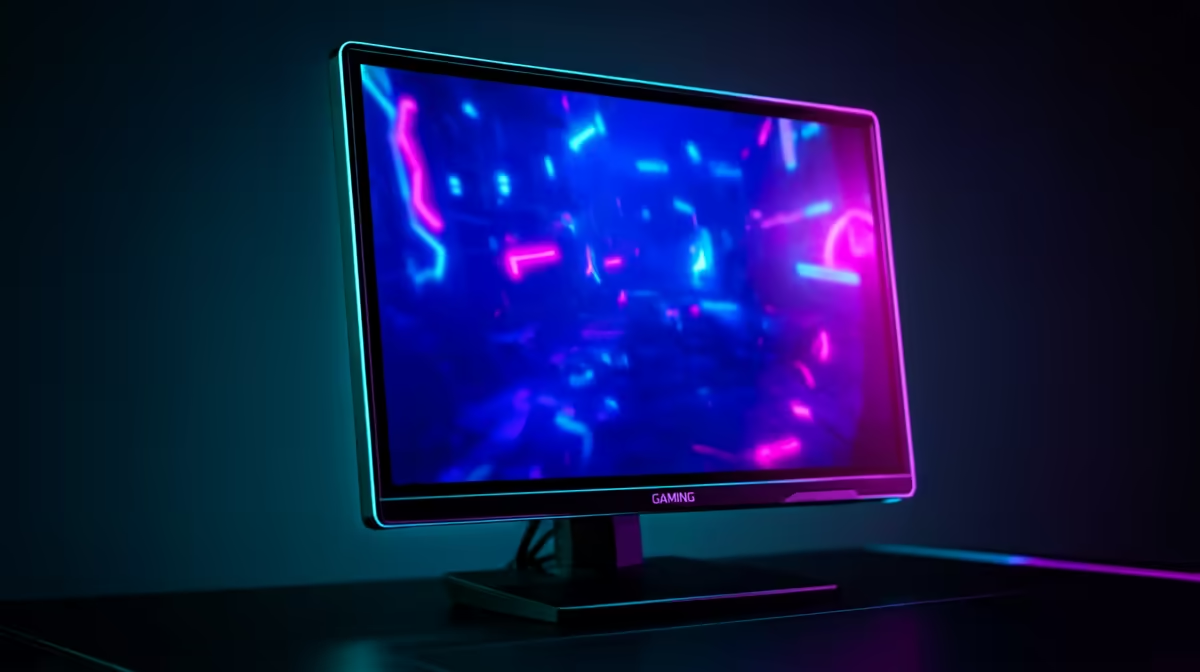
A modern gaming monitor realistically lasts 7 to 10 years before noticeable fade, and good IPS or VA panels resist burn-in entirely. OLED panels look stunning but can show burn-in after a few years of static elements, so for an always-on desktop a quality IPS monitor near R4,500 is the safer long-term buy.
Panel Type Decides Longevity
IPS and VA LCD panels use an LED backlight that dims very slowly, typically rated for 30,000-50,000 hours to half brightness; that is roughly a decade of daily use before fade becomes obvious. OLED panels produce their own light per pixel, giving perfect blacks but a real burn-in risk where taskbars, HUDs and logos sit static for thousands of hours. For mixed desktop and gaming use, IPS is the durable default; OLED rewards careful use with built-in pixel-shift and refresh routines.
Getting the Most Years From a Monitor
Run the backlight below maximum brightness, enable any screen saver or pixel-shift feature, and avoid leaving a static image on screen for hours. A 165Hz or 180Hz 1440p IPS monitor near R4,500-R6,500 gives high-refresh gaming and a long fade-free life. For OLED owners, hiding the taskbar and varying content keeps burn-in at bay.
FAQ
Do gaming monitors get burn-in?
LCD IPS and VA panels effectively never burn in; only OLED panels can, where static elements sit for thousands of hours. Built-in care features greatly reduce that OLED risk.
How long before a monitor's colours fade?
Typically 7 to 10 years of daily use. The LED backlight dims slowly over tens of thousands of hours, so most monitors are replaced for newer features first.
Is OLED a bad choice for a work-and-play desktop?
Not necessarily, but if your screen shows static toolbars all day, an IPS panel is the lower-risk pick. OLED suits mixed, varied content with its care features enabled.
always-on desktop, choose a 165Hz IPS 1440p monitor and run it below full brightness; you will get high-refresh gaming with a decade of fade-free life.