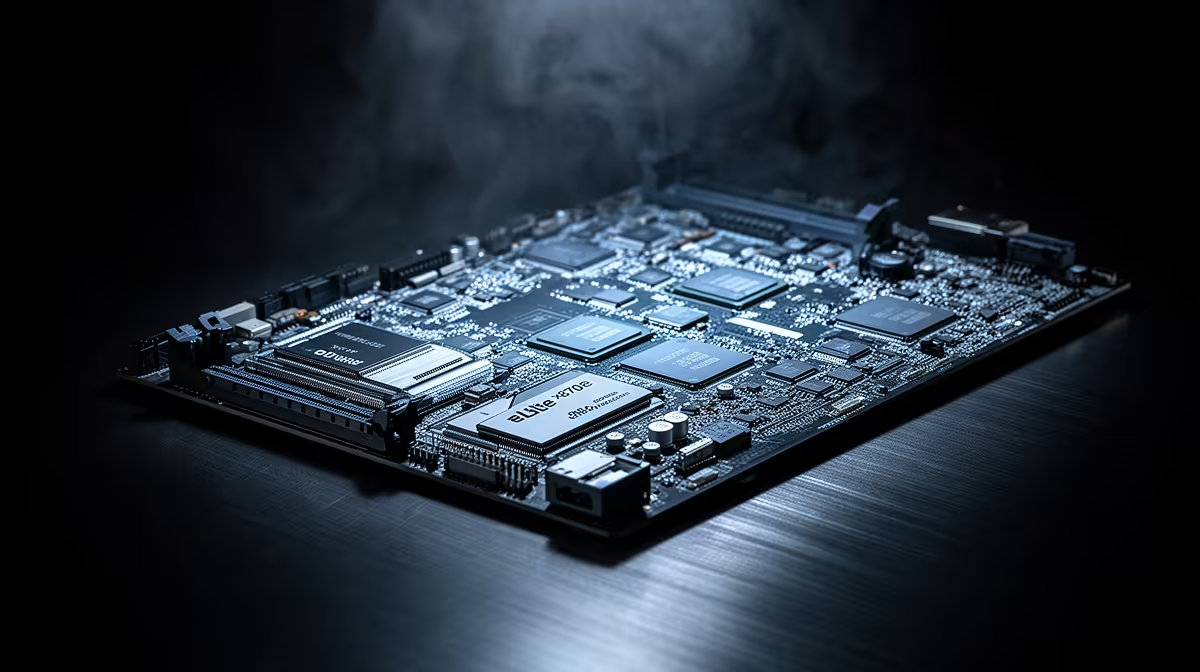
A X870E motherboard that suddenly shows FPS drops is rarely broken; the trigger is normally a recent driver, cable, or power-profile change.
Quick Answer
To stop FPS drops on a X870E motherboard, verify USB4 40 Gbps settings, close background load, and retest the same scene. An X870E board typically costs from R7,800 thanks to its USB4 and PCIe 5.0 layout. The cause is usually configuration, not a faulty component.
Update Drivers From A Clean State
Install the latest stable GPU and chipset drivers, reboot once, and avoid stacking other changes in the same pass. A clean driver state removes a frequent trigger for FPS drops on a X870E motherboard. If a recent update introduced the problem, roll back to the previous known-good version and retest the same scene.
Verify Cables, Ports And Connections
Swap to a known-good certified cable and a different port, since a marginal link can cause FPS drops that looks like a deeper fault. On a X870E motherboard this is a two-minute check that rules out a whole class of problems. Reseat the connection, retest the same scene, and record the result before moving on.
Pin down the limit before you upgrade your X870E motherboard.
Once your notes show whether frame rate is held back by drivers, display mode, thermals, or load, browse the matching Evetech motherboard shortlist with confidence.
Set Realistic Targets For Your Panel
Decide what frame rate you actually need for your panel and game type, then tune toward it rather than chasing a number the X870E motherboard was never meant to hit. An X870E board typically costs from R7,800 thanks to its USB4 and PCIe 5.0 layout. Setting a sensible target stops endless tweaking and makes any remaining FPS drops easy to judge against a clear goal.
FAQ
How much should I budget to properly address this on a X870E motherboard?
Often nothing, since most fixes are configuration changes. An X870E board typically costs from R7,800 thanks to its USB4 and PCIe 5.0 layout. If a measured bottleneck remains after tuning, spend on the single part your data points to rather than a full rebuild.
Is FPS drops on a X870E motherboard a hardware fault or a settings problem?
Most of the time it is settings, drivers, or background load rather than a broken part. Run one repeatable scene, change a single variable, and watch frame rate. Only consider a replacement once a clean configuration still shows the issue.
Could a cable or port be causing FPS drops on my X870E motherboard?
It can. A marginal or wrong-spec cable produces drops and hitches that mimic deeper faults. Swap to a certified cable, try another port, and re-run the same scene to rule it out in minutes.
Test Smart
a short log: setting changed, before value, after value. A 30-second repeatable run is worth more than testing three different games.