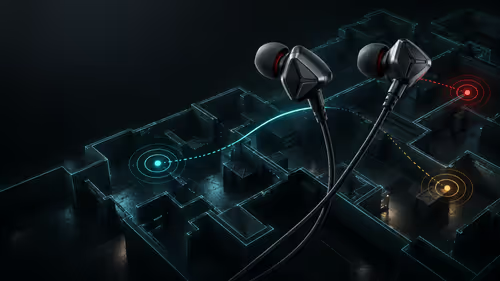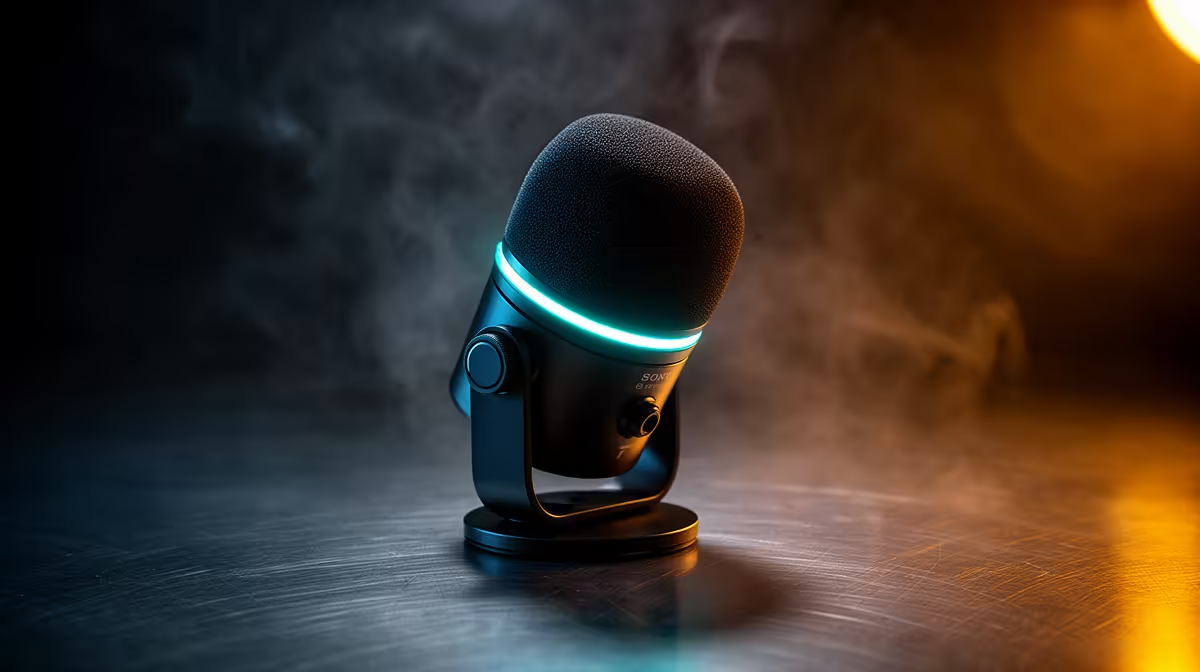
Your teammates are hearing your PC fans more clearly than your voice, and the fix is probably not a new microphone. Excessive background noise pickup during gaming comes down to two culprits almost every time: input gain set too high, and the microphone sitting too far from your mouth. Fix those two things before changing anything else.
Quick Answer
Your mic picks up too much background sound during gaming because the gain is set too high or the mic is too far away. Set input gain so voice peaks at around minus 12dB, move within 10 to 15cm of the capsule, and switch to a supercardioid pattern. These three changes remove most keyboard and fan noise without software.
⚡ Gain Is Almost Always the First Problem
Input gain controls how sensitive the microphone circuit is to incoming sound. When gain is set too high, the mic amplifies everything, your voice, your fans, your keyboard, and any ambient room noise equally. The signal coming out of the mic is louder but it is proportionally no cleaner, because the noise floor rises at the same rate as your voice.
Most gaming setups have microphone input gain set close to 100 percent by default because that is where it shipped or because a previous user maxed it out. Drop the gain to the point where your voice peaks at around minus 12dBFS in your recording or communications software. At this level your voice is strong without clipping, and the noise floor drops because less gain means the mic is amplifying smaller signals less aggressively.
Check this in Windows sound settings or in your communication app. If the input level meter shows consistent activity even when you are completely silent, the gain is too high. Reduce it until the silent baseline sits near the bottom of the meter, then test your voice level and adjust from there.
🔧 Distance Fixes What Gain Alone Cannot
Gain adjustment reduces the overall sensitivity of the input chain. Distance changes the ratio of your voice to everything else in the room, and this is a more powerful lever.
At 40cm from the microphone capsule, your voice and your keyboard are both in the room with roughly comparable distances to the capsule. The mic has no inherent reason to privilege one over the other. Move to 15cm from the capsule and your voice is four times closer than most of the noise in the room. That proximity means your direct voice signal arrives with much higher energy than the ambient sounds. The room noise has not changed, but it is now a much smaller fraction of what the mic is capturing.
Position the microphone capsule about 15cm from the corner of your mouth, not directly in front of your lips. That slight off-axis placement keeps your voice in the pickup zone while reducing the chance of breath and plosive noise, without any filter required.
🎙️ Pattern and Capsule Type: The Hardware Fixes
If gain and distance alone do not fully resolve the problem, the next step is the pickup pattern and the capsule type.
A supercardioid pattern captures a tight 115-degree front zone. Off-axis sound sources, whether a keyboard to your left or a PC tower to your right, fall into zones where the pattern attenuates them by 15 to 20dB compared to your voice directly in front. A wide cardioid or an omnidirectional pattern does not offer this level of rejection.
A dynamic capsule compounds this by requiring physical proximity and direct sound pressure to respond strongly. Fan noise and keyboard rattle are diffuse, arriving from multiple directions and from a distance. Your voice is close and direct. A condenser responds to both; a dynamic capsule responds predominantly to your voice.
Frequently Asked Questions
Why does my microphone pick up so much background noise while gaming?
The two most common causes are input gain set too high and the microphone positioned too far away. High gain amplifies the noise floor alongside your voice. Greater distance reduces the ratio of your direct voice to ambient room noise. Lowering gain and moving within 10 to 15cm of the capsule addresses both causes simultaneously.
How do I reduce background pickup quickly?
Drop input gain in your system or communication app until your voice peaks around minus 12dBFS during normal speaking. Then move the microphone within 10 to 15cm of your mouth. These two changes require no extra hardware and together remove most of the keyboard and fan noise that appears in the recording.
Does microphone distance affect noise pickup significantly?
Yes, substantially. Moving from 40cm to 15cm raises your direct voice signal by roughly 8dB relative to the room noise, because your voice gets much closer while the room stays the same distance. The ambient noise does not change, but it becomes a smaller fraction of the total signal the mic captures.
Will a supercardioid pattern help with background noise?
Yes. The narrow front lobe of a supercardioid concentrates pickup in a tight forward zone and attenuates sources that sit off to the sides or behind by 15 to 20dB. For a typical desk setup where the keyboard is beside the mic and the PC is behind it, orienting those noise sources away from the front lobe removes a significant portion of their contribution to the recording.
Can AI noise suppression fix excessive background pickup?
It helps considerably. On-mic AI suppression strips 15 to 20dB of steady background noise like fan hum and keyboard rattle in real time. It is a useful additional layer, but gain and distance should be corrected first. AI suppression applied to an improperly set gain level is managing a problem that the gain knob could have prevented.
Ready to stop broadcasting your gaming setup to your squad? Browse the dynamic and supercardioid microphone range at Evetech for a capsule that rejects background noise before software processing is even needed.