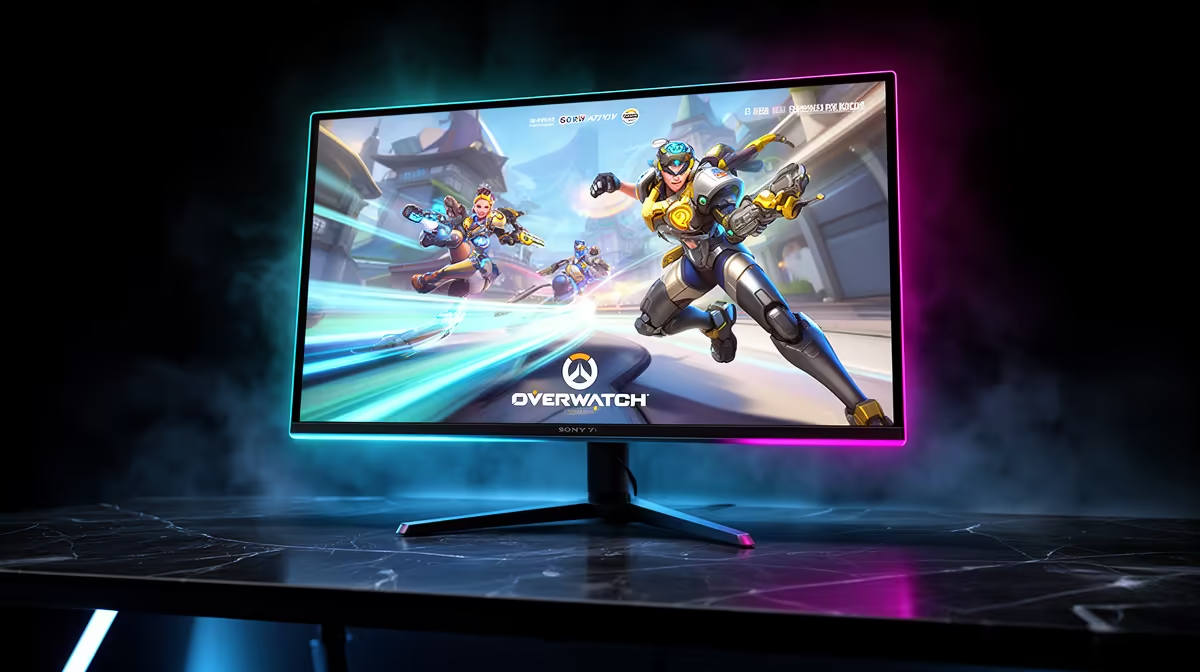
Overwatch can produce high frame rates, but the right panel is the one your PC feeds through real fights. Choosing an Overwatch 2 monitor refresh rate means matching sustained frames, motion clarity and budget.
Quick Answer
For Overwatch 2, choose a monitor refresh rate your PC can feed through the hardest fights. A stable 144Hz path is a strong starting target, while 240Hz or 360Hz earns its cost when the system sustains the frame delivery, the panel responds cleanly, and competitive play makes the smaller frame interval useful.
Compare exact resolutions, ports, and refresh modes in the PC monitor range, then inspect models players choose among monitor best sellers. No one refresh rate is an Evetech recommendation for every gaming PC.
Match refresh to measured frame delivery
Run Overwatch 2 at the intended resolution and settings. Record frame rate and frame times during busy team fights, not an empty training room. Use a repeatable replay or match segment where possible.
A 144Hz display refreshes about every 6.9 milliseconds, 240Hz about every 4.2 milliseconds, and 360Hz about every 2.8 milliseconds. Those intervals are display opportunities, not total input-lag promises.
If the PC spends much of a match below the chosen refresh, variable refresh can smooth supported fluctuations. A frame cap can improve consistency when uncontrolled peaks create heat or large swings.
Check motion quality beside the number
Pixel response needs to complete transitions within the refresh window without heavy ghosting or overshoot. Use reputable model-level response measurements across the refresh range.
An overdrive mode tuned for maximum refresh can overshoot badly at lower variable-refresh rates. Choose a balanced setting or a monitor with effective variable overdrive.
Input processing, resolution scaling, cable, GPU output, and monitor mode also affect the path. Use the supported DisplayPort or HDMI connection for the target combination.
Choose by player and budget
144Hz is a large move from 60Hz when the PC can supply it. 240Hz offers a smaller interval and can suit serious competitive play. 360Hz raises the performance, panel, port, and budget demands again.
Keep resolution and image quality in the decision. A stronger 1440p 240Hz experience may suit mixed games better than 1080p 360Hz, while an esports-focused player may prefer the latter.
Set the chosen refresh rate in Windows and the game, then confirm it through the monitor information display. A 240Hz panel left at 60Hz cannot deliver the intended experience. Use one supported sync and frame-cap strategy, and test for tearing, stutter, overshoot, and input feel.
FAQ
Is 144Hz enough for Overwatch 2?
It is a capable competitive target when the PC holds stable frame delivery and the panel has clean response. Higher refresh can help further under the right system and player.
Do I need 360 fps for a 360Hz monitor?
You can still benefit from lower-latency refresh opportunities below the maximum, but sustained high frame delivery makes fuller use of it. Variable refresh and response quality matter.
Should I lower graphics settings for refresh rate?
Reduce settings whose visual loss you accept and confirm the CPU and GPU bottleneck. Keep enough clarity to read players and effects. Test frame times in real fights.
Benchmark Overwatch 2 through busy fights, then choose the refresh tier whose panel response and ports match the frame rate your PC can sustain.