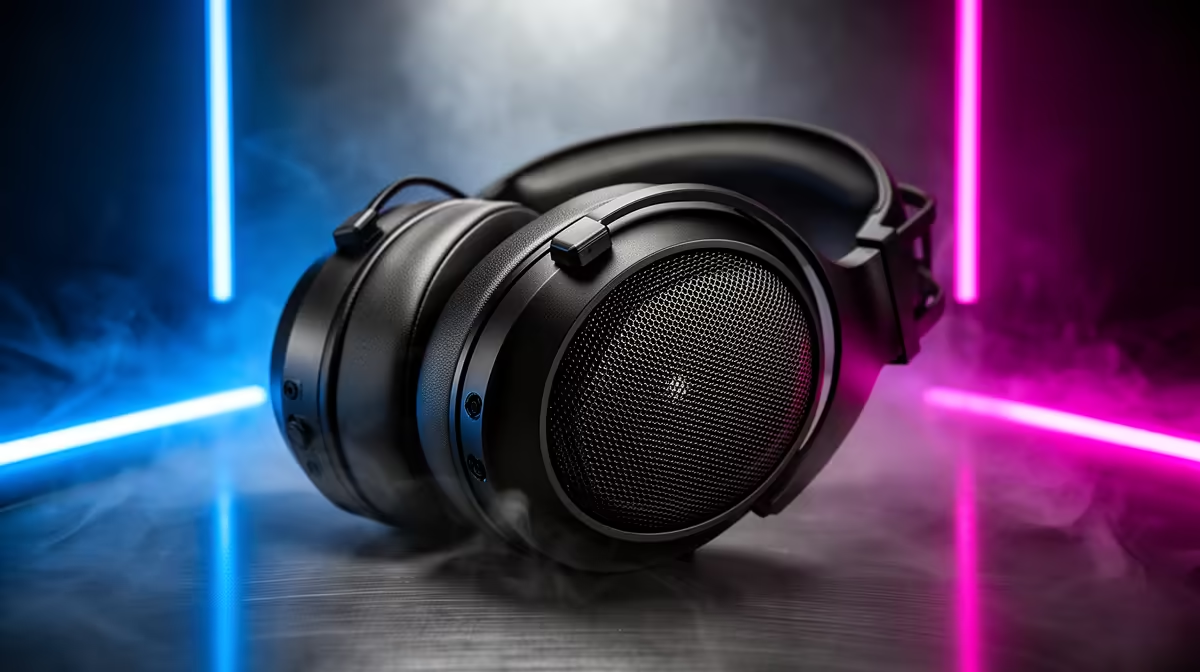
Open cups can create an airy positional presentation and let every room sound join the match. An open-back headset for FPS works best in a quiet space where leakage and isolation do not undermine the advantage.
Quick Answer
An open-back headset can be worth it for competitive FPS play in a quiet room because the open cups can create a spacious presentation and keep your ears cooler. It does not grant sharper positional hearing by design alone. Driver tuning, the game's audio, your hearing and the fit still decide whether footsteps are easier to place. Choose closed-back when nearby noise or sound leakage would distract you or someone sharing the room.
Open cups change the room relationship
An open-back earcup lets air and sound pass through the rear of the driver. You can hear more of the room, and people nearby can hear part of your game. That makes the design pleasant in a private, quiet space and frustrating beside a television, conversation or PC with loud fans.
Do a leakage test at your real playing volume. Ask someone to sit where a housemate would, then check whether gunfire and team chat carry. A night-time setup can fail this test even when the daytime room seems fine.
Imaging must be tested in your game
A wide soundstage and accurate imaging are different qualities. Width describes perceived space. Imaging describes how well a sound occupies a direction within it. An exaggerated stage can place effects far away without making front, rear or height clear.
Load one familiar training area. Turn off music and compare footsteps at fixed positions. Keep volume matched and use one spatial-audio path. If the game provides its own headphone processing, test that before adding operating-system or headset surround.
Frequency balance matters. Heavy bass can cover quiet movement, while a sharp treble peak can make every shot tiring. Use small EQ changes and stop when the mix loses body.
Comfort and power still count
Open pads often feel cooler, but clamp and pad depth remain personal. Check hair, glasses and jaw pressure over a full session. Some open headphones are easy to drive from a controller or motherboard; others need more voltage for your preferred volume. Sensitivity and impedance together provide a starting point, while an actual source test gives the answer.
A boom microphone can work with an open headset. Remember that leaked game sound may reach a sensitive mic at high volume. Position the mic close, reduce gain and test with your loudest match.
Compare available designs in the gaming headset deals and use the headset best-seller range to build a closed-back control for your test.
FAQ
Do open-back headsets leak much sound?
Yes, though the amount changes with model and volume. Test at night-time listening level if you share the room.
Are they poor in a noisy room?
Outside sound enters with little isolation, so fans, voices and traffic can mask game cues.
Do I need a headphone amplifier?
It depends on the headset sensitivity, impedance, source and desired volume. Check the exact pairing before adding an amp.
Test one open and one closed headset in your real room, using matched volume and the same FPS audio scene.