


650W PSU Planning for RTX 5090 Builds in SA
650W for RTX 5090 needs a full-build check, not a simple yes. Review GPU guidance, CPU draw, transient load, connectors, PSU quality, and upgrade plans before deciding.
Read moreA portable LED light for gaming and recording needs adjustable brightness, a wide colour temperature range, and a built-in battery. Look for at least 95 CRI, a diffuser, and USB-C charging to keep skin tones natural on stream.
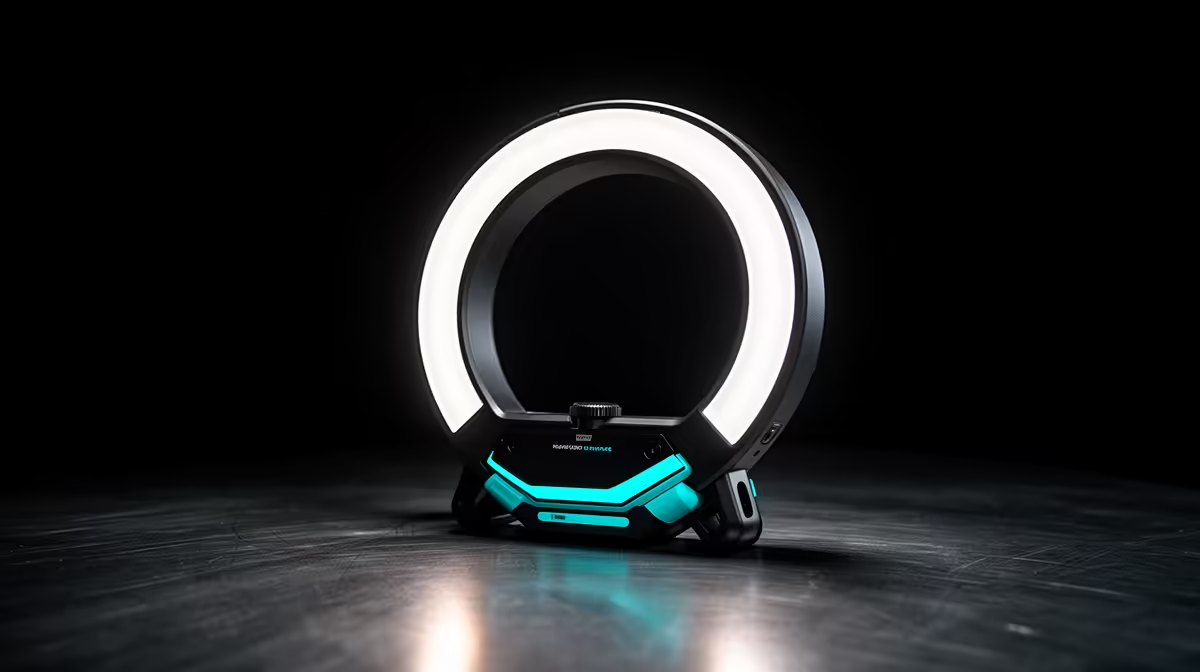
A portable LED light that suits gaming and recording sessions needs to do more than simply turn on. The panel will travel, adjust, and perform under mixed lighting conditions, so the spec list matters in ways that do not apply to a fixed studio fixture. Portable LED lights for gaming and recording come in a wide range of qualities, and three or four core features separate the panels that perform from the ones that frustrate you mid-stream.
Look for 95 CRI or higher, a colour temperature range from at least 3200K to 5600K, a built-in USB-C rechargeable battery, and a frosted diffuser. These four specs cover accurate skin tones, flexible scene matching, portable power, and flattering light quality.
Colour Rendering Index, abbreviated CRI, measures how accurately a light source reproduces colours compared to natural daylight. Most cheap LED panels sit at 80 to 85, which sounds acceptable until you see the result: skin tones on camera look slightly orange, green-shifted, or washed out.
For gaming streams and recording where your face is a primary subject, aim for 95 CRI or above. At that level, the light renders skin tones, fabric colours, and product finishes accurately on camera without any corrective grading needed in post. This is not a premium-only feature; many mid-range portable panels in the R900 to R2,000 range now offer 95+ CRI as standard.
A portable panel with a fixed colour temperature is a compromise every time you use it in a room where the ambient light does not match. Fixed daylight panels at 6500K look cold and clinical next to warm room lamps at 2700K. Fixed warm panels look muddy against window light or a second monitor at a cooler temperature.
A panel with adjustable colour temperature from around 2700K through to 6500K gives you the range to bring your key light into harmony with whatever other sources are already running. Set it warmer for evening streams where room lamps are on, cooler for daytime sessions with natural window light as the secondary source. That temperature alignment is the difference between a face that blends naturally into the scene and one that looks like it is lit from a different room.
Bi-colour panels mix two rows of LED chips at different temperatures electronically via a dial or app, with no gels or physical adjustments required.
A panel that needs mains power is not truly portable. Rechargeable built-in batteries transform a portable LED from a compact fixture into a light you can take anywhere: a second room, an event, a location shoot. For gaming setups with limited power points near the desk, battery operation also removes one cable from the surface.
A well-built portable panel runs for 2 to 4 hours at half brightness on a full charge, which is realistic for most streaming sessions. USB-C charging is the current standard worth insisting on; the same cable that charges your phone also charges the light panel.
Check whether the panel can run while tethered to a USB-C power bank or mains adapter, which removes the battery ceiling entirely for longer sessions.
A bare LED panel without diffusion casts hard-edged shadows and creates specular highlights on skin that read poorly on camera. A frosted diffuser built into the panel face softens the output into a wrap that flatters from a wider range of angles.
Panel size for portable use typically runs from about 15cm square up to 30cm square. Larger panels produce softer light at the same distance, because a physically larger source wraps around the subject more. A 20cm panel is a practical size for a portable gaming or recording light: small enough to fit in a bag and large enough to light a face cleanly from 60 to 80cm away.
Mounting is standardised across most panels: a 1/4-inch thread on the base or rear fits any standard tripod, ball head, or clamp arm.
Aim for 95 CRI or above. Below 90, skin tones and fabric colours pick up a slight green or orange cast under the camera that is difficult to correct without post-production colour grading. Panels at 95+ CRI reproduce colours accurately straight from the source.
A bi-colour panel lets you align your key light with whatever other sources are active in the scene. Set a 2700K to 6500K panel to match your room lamps or daylight and the result looks natural on camera. A fixed-temperature panel creates a colour mismatch that the camera resolves as an oddly lit face.
Most quality panels run 2 to 4 hours at around half brightness on a full charge. Full brightness shortens battery life significantly. Look for panels with USB-C charging that also run while tethered to a power bank or mains adapter for longer sessions.
Yes. A diffuser converts the panel's point sources into a broader, softer output that wraps around the face and softens shadow edges. Without diffusion, a small LED panel casts hard shadows and creates bright hot spots on skin. The difference in the camera image is clear.
Yes. The 1/4-inch thread is universal across tripods, clamp arms, ball heads, and most flexible mounts. A portable LED panel with this thread mounts on any standard camera support, so you are not buying proprietary mounting hardware for each different light.
Ready to light your stream or recording session from anywhere? Browse portable LED panels and lighting accessories chosen for South African gamers and content creators who need flexible, accurate light on or off the desk.
Aim for 95 CRI or above. Below 90, skin tones and fabric colours pick up a slight green or orange cast under the camera that is difficult to correct without post-production colour grading. Panels at 95+ CRI reproduce colours accurately straight from the source.
A bi-colour panel lets you align your key light with whatever other sources are active in the scene. Set a 2700K to 6500K panel to match your room lamps or daylight and the result looks natural on camera. A fixed-temperature panel creates a colour mismatch that the camera resolves as an oddly lit face.
Most quality panels run 2 to 4 hours at around half brightness on a full charge. Full brightness shortens battery life significantly. Look for panels with USB-C charging that also run while tethered to a power bank or mains adapter for longer sessions.
Yes. A diffuser converts the panel's point sources into a broader, softer output that wraps around the face and softens shadow edges. Without diffusion, a small LED panel casts hard shadows and creates bright hot spots on skin. The difference in the camera image is clear.
Yes. The 1/4-inch thread is universal across tripods, clamp arms, ball heads, and most flexible mounts. A portable LED panel with this thread mounts on any standard camera support, so you are not buying proprietary mounting hardware for each different light.
650W for RTX 5090 needs a full-build check, not a simple yes. Review GPU guidance, CPU draw, transient load, connectors, PSU quality, and upgrade plans before deciding.
Read more
How to fix FPS drops Windows 11 RX 9070 XT starts with GPU drivers, overlays, power plans, and frame pacing checks. For SA gaming PCs, verify chipset updates, HAGS, refresh rate, thermals, and per-game graphics settings.
Read more
How to fix FPS drops on X870E motherboard starts with BIOS, chipset drivers, PCIe settings, and memory stability. SA gamers can check EXPO, resize BAR, thermals, display refresh, and background apps before replacing components.
Read more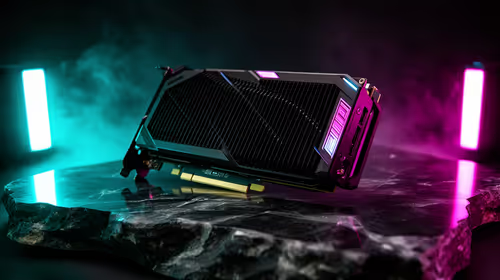
RTX 5060 is popular with SA students because it can fit gaming, coursework, and creative app needs in one setup. Compare total system price, cooling, RAM, storage, and screen quality before picking a desktop or laptop.
Read more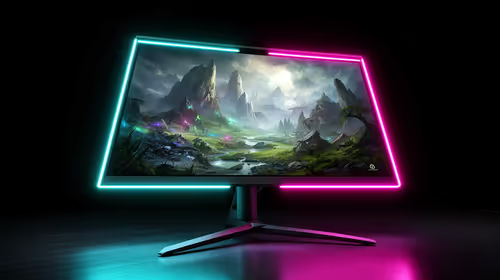
1440p is the sweet spot for SA gamers because it balances sharp visuals, high frame rates, and GPU cost better than 4K. It is a practical monitor target for players who want smoother upgrades without the heavier hardware demands of 4K.
Read more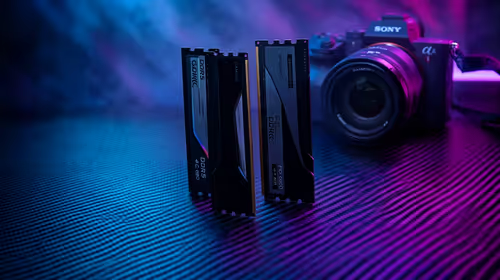
RAM pricing for Midrand gamers can shift with exchange rates, supply, specs, and model tier. Treat the title as a buying prompt, then compare SA warranty, timing, and build priorities.
Read more
From 1 October 2026, WhatsApp Business Platform service replies in South Africa are expected to cost about $0.0076, or 12 cents, per delivered message.
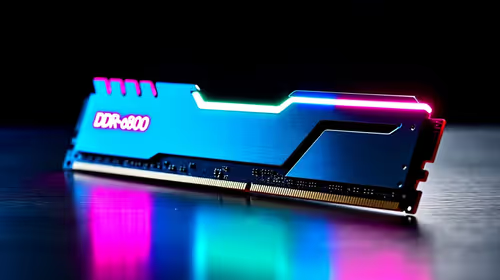
DDR5-8000 RAM Kits pros and cons depend on the build, budget, and workload. Weigh gaming needs, platform fit, power, cooling, warranty support, and South African pricing context before shortlisting it.
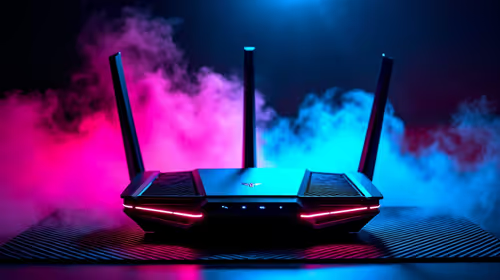
Wi-Fi 6E vs Wi-Fi 6 depends on AAA single-player gaming needs, platform limits, and budget fit. Compare compatibility, latency, upgrade path, and real setup constraints before choosing for an SA build.
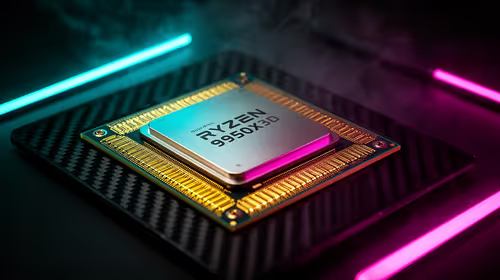
Ryzen 9 9950X3D dead pixel checks should isolate the panel first. Run colour fills, inspect the monitor menu, test another cable or input, and capture proof before linking it to the SA CPU upgrade.
YouTube will count public views from the first frame across video formats from 24 August, while earnings and eligibility remain tied to engaged viewing.
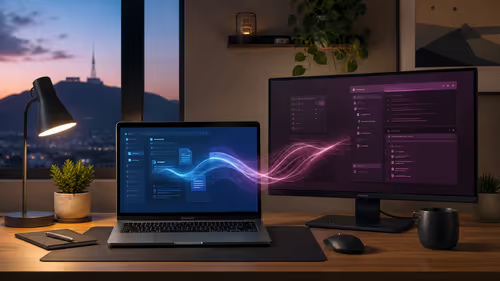
Canonical expects Ubuntu on WSL users to outnumber native Ubuntu desktop users before the end of 2026. The software is open source and runs inside supported Windows PCs.
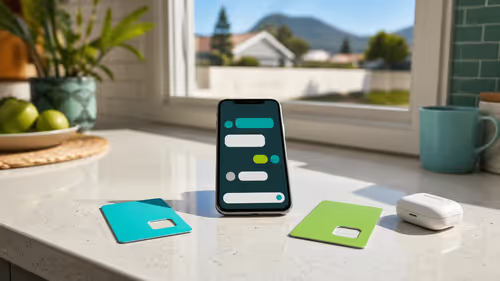
Telkom's daily bundles pair WhatsApp access with 10 all-network voice minutes. The R15 option includes 300MB, while the R17 option uses a fair-use threshold.
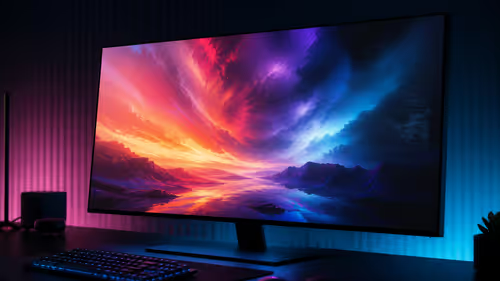
A 10,000-hour test found similar image retention across older and newer OLED TVs, while newer panels were brighter and more efficient. Local OLED monitors started at R9,999.

Windows 11 update KB5121003 is linked to crashes in several multiplayer games on versions 24H2 and 25H2. Check the build, report the fault and avoid risky file or update changes unless the problem is confirmed on your PC.

Comsol's standalone 5G network covers about one million Gauteng homes and starts commercial ISP service in September. Early packages range from R275 to R875 a month, but coverage and fair-use rules still decide the real value.

Sennheiser's Momentum True Wireless 5 adds user-replaceable batteries, 12-hour playback and a $299.95 launch price. There is no confirmed South African date, so compare longevity with live earbuds from R199 to R2,999.

AVerMedia's GC531 and GC535 are professional HDMI capture devices for continuous streaming, with RGB24 capture up to 2K30 and 4K30. South African creators should compare them with live 4K capture cards from R2,099.