Quick Answer
Pay more for noise rejection if you record in a shared flat or near street traffic; pay for a boom arm if you want clean desk space and consistent mic distance. A good cardioid USB mic with strong off-axis rejection runs about R2,800, and a sturdy boom arm adds roughly R700.
When Noise Rejection Earns The Premium
A tight cardioid or hypercardioid pattern with solid off-axis rejection is worth it when your room is noisy: housemates, a fan, or a busy road outside. It keeps keyboard clatter and background chatter out of your stream without aggressive software gating that makes you sound robotic. If your space is already quiet and treated, the extra rejection adds little.
If you can only afford one upgrade now, fix whichever problem your last few recordings actually showed: background bleed means spend on rejection, while uneven levels and a cluttered desk mean the boom arm earns its place first.
When A Boom Arm Is The Better Buy
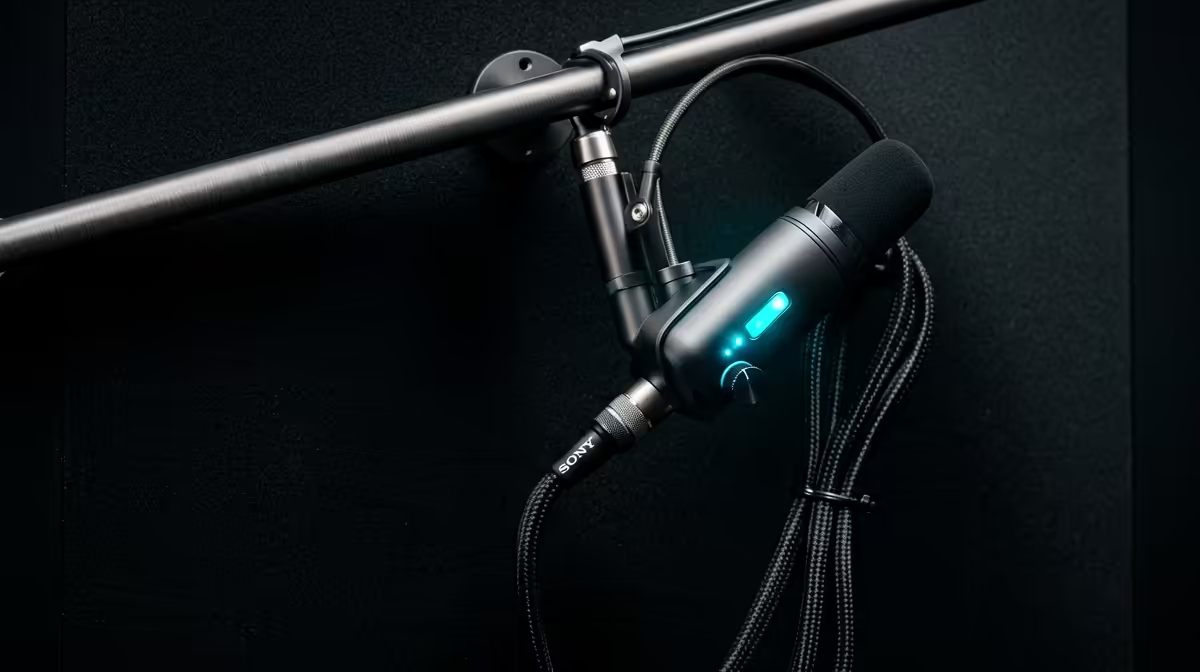
A boom arm pays off when desk space is tight or you move around while talking. It holds the mic at a fixed distance so your level stays even, frees the desktop for keyboard and mouse, and isolates the capsule from desk thumps when paired with a shock mount. For static, single-position recording, a simple desk stand at R250 may be enough.
FAQ
Does noise rejection replace room treatment?
No; it reduces, not eliminates, background noise. A tight pattern plus a cheap foam panel behind you beats relying on rejection alone.
Is a boom arm necessary for a good stream?
Not necessary, but it keeps mic distance consistent and clears your desk, which most streamers find worth the R700 once they try it.
Can software gating do the same job for free?
Gating helps but can clip the start of words and sound unnatural. Hardware rejection from a tight pattern gives cleaner results with less processing.
room is noisy, spend on a tight cardioid pattern first; if your desk is cramped, a boom arm and shock mount deliver the bigger day-to-day improvement.