Harsh plosive popping in a high-fidelity microphone recording is not a mystery. A hard "p" or "b" fires a fast jet of air at the diaphragm, the capsule reads the pressure spike as a loud low-frequency thump, and the recording captures that thump sitting right underneath the word. Solving plosive audio problems with an integrated pop filter works well, but the filter is not the complete answer on its own. Angle and distance finish what the mesh starts.
Quick Answer
An integrated pop filter removes the bulk of plosive air bursts from p and b sounds by diffusing the jet before it strikes the diaphragm. Combine the filter with a 15-centimetre recording distance and a 20 to 30-degree off-axis angle for a clean result, since no mesh alone handles every speaking style.
🔧 What the Integrated Filter Removes
A plosive consonant momentarily seals the airflow in the mouth and then releases it as a concentrated burst. That burst travels forward as a column of fast-moving air. The diaphragm responds to changes in air pressure, so when the air column hits it, the recording registers a sharp pressure spike below 200 Hz.
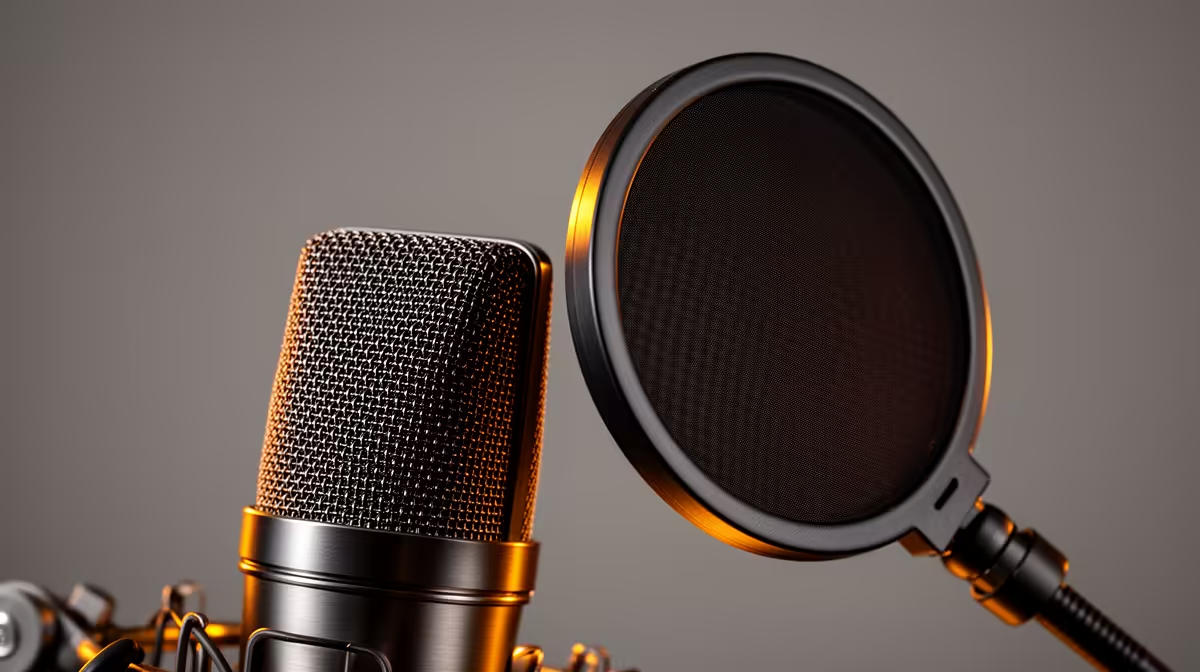
An integrated pop filter sits between your mouth and the capsule and breaks that column up. Fine mesh at a specific porosity scatters the directed burst into slower, multi-directional airflow. The acoustic pressure wave of the sound still passes through. The result is that the consonant lands in the recording without the underlying thump that made it harsh.
At normal streaming and podcasting distances of around 15 centimetres, a quality integrated filter eliminates the majority of plosive impact. The residual pop that remains is where angle and distance take over.
⚡ Off-Axis Angle: The Technique That Finishes the Job
Speaking directly into the capsule aims plosive air straight at the diaphragm. Even a good integrated filter has a maximum air volume it can scatter. Speaking at an angle redirects that burst so it travels past the capsule edge instead.
A 20 to 30-degree rotation off the straight-ahead axis is enough. You still face the mic and the cardioid pickup zone still captures full signal. The plosive air shifts its path by enough to clear the capsule. Combined with the filter, the result is a clean recording with no perceptible thump even on direct plosive words.
Maintaining this angle consistently matters across a session. A habit of slight rotation becomes automatic after a few sessions. If you record at a desk with a monitor directly ahead, angling the mic slightly left or right and then turning your head to match gives the natural off-axis position without any awkwardness.
🎯 Distance: The Third Layer of Plosive Control
Recording distance is the variable most people set once and never revisit. At 10 centimetres, the air burst arrives with enough force to challenge even a good integrated filter. At 20 centimetres, the burst has dispersed enough, but the voice starts pulling in room noise.
Fifteen centimetres is the practical middle point. It delivers proximity warmth while giving the air burst enough distance to partially disperse before reaching the mesh. Mark the position on your boom arm once you find the sweet spot.
Frequently Asked Questions
What physically causes harsh plosive popping in a recording?
A fast jet of air expelled during p and b consonants strikes the diaphragm as a pressure spike. The capsule records both the acoustic wave and the physical air impact together, producing a low-frequency thump below 200 Hz under the consonant.
How much does the built-in filter reduce popping without additional technique?
At normal speaking distances it removes the large majority of plosive impact. Pairing the filter with off-axis angle and a 15-centimetre distance removes residual thump and delivers a clean consonant.
Does a 30-degree off-axis angle change how the mic picks up the voice?
Not significantly. Cardioid polar patterns have a broad front lobe that extends well beyond a 30-degree offset. The plosive air, being a directed burst, changes trajectory much more dramatically than the sound does.
What recording distance works best to prevent plosive problems?
About 15 centimetres. Closer than 10 centimetres overloads most integrated filters. Further than 25 centimetres reduces low-end warmth and pulls in more room noise.
Is it worth trying to fix plosives in editing rather than at the source?
Possible but not preferable. High-pass filtering removes warmth; de-essing or volume automation leaves processing artefacts. Capturing clean audio at the source preserves the natural character of the voice and saves editing time entirely.
Ready to record plosive-free audio from the first take? Browse the condenser microphone range at Evetech and find models with integrated pop filters built for clean vocal recording.