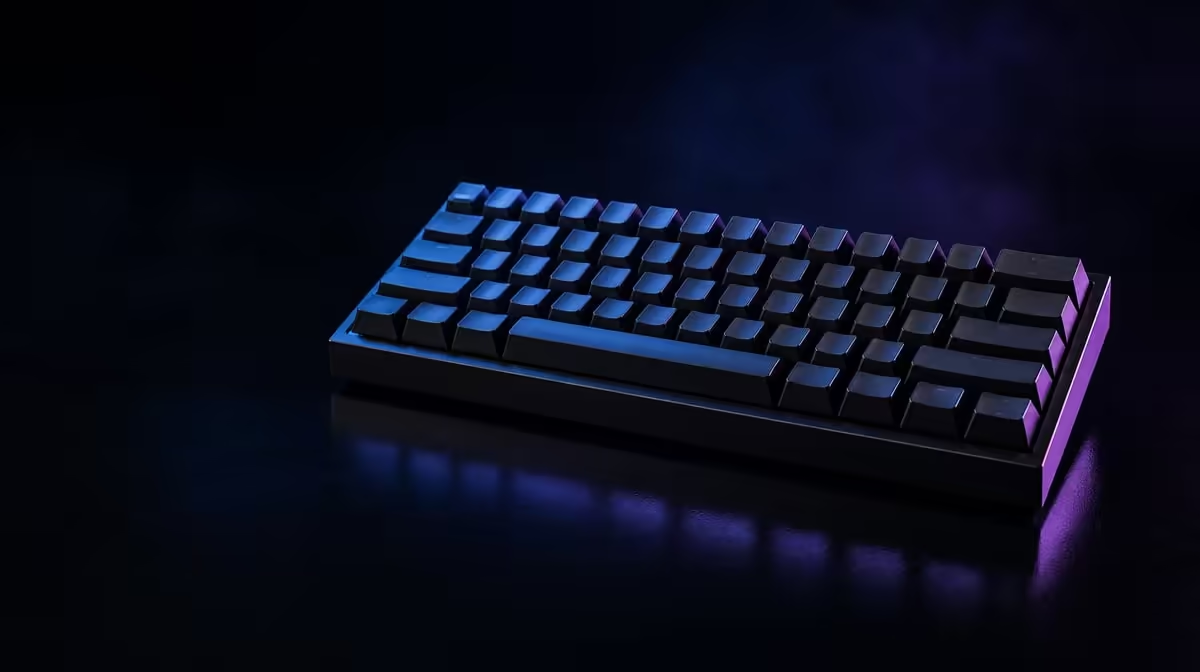
The keyboard must fit the desk and the user before specialised features can help. Choosing a gaming keyboard for your complete setup starts with required keys, mouse room, switch control, operating support and the other devices already occupying the workspace.
Quick Answer
Measure the usable desk, choose the smallest layout that retains essential keys and test switch feel through games and typing. Then assess PBT caps, hot-swap, RGB software or high polling only when each feature fits the complete PC, room and ownership plan.
📐 Fit the real desk
Record usable width and depth with the monitor stand, speakers, microphone, wrist support and mouse pad in place. An empty tabletop overstates available room.
Choose among full-size, 98%, TKL or another layout by keys used each week. A number pad can serve work or bindings; unused, it consumes mouse space.
Check exact key positions rather than trusting percentage labels. Compact navigation clusters, shortened Shift keys and function layers can change familiar shortcuts.
Place the alphanumeric section with the typing shoulder and rehearse the widest mouse sweep. Case width, keyboard angle and cable exit all affect the final reach.
Include chair height and wrist position. A keyboard that fits horizontally can still be uncomfortable when its front edge or feet create a poor hand angle.
Mark the candidate footprint with paper before purchase. It cannot reproduce feel, but it exposes collisions with the mouse, pad and monitor stand.
Study current layouts in Evetech's Logitech gaming-keyboard range.
🎚️ Match feel to mixed use
Linear, tactile and clicky categories describe broad feedback. Force, travel, return and sound vary within them, so test the exact board where possible.
Run held movement, rapid taps, modifiers and a realistic typing passage. Note accidental presses, fatigue and whether click noise suits calls or a shared room.
Test after the hands are warm and through a longer session. A mechanism that feels exciting for two minutes may become tiring during work.
Include large stabilised keys. Space, Shift and Enter can sound and return differently from ordinary letters, affecting the complete impression.
PBT caps can add durable texture, while legend method and manufacturing still matter. Confirm stem, layout and lighting compatibility before planning replacements.
Judge legends from the normal seated angle and room light. A cap can look clear in a product image but difficult to read on the actual desk.
Compare the complete gaming-keyboard category, keeping switch comfort ahead of decorative extras.
🧩 Add features with a purpose
Hot-swap can support compatible switch repair or experiments, but socket format, careful tools and warranty terms need checking.
The board should still be a good purchase with its original switches. Flexibility cannot rescue poor layout, rough stabilisers or unsuitable software.
Software matters when profiles, assignments or lighting are used. Confirm the exact keyboard works in the intended operating environment and retains a clear default.
Create one recovery profile with ordinary mappings. Experimental macros and lighting should be reversible without remembering a complicated sequence.
Very high polling deserves a controlled game test with frame times. A stable lower rate can be more practical than a maximum that adds inconsistency.
Use the same USB path and repeatable drill for comparisons. Report frequency cannot compensate for low game frames or slow display response.
Finish with a complete-setup rehearsal: start the PC, load the profile, play, type and return to desktop. The right keyboard makes that routine predictable.
Repeat it after a week. Early excitement fades, allowing desk fit, switch fatigue and profile reliability to decide the final judgement.
Use Evetech's accessory best-seller page to consider the wider desk and check current availability for the final shortlist.
Frequently Asked Questions
Which decision should come before switch colour or RGB?
Choose the required layout and confirm its physical fit on the occupied desk.
How should switch feel be matched to mixed use?
Test real gaming actions and a sustained typing block, noting control, force, fatigue and noise.
When do PBT keycaps add practical value?
They can add texture and resistance to shine when the cap set also fits the stems and layout.
Who benefits most from hot-swappable sockets?
Users planning careful compatible switch repair or a defined feel experiment gain the clearest value.
Why should keyboard software be checked before purchase?
Profiles and assignments provide little benefit when the utility does not support the exact board and system.
How can mouse space influence keyboard selection?
A narrower layout can bring the mouse inward and leave more room for broad movement.
What should competitive players test beyond polling rate?
Check registration, frame stability, switch control, game timing and the complete display-response path.
Building the keyboard into a complete gaming desk? Compare Evetech gaming keyboards only after measuring the layout, mouse sweep and software environment together.