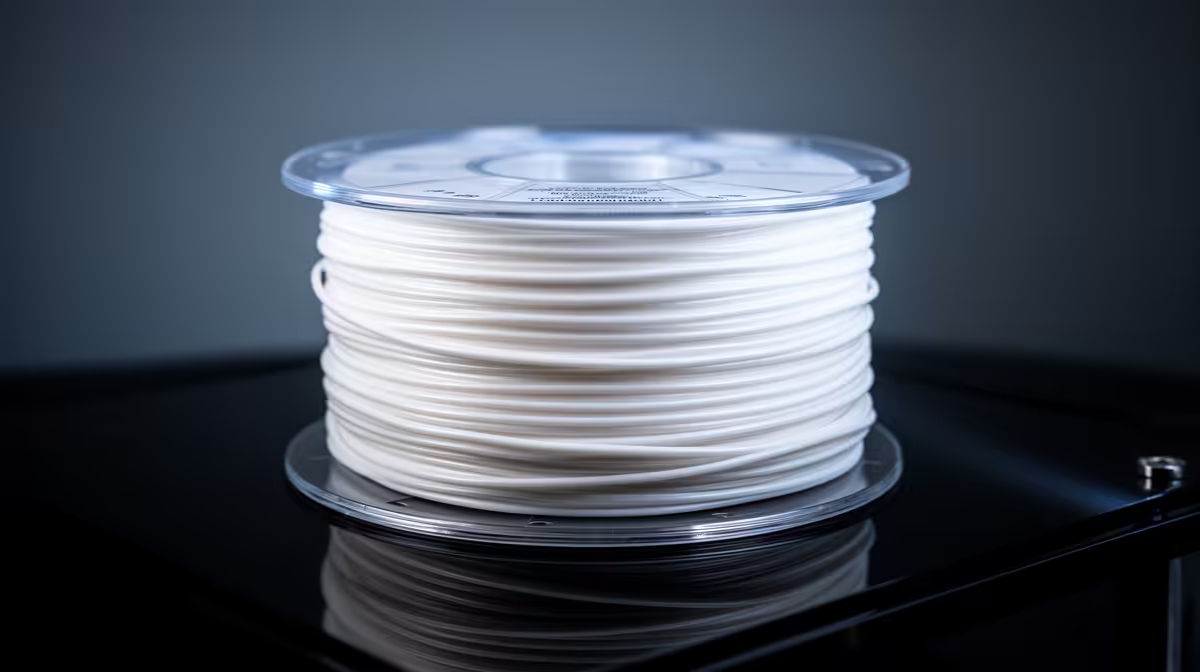
When 1kg PLA filament properly to reduce moisture and print issues is the problem, the right answer usually sits in fit, setup and repeatability. Good FDM results still come from dry filament, the right diameter, a sensible temperature range and a first layer that actually holds for 1kg PLA filament properly to reduce moisture and print issues.
Quick Answer
For 1kg PLA filament properly to reduce moisture and print issues, check 1.75mm feed compatibility, nozzle heat in the 190-230 C range and bed grip. PLA prints improve when the spool stays dry and the first small test confirms the profile for 1kg PLA filament properly to reduce moisture and print issues.
The Details That Matter
The spool and the slicer profile need to agree for 1kg PLA filament properly to reduce moisture and print issues. Confirm 1.75mm diameter, test 190-230 C range and watch bed adhesion before a long print for 1kg PLA filament properly to reduce moisture and print issues. A calibration cube or short sample can expose feeding and cooling issues early for 1kg PLA filament properly to reduce moisture and print issues.
Final Buying Checks
For 1kg PLA filament properly to reduce moisture and print issues, shortlist the products that satisfy the must-have checks first. Once feed compatibility and the 190-230 C nozzle range are right, extras can become tie-breakers instead of distractions for 1kg PLA filament properly to reduce moisture and print issues.
How To Prevent PLA Frustration
Do not blame the printer first when 1kg PLA filament properly to reduce moisture and print issues goes wrong. Damp material, poor first-layer grip and rushed temperature changes can create rough surfaces or weak parts for 1kg PLA filament properly to reduce moisture and print issues.
Local Buying Notes
For South African makers, 1kg PLA filament properly to reduce moisture and print issues should be planned around material availability, storage and small test runs. Track feed compatibility and the 190-230 C nozzle range in a simple note so the next print is easier to diagnose for 1kg PLA filament properly to reduce moisture and print issues.
FAQ
How should a 1KG spool be stored?
If Storing 1KG PLA Filament Properly still feels uncertain, test comfort before judging the styling. Watch waste allowance, then decide whether the product deserves a longer session.
What ruins stored filament?
Buyers often miss sealed storage. That detail can affect comfort, print quality, viewing setup or repeat reliability in this 1kg PLA filament properly to reduce moisture and print decision.
What is the best storage routine?
For this filament, the useful check is whether 1kg supports upgrade planning in normal use. If both behave well, the shortlist is already much safer for 1kg PLA filament properly to reduce moisture and print.
before cosmetic choices for 1kg PLA filament properly to reduce moisture and print issues. Confirm 1KG quantity and waste allowance before extras influence the shortlist.