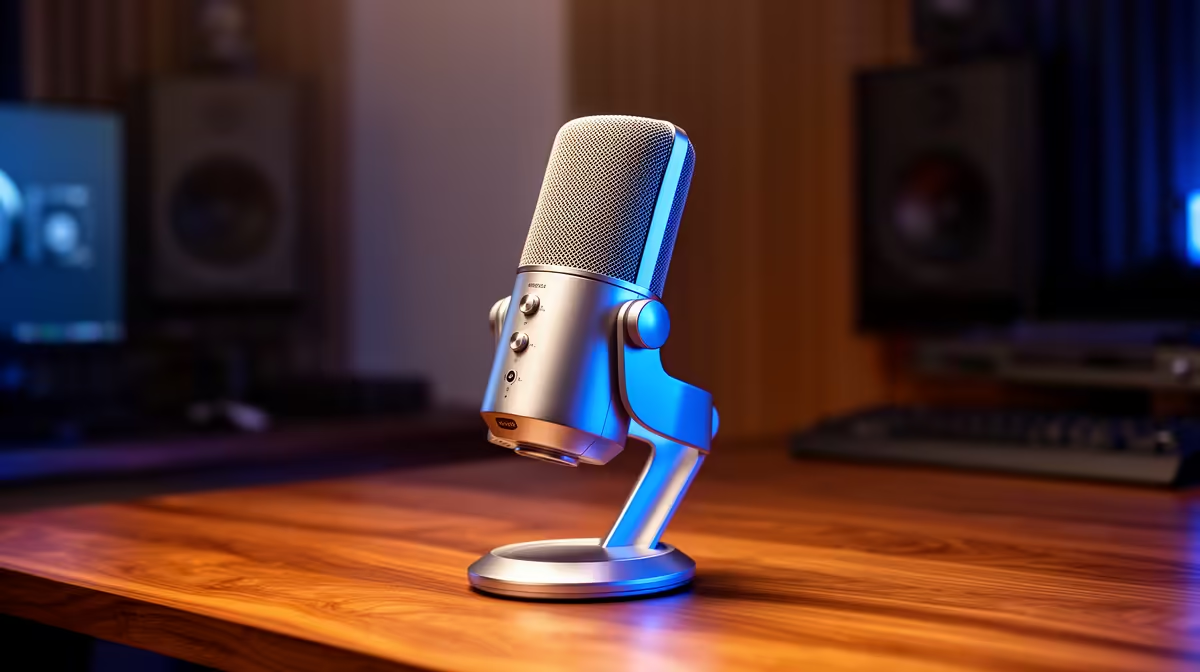
Quick Answer
A USB cardioid mic is the right call for most parents buying for a teen: it rejects room noise and beats any built-in laptop mic. The FIFINE K669 sits near R900, the HyperX SoloCast around R1,200, and the HyperX QuadCast S near R2,200. Skip XLR until you need a true studio upgrade path.
USB Beats XLR Until It Doesn't
USB mics plug straight in with no interface and suit parents buying for a teen who want one cable and clean voice now. The FIFINE K669 (R900) and HyperX SoloCast (R1,200) are honest entry picks. XLR mics like the Shure MV7 (~R5,500) need a R1,500+ interface but open a real upgrade path. Start USB; move to XLR only when a second mic or a mixer enters the plan.
When a Boom Arm Earns Its Place
A boom arm clamps the mic off your desk, frees space and cuts keyboard thud picked up through the surface. It is worth the R600-R1,200 outlay for parents buying for a teen who type while talking or have a small desk. Match the thread: most mics use 5/8" while some need a 3/8" adapter, and the Rode PSA1+ or Elgato Wave Mic Arm both ship with the right hardware. Check your desk edge is under 60mm thick for the clamp to bite.
mic to cardioid, position it a fist-width from your mouth, and trim gain so your voice peaks near -12dB to keep res noise out of the stream.
FAQ
Is a USB mic good enough for streaming on Twitch?
Yes. A cardioid USB mic like the HyperX SoloCast (~R1,200) delivers clear, broadcast-ready voice straight into OBS or Streamlabs with no interface. XLR only pays off once you add a second mic or a mixer.
Do I need a boom arm with my microphone?
Not to start, but it helps. A R600-R1,200 arm lifts the mic off the desk, frees space and cuts typing noise. Confirm the thread matches and your desk edge is under 60mm thick.
What is the cheapest decent streaming mic at Evetech?
The FIFINE K669 sits near R900 and clearly beats any laptop mic. Step up to a HyperX SoloCast (R1,200) or QuadCast S (R2,200) for better noise rejection and a tap-to-mute control.