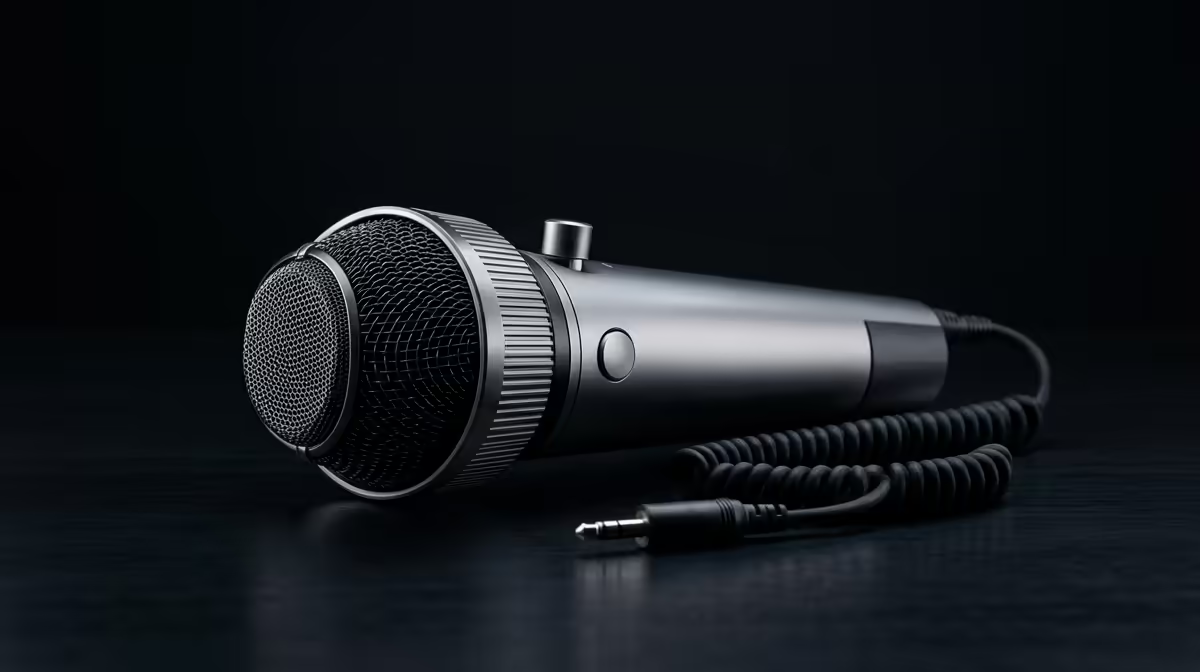
For a space-limited setup, noise rejection in a streaming mic matters because a small room reflects sound and sits close to household noise, so a tight pickup keeps recordings clean. It is worth paying for once you cannot move the mic away from walls or noise.
Quick Answer
Noise rejection is worth paying for on a tight desk: a compact USB cardioid mic runs R1,200 to R2,500 at Evetech and rejects side and rear sound that a small reflective room would otherwise capture. For a quiet, treated corner a basic mic works, but in a cramped space the cardioid pattern plus software suppression keeps your stream clean without rearranging the room.
Why small rooms need tight pickup
A cramped room reflects sound off nearby walls and sits close to household noise, so an omnidirectional mic captures all of it. A cardioid USB mic at R1,200 to R2,500 hears mainly what is in front, rejecting the rest, which is exactly what a small space needs. Running at 48kHz/24-bit on a compact boom arm, it keeps the desk clear while a noise gate in your software mutes the channel between phrases to cut residual room hum.
Tame a tight space without moving the mic
Mount the mic on a low-profile arm 15 to 20cm away and speak across, not into, the capsule. A pop filter handles plosives in a reflective room better than EQ. Soft surfaces nearby, a curtain, rug or even a hanging duvet, cut echo cheaply. Avoid multi-pattern mics here; you pay for omni and figure-8 modes a small room never uses. Cardioid plus light treatment is the space-efficient way to sound clean.
FAQ
Does a streaming mic need noise rejection in a small room?
Yes. A cramped room reflects sound and sits near household noise, so a cardioid mic that rejects side and rear pickup keeps recordings clean. Compact cardioid USB mics run R1,200 to R2,500 at Evetech.
How do I reduce echo in a small mic setup?
Add soft surfaces near the mic, a curtain, rug or hanging duvet, and use a pop filter. A cardioid pattern plus light treatment tames a reflective small room without needing to move the mic away from walls.
Should I buy a multi-pattern mic for a small desk?
No. Multi-pattern mics cost more for omni and figure-8 modes a small room never uses. A single cardioid mic at R1,200 to R2,500 is cheaper and better suited to a tight, reflective space.
tight desk, a cardioid mic on a boom arm plus a noise gate and one soft surface nearby beats moving furniture; the pattern rejects the household noise a small reflective room would otherwise capture.