Quick Answer
Start the shortlist with compatibility, comfort, price, warranty and one measurable performance target. For quiet late-night gaming, use ASUS ROG Ally, Lenovo Legion Go or MSI Claw as the reference point, keep the spend around R11,000 to R22,000, and check for 40 to 60fps at 720p or 900p in lighter PC games. The safer SA buy is the one that fits your device, room and warranty path before adding cosmetic extras.
Compatibility first
Start with the failure you feel every week. For quiet late-night gaming, that usually means thin walls and sleeping family, so the handheld gaming PC should reduce friction without adding cable mess or a fragile part to carry.
Check 16GB RAM, NVMe storage and a 7-inch to 8.8-inch 120Hz class screen before comparing colours or premium labels. If your current device cannot use that spec, the expensive option will behave like a basic one.
Specs to compare
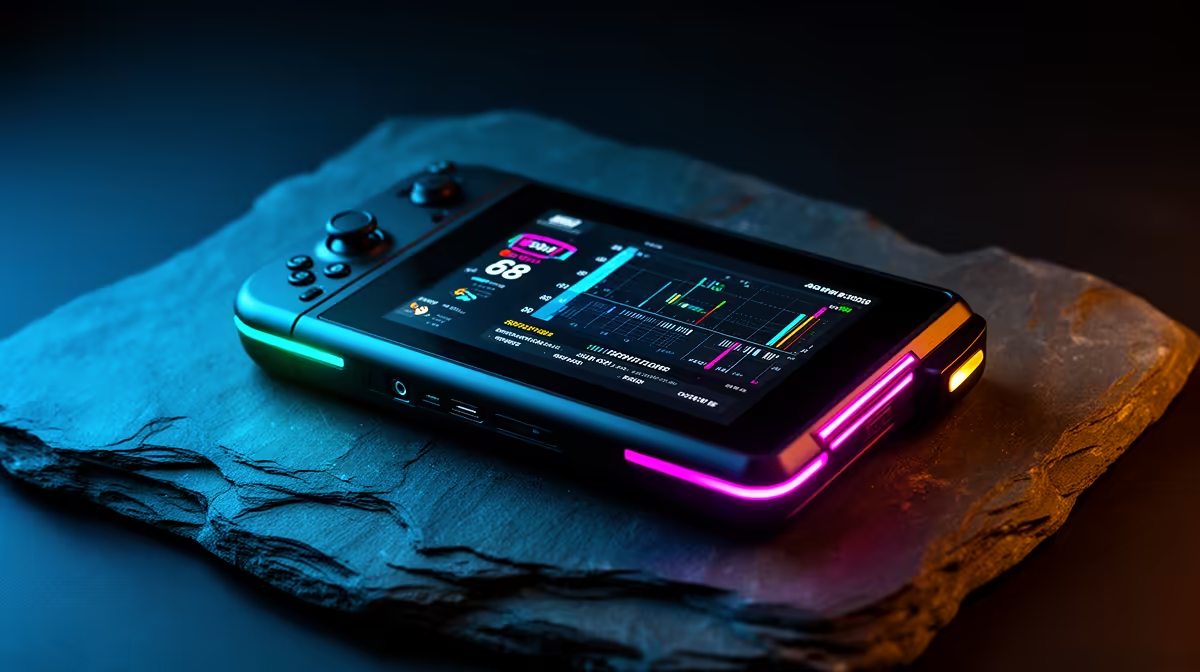
The useful middle ground is where comfort, thermals, SSD space, charger size and controller mapping line up. Named options such as ASUS ROG Ally, Lenovo Legion Go or MSI Claw give you a concrete level to compare against instead of vague upgrade language.
Keep pricing broad because live stock moves. A R11,000 to R22,000 band is enough to separate entry, balanced and premium choices, and the upgrade should clearly improve 40 to 60fps at 720p or 900p in lighter PC games.
Room fit
Map the gear to the room before checkout. A Cape Town residence desk, a Joburg family gaming room and a private digs setup can need different cable lengths, noise levels and storage habits.
Also check return terms, local warranty support and replaceable wear parts. These details beat a small spec win when the setup is used daily.
FAQ
What price range is sensible for handheld gaming PCs?
For most SA buyers, R11,000 to R22,000 is the practical band before specialist needs take over. Spend near the lower end for occasional use and move up only when comfort matters every week.
Which spec should I check first on a handheld gaming PC?
Check 16GB RAM, NVMe storage and a 7-inch to 8.8-inch 120Hz class screen before cosmetic features. That single check prevents most mismatch problems for quiet late-night gaming.
What is the biggest buying mistake with handheld gaming PCs?
The mistake is paying for extras while ignoring small batteries, noisy fans, cramped storage and fragile sticks. Confirm compatibility, warranty and the physical setup before choosing the nicer-looking option.
Compare handheld gaming PCs by comfort, thermals, SSD space, charger size and controller mapping before spending extra on features that will not change your quiet late-night gaming.