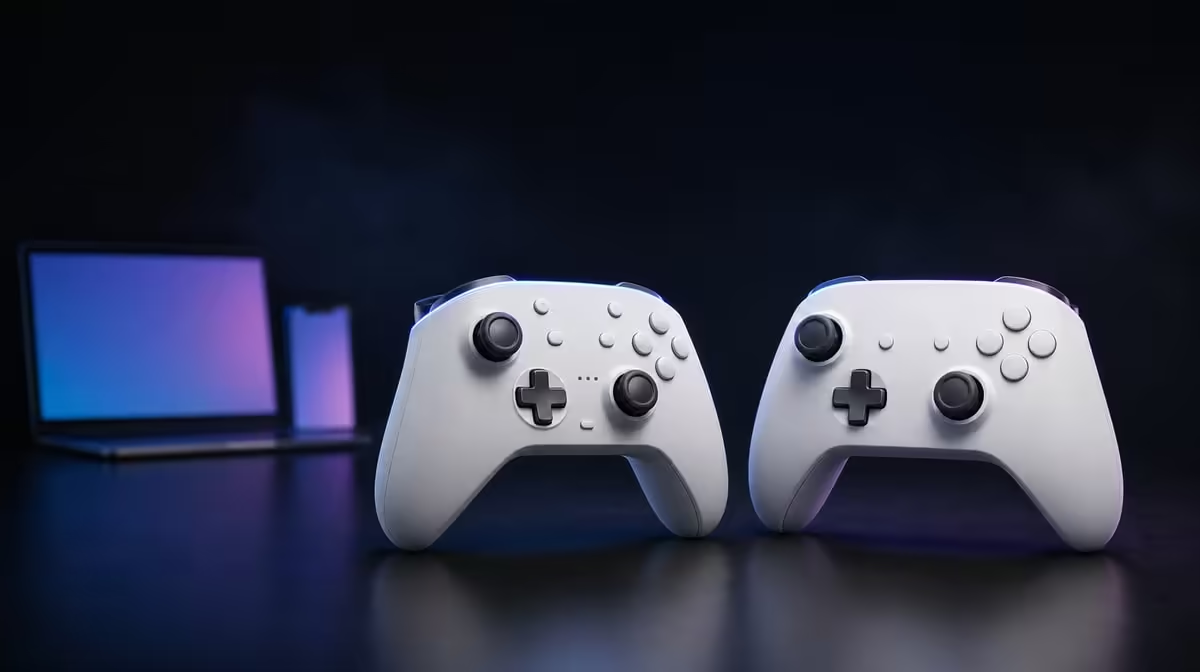
Connection breadth matters only when the controller actually moves. In tri-mode vs single-platform controllers, tri-mode supplies several routes and host flexibility, while a focused design can suit one known setup with less switching. The R999 GameSir Cyclone 2 combines tri-mode and multiplatform support for players who use more than one device.
Quick Answer
Choose tri-mode when one controller regularly moves among supported devices or needs alternate connection paths. A single-platform controller can make sense for a fixed host and game library. The Cyclone 2 costs R999 with an included charging dock, but its multiplatform label still requires buyers to verify each intended device and title.
🔀 Flexibility needs a real schedule
Write the devices used in a normal week and assign a route to each. If the controller moves between them, tri-mode can reduce duplicate hardware and provide a fallback during troubleshooting.
If the list contains one host in one place, a focused controller may cover the task. Extra modes can remain useful future flexibility, but they should not receive the same value as daily use.
Build a simple weekly matrix. Put devices in rows and playing locations in columns, then mark the connection used in each. Multiple filled cells support the tri-mode case. One repeated cell suggests that a narrower design could be enough.
Add the cost of duplicated hardware to the thought process without inventing prices. One R999 Cyclone 2 may cover several supported roles, but only if the relevant games and hosts pass.
Browse Evetech gaming controllers to compare complete platform roles rather than counting connection names.
🎮 Compatibility is not automatic
Tri-mode describes connection options, and multiplatform describes intended support. Neither proves that every host, game or feature behaves identically.
Test default input on each intended device. Confirm the TMR sticks, Hall triggers and face buttons before copying a profile. Name platform-specific settings clearly where prompts or response differ.
Run the switch in both directions. Move to the second host, verify default commands, then return to the first without editing its working setup. This round trip proves that flexibility is manageable.
Connection delay should be compared in a local scene. Online server travel can obscure a small local difference and does not make one platform inherently better.
The same magnetic control hardware remains in the Cyclone 2 across routes, so a change tied to one connection should be diagnosed at that layer before recalibrating the sticks.
🔋 The dock adds value across sessions
The included Smart Start-Stop dock gives the controller a fixed charging and storage point between device changes. It can simplify a shared setup even though it does not alter platform compatibility.
Return the controller to the dock only after the correct profile is saved. The base can become the physical end of a device-switching routine: disconnect, note the last host, seat the controller and confirm charging contact.
Seat the controller carefully, keep the contacts clear and place the dock away from direct heat. At R999, this charging hardware belongs in the package comparison rather than on a separate budget line.
Explore Evetech gaming accessories for the surrounding setup and use accessory favourites for broader context.
Customisable RGB may help identify profiles, but lighting should not be counted as another platform or response feature. Keep it in the preference column while TMR sticks and Hall triggers stay in the control column.
Review the weekly matrix after real use. If most sessions remain on one host, reduce the weight of unused modes. If switching becomes routine and the saved profiles stay clear, tri-mode has proved its practical value beyond the specification list.
Before paying for extra routes, name the second device or fallback they will serve. Then test recognition, mappings and local response on that host. If no second use survives the checklist, a simpler controller may fit; if the gamepad moves regularly, tri-mode flexibility can remove repeated pairing and cable decisions.
The dock should be scored separately. It adds a fixed charging routine, while multiplatform support concerns the controller's hosts.
Frequently Asked Questions
What is the practical benefit of tri-mode?
It gives one controller several connection routes, useful when supported devices and playing positions change.
When can a single-platform design make sense?
When the player uses one fixed host and does not need fallback or travel routes.
Does tri-mode guarantee universal support?
No. Verify each device, game and feature before treating a connection as part of the regular routine.
What does the flexible Cyclone 2 cost?
The Phantom White Cyclone 2 package is R999, including its smart charging dock.
Ready to pay for connections you will genuinely use?
Explore Evetech gaming controllers and match multiplatform flexibility or focused simplicity to your actual device schedule.