A 3D printer is only as accurate as the rails it slides on, and the two motion systems you will meet at almost every price point are linear rails and smooth rods with bushings. They guide the print head and bed along each axis, and the difference between them shows up in the corners of your prints, in ringing artefacts, and in how the machine ages after a few thousand hours.
Quick Answer
Linear rails use a profiled steel rail with a recirculating ball-bearing carriage, giving very low play and high rigidity. Smooth rods with linear bushings cost less but allow more flex and wear faster. For dimensional accuracy you want rails; for a tight starter budget, good rods are fine.
How each system actually guides the axis
A smooth rod setup is two hardened steel rods per axis with a sliding bearing, either a recirculating ball bearing (LM8UU style) or a plain polymer bushing, riding along them. The carriage is constrained because it wraps the rods. It works, and millions of printers ship this way, but the contact area is small and the rods can bow slightly under load over a long span.
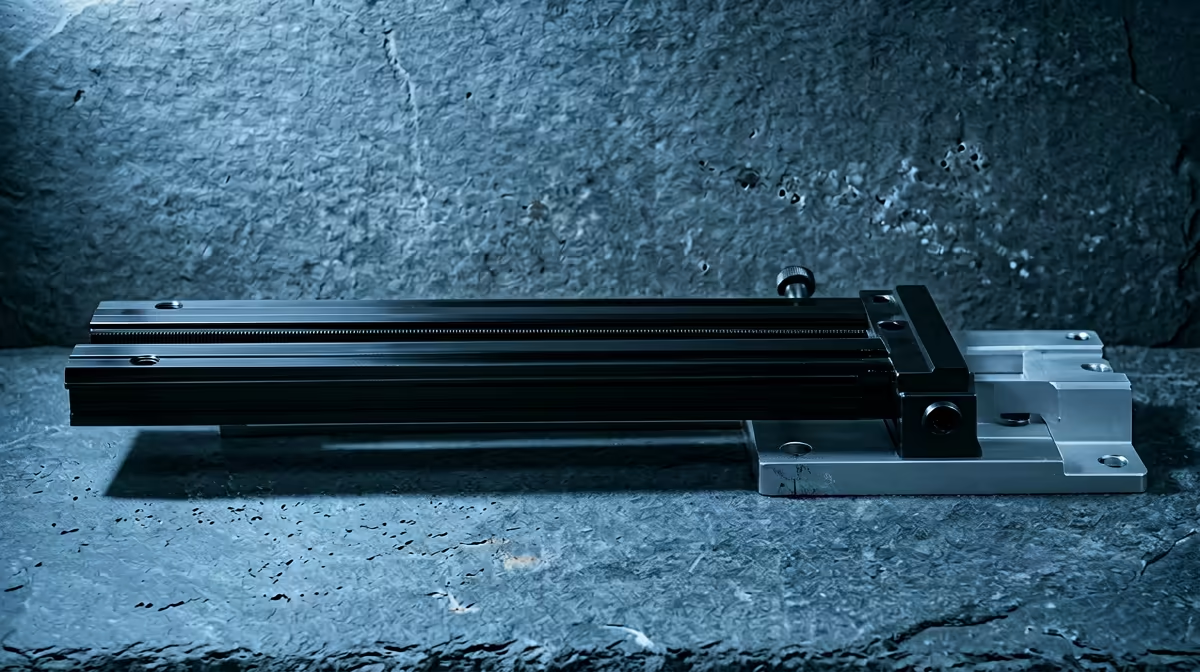
A linear rail replaces the round rod with a flat profiled rail, usually an MGN9 or MGN12 in hobby machines. The carriage runs on four rows of recirculating balls that wrap the rail's grooves, spreading load across a much larger contact area. That geometry resists twisting forces the round rod cannot, so the toolhead stays square to the bed even when it accelerates hard.
Where the difference shows in a print
Play in the motion system turns into visible defects. With worn rods you get ghosting or ringing, those faint echo lines after a sharp corner, because the head wobbles a fraction before it settles. You also get slightly rounded corners and inconsistent wall thickness on tall parts where the rod flexes most.
Rails hold tolerance far better as speeds climb. If you print mostly slow and small, you may never notice. The moment you push acceleration for faster prints, or you print tall narrow models, the rigidity of a rail keeps edges crisp where rods start to smear.
Cost, maintenance and longevity
Rods are cheaper to buy and to replace, and a polymer bushing runs dry and quiet. The trade-off is wear: bearings develop slop, and a bowed rod is hard to true again. Rails cost more up front and need an occasional wipe and light grease, but a quality rail holds its tolerance for years.
If you are weighing an upgrade or a fresh machine, it helps to browse the current range of 3D printers at Evetech and check which motion system each model uses before you commit. A handful of useful spares and tools also live among the best-selling accessories if you plan to maintain the machine yourself.
Frequently Asked Questions
Are linear rails always better than smooth rods?
For rigidity and long-term accuracy, yes. But a well-tuned rod machine prints beautifully at moderate speeds, so rails are not a strict requirement unless you chase speed or large precise parts.
What does MGN12 mean?
MGN is a miniature linear rail family and the number is the rail width in millimetres. MGN12 (12mm) is stiffer than MGN9 and common on the X axis of mid-range printers.
Do smooth rods wear out faster?
The bushings and bearings do. Ball bearings develop play and polymer bushings slowly loosen, so you may rebuild a rod axis once over the machine's life, while a clean rail usually outlasts it.
Can I upgrade my printer from rods to rails?
Often yes, with a bracket kit matched to your frame. It is a worthwhile mod for a printer you intend to keep, though it needs careful squaring during install.
Which should a first-time buyer pick?
Buy on the whole machine, not the rail alone. A solid rod printer from a good brand beats a cheap rail printer with a flimsy frame. Treat rails as a bonus, not the deciding factor.
Comparing motion systems on real models is the fastest way to decide. Browse the current 3D printer lineup at https://www.evetech.co.za/components/3d-printers-130 and see which build suits your accuracy and budget.