Quick Answer
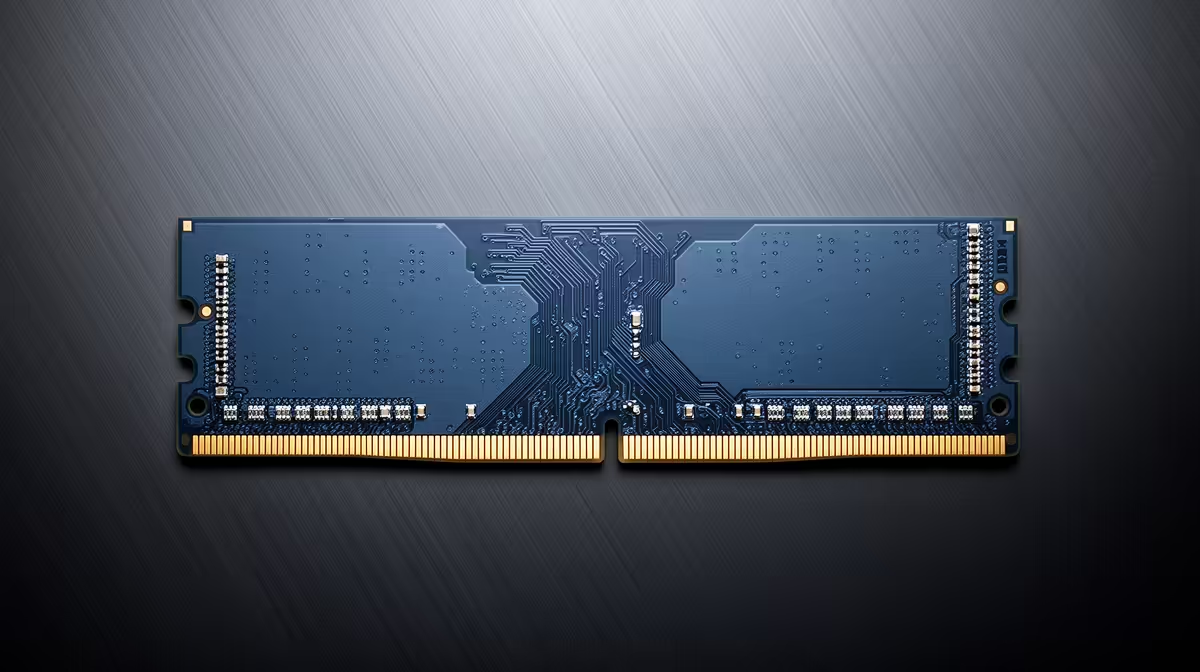
In cheap DDR5 kits used for data science coursework, the first thing to break is stability under sustained multitasking, not the chips physically dying: bargain DDR5-4800 kits without proper EXPO/XMP profiles throw errors when you run large pandas dataframes or train models. Spend a little more for a DDR5-5600 or DDR5-6000 kit with a verified profile, around R900 to R1,500 for 32GB.
Stability fails before the silicon does
Cheap DDR5 rarely dies outright; it becomes unstable when you push it. Data science workloads (large Jupyter notebooks, pandas joins, model training) hold gigabytes in memory for long stretches, exposing weak kits that pass a quick boot but crash hours into a run. The fix is a kit rated DDR5-5600 or DDR5-6000 with a tested EXPO (AMD) or XMP (Intel) profile. Expect R900 to R1,500 for a reliable 32GB kit at Evetech.
Capacity matters more than speed for datasets
For coursework, 32GB beats a faster 16GB kit every time: running out of RAM forces swapping to SSD, which slows a model train to a crawl. If you handle bigger datasets, 64GB is the next step. A DDR5-5600 32GB kit is the practical floor for a data science laptop or desktop. Pair it with a fast NVMe SSD so any unavoidable swapping hurts less.
EXPO/XMP is the real value line
The cheapest kits ship at JEDEC DDR5-4800 with no overclock profile, so you leave performance on the table and sometimes get flaky behaviour. A kit with a one-click EXPO or XMP profile to 5600 or 6000 is more stable and faster for the same rough money. Enable the profile in BIOS; it's the single setting that turns a budget kit into a dependable one.
FAQ
What breaks first in cheap DDR5 for data science work?
Stability under sustained load, not the physical chips. Bargain DDR5-4800 kits without proper profiles throw errors during long pandas operations or model training. A DDR5-5600 or 6000 kit with a verified EXPO/XMP profile avoids this.
How much RAM do I need for data science coursework?
32GB is the practical minimum so large dataframes and notebooks don't force slow SSD swapping; 64GB suits bigger datasets. Capacity matters more than raw speed, so prioritise 32GB DDR5-5600 over a faster 16GB kit.
Is enabling EXPO or XMP safe on a budget kit?
Yes, it's a one-click BIOS setting the kit is rated for, and it's both faster and often more stable than the default DDR5-4800 fallback. Leaving it off wastes the speed you paid for and can leave you on a flakier JEDEC profile.
After installing a budget DDR5 kit, enable its EXPO or XMP profile in BIOS and run MemTest86 overnight; it confirms stability before a 6-hour model train crashes on you.