Quick Answer
ATX 3.1 is the PSU design standard that requires power supplies to handle 200% power spikes for up to 100 microseconds without shutting down. PCIe Gen 5.1 is the updated slot specification. Together they ensure modern PSUs and GPUs like the RTX 5090 can exchange power reliably through the 16-pin 12V-2x6 connector without triggering overcurrent protection during peak transient loads.
ATX 3.1: What Changed and Why It Matters 🔌
The ATX 3.0 standard, released with the RTX 4000 series, first introduced requirements for transient power handling, because NVIDIA's new GPU architectures draw very brief but intense current spikes that older PSU designs could not absorb without briefly shutting down. ATX 3.1 refines those requirements: the PSU must now sustain 150% rated load for a specified duration and 200% for 100 microseconds on the PCIe power rails specifically. In practical terms this means a 1000W ATX 3.1 PSU must be capable of briefly supplying 2,000W worth of current to the GPU connector without triggering its overcurrent protection circuit.
The 12V-2x6 Connector: The Physical Side of PCIe Gen 5.1 🔧
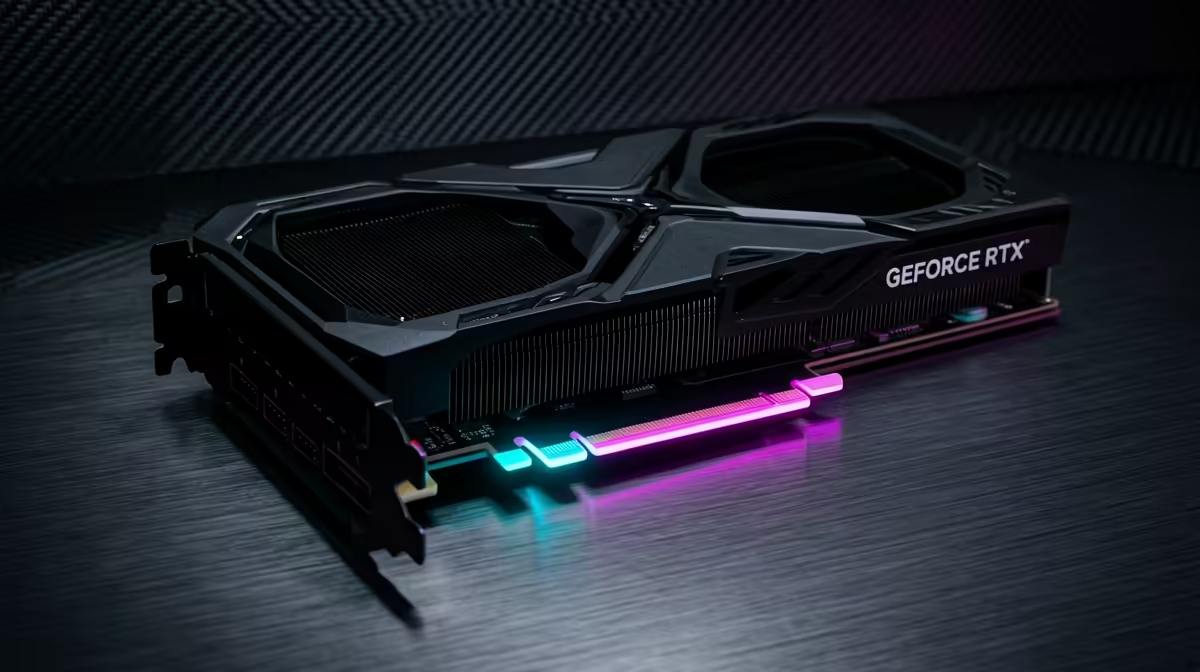
PCIe Gen 5.1 introduced the 12V-2x6 connector as a replacement for the 12VHPWR connector used in early RTX 4000 series cards. The 12V-2x6 connector has the same 16-pin physical form factor but adds improved retention tabs and revised contact geometry that reduce the risk of the connector seating incompletely, which was a reported failure mode on some early 12VHPWR implementations. The connector can deliver up to 600W at full engagement of all 16 pins. NVIDIA's RTX 5090 and RTX 5080 Founders Edition cards ship with a 12V-2x6 receptacle. ATX 3.1 PSUs include a native 12V-2x6 cable, eliminating the need for adapters. If you own an ATX 3.0 PSU with a 12VHPWR cable, that cable is electrically compatible with a 12V-2x6 card, but using adapters that combine multiple 8-pin cables into a single 16-pin connector is not recommended for sustained high-wattage loads.
What This Means for South African Builders Upgrading Now 🖥️
If you are building or upgrading a system around an RTX 5090 or RTX 5080 in South Africa, purchasing an ATX 3.1 certified PSU is the correct move rather than reusing an older unit with an adapter cable. The stability benefit is real and the price premium over a non-ATX 3.1 PSU of equivalent wattage is typically R300 to R700, which is a small fraction of the total build cost when the GPU alone costs R25,000 to R55,000. Look for PSUs that explicitly state ATX 3.1 compliance and include a native 16-pin 12V-2x6 cable in the box. ASUS ROG, Corsair, be quiet! and Seasonic all offer ATX 3.1 certified units currently stocked at Evetech.
Check Your PSU Cable Label Before Plugging In ⚡
On some modular PSUs the 12V-2x6 or 12VHPWR cable has a warning label specifying the maximum wattage it supports based on how many of the sense pins are engaged. Read this label before connecting to an RTX 5090. The cable must be fully seated until the retention tabs click to engage all 16 contacts. A partially seated connector at 575W draw is a fire risk.
FAQ
Is an ATX 3.0 PSU safe to use with an RTX 5090?
An ATX 3.0 PSU is electrically capable of running an RTX 5090 if it includes a native 12VHPWR or 12V-2x6 cable.
Do all new PSUs sold in 2026 support ATX 3.1?
Not automatically.
What wattage ATX 3.1 PSU should I buy for an RTX 5080 build?
An 850W ATX 3.1 unit handles an RTX 5080 paired with a Ryzen 7 9800X3D comfortably, with the RTX 5080's 360W TBP plus CPU and system overhead landing around 550W to 600W total.
Upgrading to an RTX 5000 series GPU and need an ATX 3.1 compliant PSU? Evetech stocks a full range of ATX 3.1 certified power supplies from 850W to 1600W, with local warranty and the right native cables for your new GPU.