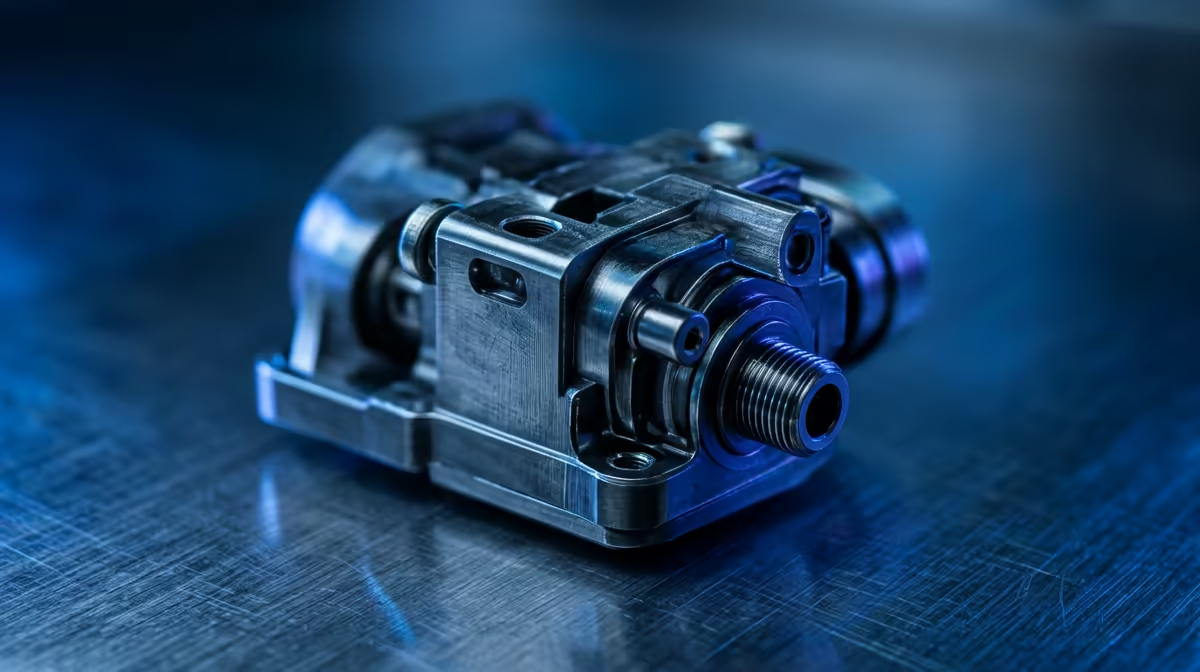
The hotend is the part of a 3D printer that melts plastic filament into a controllable molten thread, then pushes it through the nozzle to build your model layer by layer. It is also the single component that decides how hot you can safely print, and that ceiling depends almost entirely on one detail: whether the throat is lined with PTFE or built from solid metal.
Quick Answer
A PTFE-lined hotend caps out at roughly 240 to 250C because the plastic liner starts releasing fumes and degrading above that point. An all-metal hotend swaps that liner for a steel or titanium throat and pushes safely to around 300C, which is what nylon, polycarbonate, and carbon-fibre blends actually need.
How a hotend melts and pushes filament
Inside the hotend, a heater cartridge warms a metal block to your set temperature while a thermistor reads it constantly so the firmware can hold it steady. Filament enters through the cold-side throat, hits the short melt zone just above the nozzle, and turns to liquid only in that final stretch. Keeping the upper throat cool matters: if heat creeps too far up, the filament softens early and jams the path. That balance between a hot tip and a cool entry is the whole design challenge.
PTFE-lined versus all-metal
A PTFE-lined hotend runs a slick Teflon tube right down to the nozzle. That tube gives gorgeously smooth filament feeding and very few clogs with everyday materials, which is why most starter printers ship with one. The catch is the liner itself. Above roughly 250C the PTFE begins to break down, so PLA, PETG, and standard TPU are its comfortable home and anything hotter is off limits.
An all-metal hotend removes the liner entirely. The filament path is metal from top to bottom, so there is nothing to degrade at high heat. That unlocks engineering filaments but asks for a little more care: retraction and temperature tuning matter more, because metal throats can be slightly fussier with soft or heat-sensitive materials. For most SA makers who want to grow into tougher prints, the all-metal route is the long-term answer. You will find printers and upgrade parts among the 3D printers in our components range when you are ready to step up.
Which one suits your filament shopping list
If your projects are cosmetic models, prototypes, and PLA brackets, a lined hotend keeps life simple and cheap. The moment you want gears that survive a hot car boot in a Joburg summer, functional nylon parts, or anything carbon-reinforced, the all-metal throat earns its keep. Many printers can be upgraded later with a spare nozzle and hotend kit, and the smaller bits to keep a printer fed live in our 3D printing accessories and best sellers.
Frequently Asked Questions
Can I print nylon on a PTFE-lined hotend?
Not safely. Nylon wants 250C and up, which sits past the liner's safe ceiling. Pushing a lined hotend that hot degrades the PTFE and can release fumes, so nylon and polycarbonate really do need an all-metal throat.
Does an all-metal hotend print PLA worse?
No, it prints PLA perfectly well once tuned. You may need slightly more retraction and a touch of fan management, but the difference is small and easily dialled in over a print or two.
How do I tell which hotend my printer has?
Check the printer's listed maximum nozzle temperature. A 240 to 260C ceiling almost always means a PTFE liner, while a 290 to 300C rating points to an all-metal design. The manufacturer spec sheet confirms it.
Is the nozzle the same as the hotend?
No. The nozzle is the small brass or hardened-steel tip that screws into the front of the hotend. The hotend is the whole heated assembly, and the nozzle is just its replaceable exit.
Planning to print tougher, higher-temperature parts? Browse the current 3D printer range at Evetech and pick a machine matched to the filaments you actually want to run: https://www.evetech.co.za/components/3d-printers-130