Quick Answer
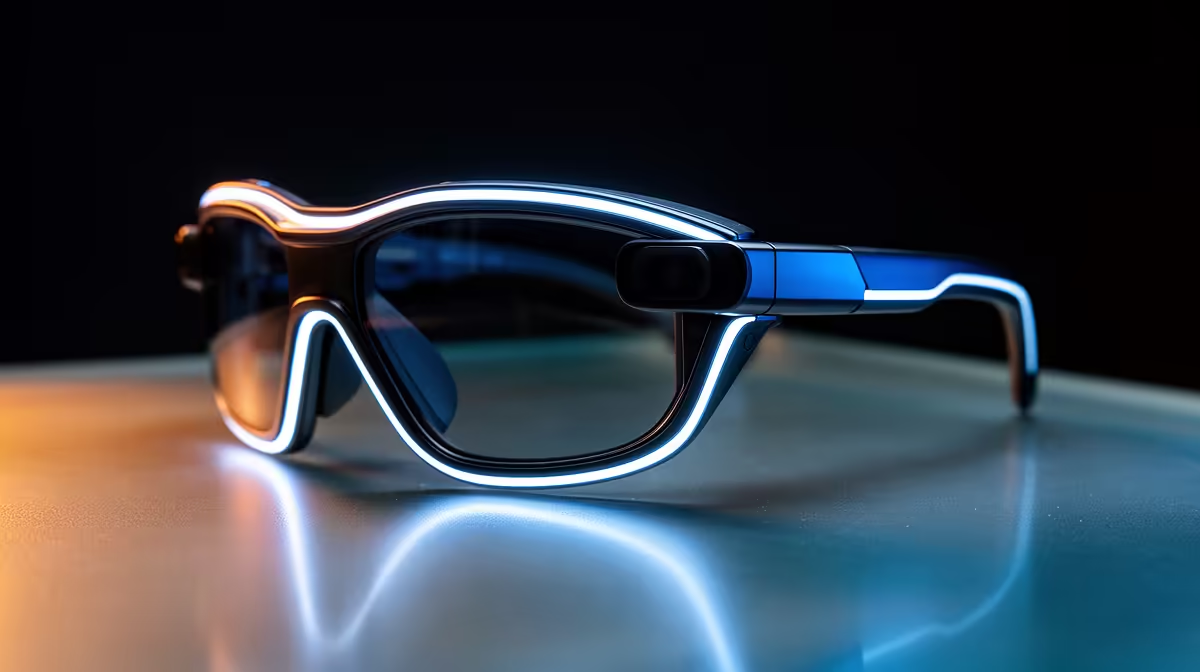
For a campus residence room, AR glasses matter most as a private big-screen for a tiny desk: look for around 1080p per eye, 45-50 degree field of view, and 400+ nits so the image holds up under harsh res lighting. Budget roughly R7,000-R11,000 for a display-grade pair that plugs into a USB-C laptop or phone.
Why AR Glasses Suit Cramped Res Rooms
A koshuis or res desk rarely fits a 27-inch monitor, and that is exactly where display AR glasses shine: they project a virtual 100-130 inch screen in front of you off a single USB-C cable. For room use, prioritise per-eye resolution near 1080p so text stays readable, brightness of 400 nits or more to fight overhead fluorescent light, and a comfortable nose-bridge fit you can wear for a two-hour study block. A 45-50 degree field of view is the practical sweet spot at this budget.
Compatibility With Your Laptop And Phone
Display AR glasses need a USB-C port that carries DisplayPort Alt Mode, which most modern laptops and many Android phones have but some budget laptops and iPhones do not. Check your device first, because an adapter or a separate dock can add R800-R1,500 to the real cost. If your laptop lacks Alt Mode, you may need a compatible dongle, so confirm before you buy rather than after.
Comfort And Eye Strain For Long Study Sessions
In a small room you wear them close and often, so weight and adjustable focus matter. Look for a pair under about 80g with a diopter or insert-lens option if you wear glasses, because forcing prescription lenses behind AR optics causes strain. Take a screen break every 30-40 minutes as you would with any monitor; the virtual screen still tires your eyes if you push through.
FAQ
How much do AR glasses cost in South Africa?
Display-only AR glasses land roughly R6,500-R12,000 depending on resolution and brightness. Models with built-in compute or wider field of view run higher, so set your budget before chasing features you will not use.
Will AR glasses work in a bright res room?
Look for 400 nits or more, which holds a usable image under typical overhead fluorescent lighting. Dimmer panels wash out, so brightness matters more than resolution in a bright room.
Do AR glasses replace a monitor for studying?
For a cramped room they can, projecting a large virtual screen off one cable. Just confirm your laptop or phone supports DisplayPort over USB-C, or budget for a compatible adapter.
laptop's USB-C port supports DisplayPort Alt Mode before buying AR glasses, because without it you need an extra adapter that adds real cost.