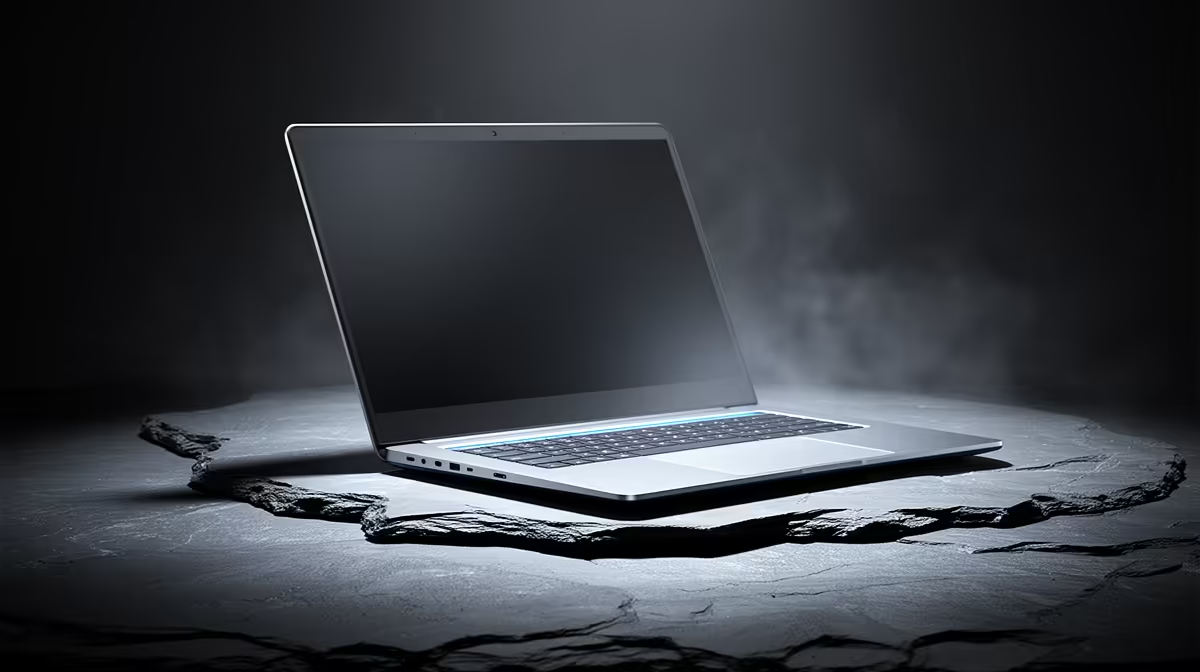
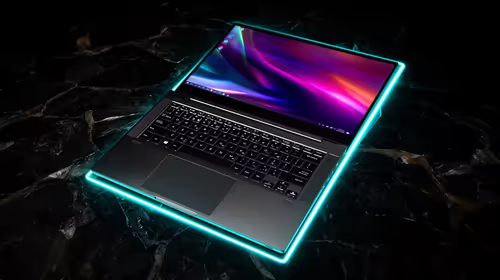
An NSFAS-funded or supplier-issued laptop has no single national specification. Expect entry-level hardware in many catalogues, then verify the exact model code before accepting it. The useful target for general study is 8GB RAM, SSD storage and a processor that can handle your course applications.
Quick Answer
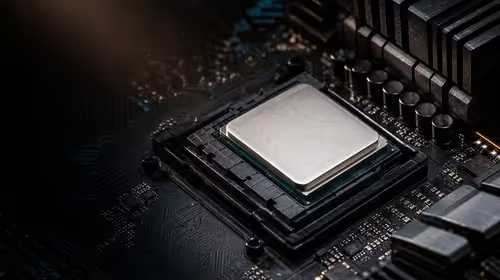
For essays, research, email, Office work and video classes, look for 8GB of usable memory and at least a 256GB SSD. A 512GB SSD gives more breathing room for course files. Entry Ryzen 3 and Core i3 processors can cover that workload when paired with enough memory.
Engineering, architecture, data science and media students need the faculty software list before deciding. A basic study laptop may open notes with ease while falling short for Revit, SolidWorks, large datasets or video exports.
Use laptop best sellers and current laptop deals to compare named configurations after your funding route confirms eligible products.
Read Beyond the Processor Badge
Check whether 8GB means all soldered memory or an upgradeable module. Confirm that storage is an SSD rather than 64GB eMMC. Ask for screen resolution, Wi-Fi support, webcam details and the ports needed for a monitor or lab equipment.
The HP Notebook 255R G10 paired a Ryzen 3 processor with 8GB RAM and a 512GB SSD at R8,499 as of July 2026. That is a dated named example, not a promise about an NSFAS catalogue.
Check the Whole Student Package
Battery life depends on workload, screen brightness and battery health, so brochure figures need context. Ask whether the charger, operating system and local warranty are included. Record the supplier's fault process and collection address.
A 14-inch laptop travels well between lectures. A 15.6-inch screen gives spreadsheets and split documents more room. Weight, keyboard comfort and charger size matter when the laptop crosses campus each day.
Test the exact course software during the return period. Keep the invoice, serial number and delivered model label together.
Ask how Windows updates and recovery are handled before the first assignment. Create the student's own administrator account, remove trial software they do not need and turn on device encryption only after saving the recovery key. A campus IT desk may provide required security tools or licensed software.
Storage fills faster than the brochure suggests. Keep at least 15 to 20 percent free for updates and temporary files. Move old lecture recordings to an external drive or approved cloud service, while keeping assessed work backed up in two places.
FAQ
Is 8GB RAM enough?
It can cover general coursework. Heavy design, engineering or data tools may call for 16GB or more.
Should the laptop have an SSD?
Yes. SSD storage gives a better study experience than small eMMC storage and leaves more room for Windows updates.
How long should an entry laptop last?
That depends on build, workload and course growth. An upgrade path and a clear warranty route improve its prospects across a degree.
Match the exact funded laptop model to your faculty software list, then verify memory, SSD capacity and warranty before accepting it.