Quick Answer
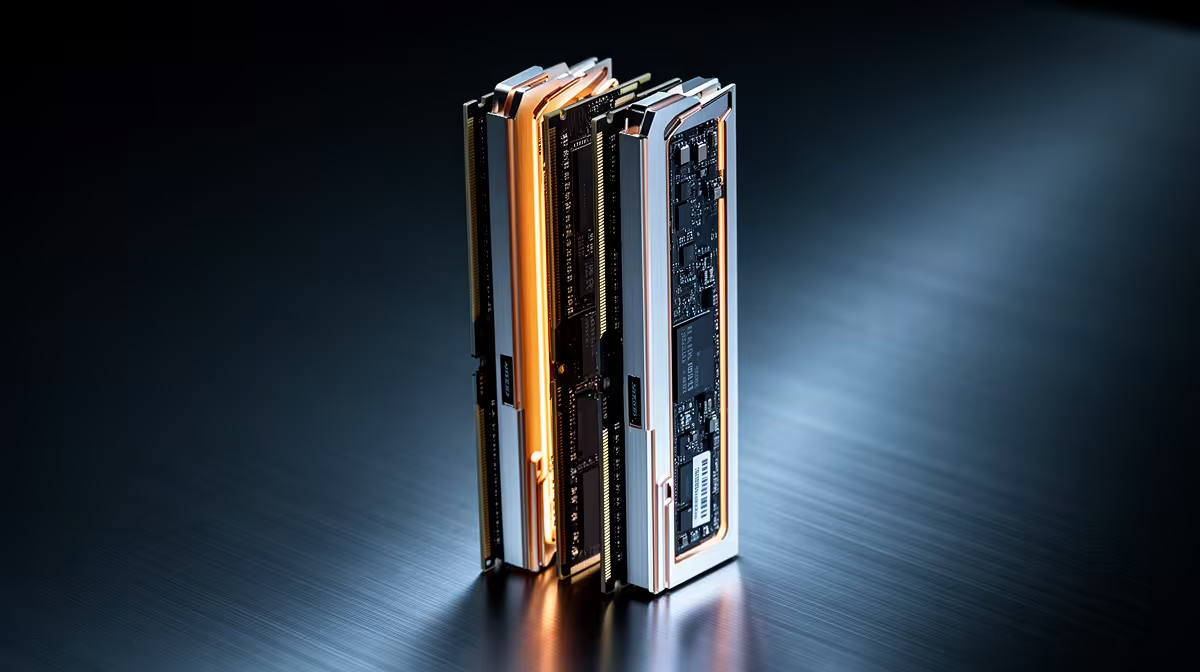
DDR5-8000 is stuck on Intel-only platforms because Intel's Core memory controller uses a flexible gear divider that handles very high speeds, while AMD's AM5 runs best at DDR5-6000 in a synchronised 1:1 mode. For gaming this matters little — AM5 at tuned DDR5-6000 (around R1,800 for 32GB) stays close to Intel at 8000 in real frame rates.
The technical reason
AMD's AM5 ties memory performance to a 1:1 ratio between the RAM, memory controller and infinity fabric, which peaks around DDR5-6000. Beyond that the ratio breaks and gains vanish or stability suffers. Intel's Core chips instead use gear modes that decouple the controller from raw RAM speed, letting them validate DDR5-7200, 8000 and higher. That architectural difference is why the eye-catching speeds live on Intel boards.
Does it matter for gaming?
Barely. The gaming difference between DDR5-8000 on Intel and DDR5-6000 on AMD is typically a few percent at most, often within margin of error, because games are more sensitive to latency and GPU power than raw memory bandwidth. Buy the platform that fits your use and budget, run DDR5-6000 CL30 on AM5 or XMP-rated kits on Intel, and spend the difference on a stronger GPU. Tight timings also matter more than raw frequency for gaming, so a CL30 kit at 6000 often feels as quick as a looser, faster kit while costing less and running with fewer stability headaches.
FAQ
Why can Intel run DDR5-8000 but AMD cannot?
Intel's memory controller uses gear modes that decouple it from raw RAM speed, while AMD's AM5 peaks near DDR5-6000 in its synchronised 1:1 ratio.
Is DDR5-8000 much faster for games?
No. The gaming gap over DDR5-6000 is usually a few percent, often within margin of error. Latency and the GPU matter far more than bandwidth.
What RAM speed should I run?
DDR5-6000 CL30 on AM5, or an XMP-rated kit on Intel. Enable the profile in the BIOS so it runs at the rated speed.
Before you buy
DDR5-8000 is an Intel feature with little gaming payoff — on AM5, DDR5-6000 CL30 is the value sweet spot.