Quick Answer
Entry-level AR glasses are enough for travel gaming if you accept a single virtual 1080p screen for cloud or handheld streaming; they will not deliver wide-field, high-brightness immersion. Entry models around R5,500 work well as a portable monitor on the move, with limits.
What Entry AR Glasses Do Well On The Road
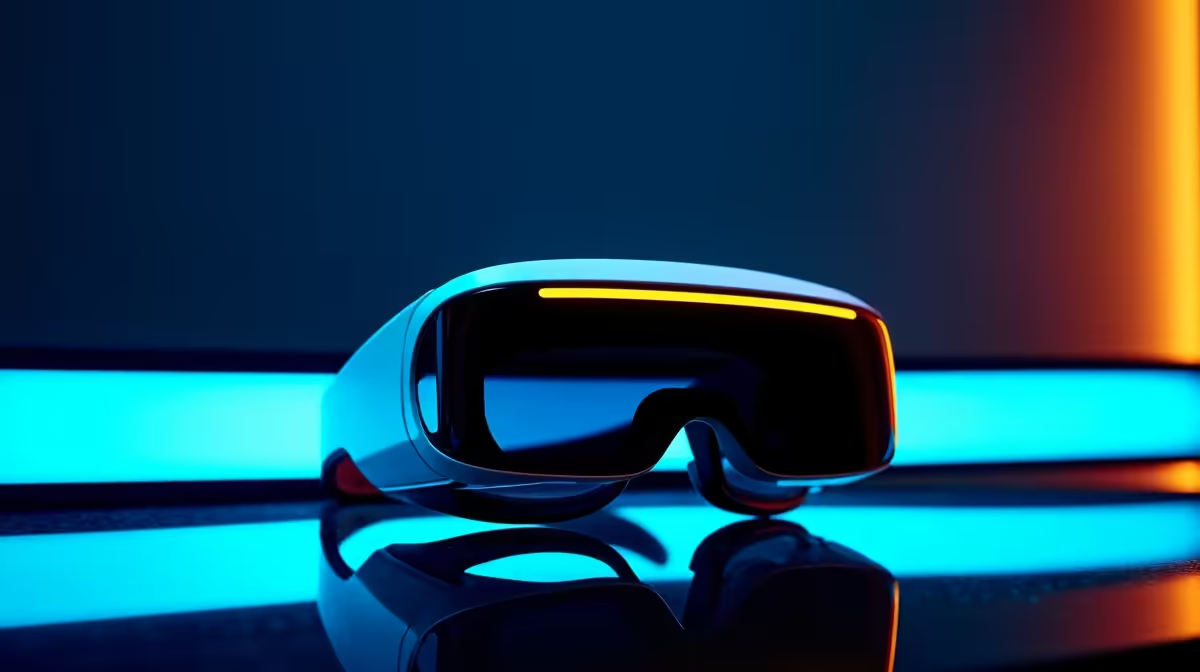
For travel, entry AR glasses shine as a private big-screen substitute. Plugged into a handheld or phone over USB-C, they project a sharp virtual display so you game on a plane, train or in a guesthouse without lugging a monitor. A 1080p-per-eye panel handles most games and video comfortably, and a sub-90g frame stays wearable for a few hours at a time.
Where Entry Glasses Fall Short
The compromises show in field of view, brightness and head tracking. Entry models have a narrower field of view, so the screen feels like a TV across the room rather than fully immersive, and around 400 to 500 nits can wash out in bright cabins. They rarely offer six-degree head tracking, so the screen stays fixed to your view. For a simple portable screen that is fine; for true AR immersion, you need to spend more.
FAQ
Can entry AR glasses replace a travel monitor?
Yes; plugged into a handheld over USB-C they project a sharp virtual 1080p screen, which is ideal as a portable display on planes and trains.
Do entry AR glasses do real augmented reality?
Mostly no; they act as a fixed virtual screen rather than tracking your head and anchoring content to the room. True AR needs pricier models.
Are entry glasses bright enough for daytime travel?
At 400 to 500 nits they can wash out in bright cabins. Use them in shaded or dim conditions for the best image, or step up for higher brightness.
If you want a private portable screen for cloud or handheld gaming on the move, entry AR glasses suffice; for wide-field immersion, budget for a higher tier.