You’re in the final squad showdown, the zone is closing, and you’ve got the perfect angle... then darkness. The dreaded silence. For South African gamers, this isn't just an annoyance; it's a constant threat. But what if you could buy a few precious minutes to save your game and safely shut down? That’s where a good UPS for your gaming PC becomes essential. ⚡
Why a UPS is Non-Negotiable for Your Gaming PC
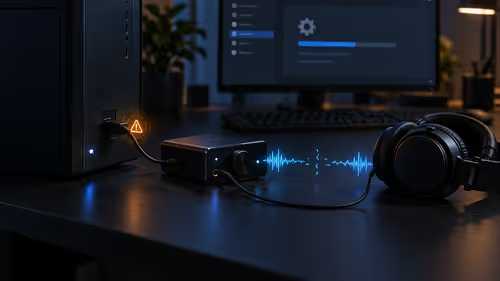
Think of an Uninterruptible Power Supply (UPS) as a personal power guard for your expensive rig. It’s essentially a big, smart battery that sits between the wall socket and your PC. When the power cuts, it instantly takes over, giving you a seamless supply of electricity. This isn't just about finishing your match; it's about protection.
Sudden power loss can corrupt your operating system, wreck a saved game, or even cause physical damage to sensitive components. The surge of "dirty" power when electricity returns can be just as lethal, frying your motherboard or your prized CPU processor. A reliable UPS for a gaming PC acts as a shield, providing clean, stable power and preventing catastrophic hardware failure. 🛡️
How to Choose the Right UPS for Your Gaming Setup
Picking a UPS isn't as simple as grabbing the first box you see. To find the best UPS for your gaming needs, you have to match it to your specific hardware. Let's break down the key specs.
Calculate Your Power Needs (VA vs. Watts)
You'll see two ratings on a UPS box: Volt-Amperes (VA) and Watts (W). While they're related, the Watt rating is what you need to focus on. This number must be higher than the total power your PC and monitor draw under full load.
A simple rule of thumb is to look at your Power Supply Unit's (PSU) wattage. If you have an 850W PSU and your monitor uses around 50W, you're looking at a 900W total draw. It's wise to get a UPS with a wattage rating at least 20-25% higher than your needs to give you a safe buffer.
Quick Power Check 💡
Not sure what your PC's power supply unit (PSU) is rated for? It's usually printed on a sticker on the side of the PSU itself. You might need to open your PC case to see it. This wattage number is the starting point for choosing the right UPS for your gaming PC. Remember to add your monitor's power draw too!
Waveform Wisdom: Pure Sine Wave is King
This sounds technical, but it's crucial. Modern gaming PCs use high-efficiency PSUs with Active Power Factor Correction (APFC). These PSUs are sensitive and work best with a "Pure Sine Wave" output from a UPS, which mimics the clean power from your wall socket.
Cheaper "Simulated Sine Wave" models can cause some APFC power supplies to buzz or even shut down unexpectedly when on battery power. For a modern rig, especially one built from quality AMD barebone kits, spending a bit more on a Pure Sine Wave UPS is a smart investment for long-term stability.
Setting Up Your UPS for Maximum Protection
Once you have your UPS, setup is straightforward. Plug the UPS into the wall, and then plug your critical hardware—your PC tower and your main monitor—into the battery-backed outlets on the UPS. Most units also have "surge only" outlets; these are perfect for printers, speakers, or other peripherals that don't need to stay on when the power dies.
This simple step ensures the battery's runtime is dedicated entirely to giving you enough time to save your progress and shut down gracefully. A well-chosen UPS for your gaming PC is the ultimate defence, turning a session-ending disaster into a minor inconvenience. It’s the piece of kit that ensures your powerful machine, whether it’s based on the latest Intel barebone kits or a custom build, is always protected. 🚀
Ready to Improve Your Gaming Pc? Protecting your gear with a solid UPS is the first step. The next is building a machine worthy of that protection. Whether you're upgrading your components or starting fresh, we've got the parts to help you dominate... no matter what Eskom throws at you. Explore our massive range of PC components today!