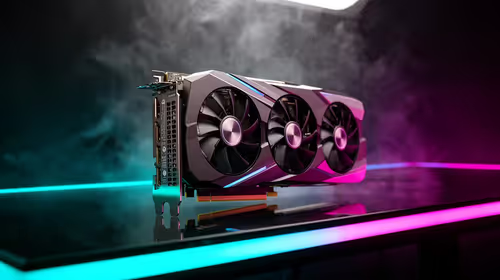
That powerful GPU humming away in your PC isn't just for smashing high scores in Sandton... it's a portal to a new creative universe. With a few clicks, you can generate breathtaking images, concept art, and designs. But as this AI revolution booms across Mzansi, a tricky question pops up: what are the AI art ethics involved? Is it creativity, or is it theft? This guide will help you navigate the maze. 🤔
Understanding the AI Art Ethics Debate
At the heart of the AI art ethics conversation is one thing: data. Most popular AI image generators were trained by "scraping" billions of images from the internet. This includes everything from personal Flickr photos to the entire portfolios of professional artists on sites like ArtStation... often without their permission or compensation.
This has split the creative community. On one side, proponents argue AI democratises art, giving everyone powerful tools. On the other, artists feel their life's work has been used to train a machine that could devalue their skills. It's a complex issue with no easy answers, but understanding the basics is the first step for any responsible user of powerful graphics cards.
Your GPU's Role in Ethical AI Art Generation
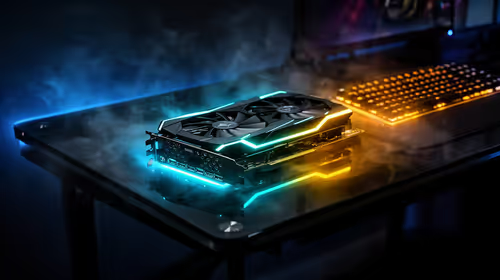
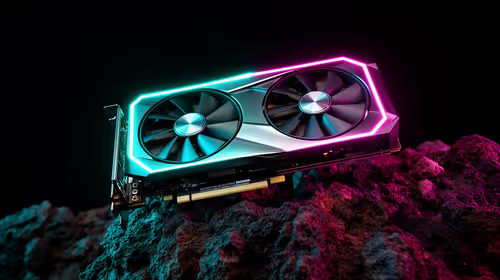
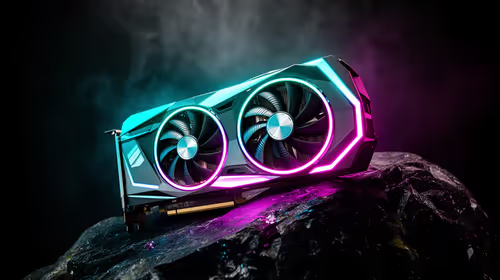
So, where does your hardware fit into the ethics of AI art? While cloud-based services like Midjourney are popular, running AI models locally using tools like Stable Diffusion gives you far more control. This is where your GPU becomes the star of the show. 🤖
Generating AI art is incredibly demanding. It requires massive parallel processing power and heaps of VRAM (video memory) to handle the complex calculations.
- NVIDIA GPUs: Cards with CUDA cores, like those found in modern NVIDIA GeForce cards, are currently the industry standard for running most local AI models efficiently.
- AMD GPUs: While NVIDIA often has the edge in software support, AMD's Radeon lineup offers incredible raw performance for your money, and support for their hardware in the AI space is growing fast.
By running models locally, you can choose which models to use, including those trained on ethically sourced datasets. This is a significant step towards more ethical AI art generation.
Check Your Model's Roots 🎨
Before downloading a Stable Diffusion model from a site like Civitai, check its description. Creators are becoming more transparent about their training data. Look for models trained on public domain images (like the CCO license), images the creator made themselves, or datasets where consent was explicitly given. This is a small but powerful way to engage with AI art more ethically.
Practical Steps for Mzansi's Creators
Navigating the AI art ethics landscape can feel daunting, but you have the power to make responsible choices. Here are a few practical tips for using AI as a tool without stepping on the toes of human artists.
Be Transparent and Give Credit
If you use AI to create an image you share online, just say so. A simple #AIArt tag goes a long way. If you used a specific artist's name in your prompt to guide the style (e.g., "in the style of Greg Rutkowski"), make sure you credit that artist. It's about honesty and respecting the creative DNA that influenced your work.
Use AI as a Collaborator, Not a Replacer
Think of AI as a super-powered assistant. It's fantastic for:
- Brainstorming: Quickly generating dozens of concepts for a character or environment.
- Texturing: Creating seamless textures for 3D models.
- Inspiration: Getting out of a creative rut with unexpected visual ideas.
For serious creative professionals, the massive datasets and VRAM requirements might even justify investing in professional workstation graphics cards, which are built for these kinds of sustained, heavy workloads.
Support Human Artists ✨
This is the big one. The best way to balance the scales is to actively support the creative community. Commission a local South African artist for a unique piece, buy prints from your favourite creators, or subscribe to their Patreon. Your ZAR goes directly toward keeping human creativity alive and well. The rise of AI art doesn't have to mean the fall of the human artist... especially if the community using the tools also supports them.
Ultimately, the conversation around AI art ethics is ongoing. As a GPU user in South Africa, you're at the forefront of this new technology. By staying informed and making conscious choices, you can explore this incredible new world of creativity responsibly.
Ready to Power Your Creativity? Whether you're gaming, creating, or diving into the world of AI, the right GPU is essential. The debate on AI art ethics is complex, but having the right hardware gives you the power to choose your path. Explore our massive range of graphics cards and find the perfect engine for your next masterpiece.