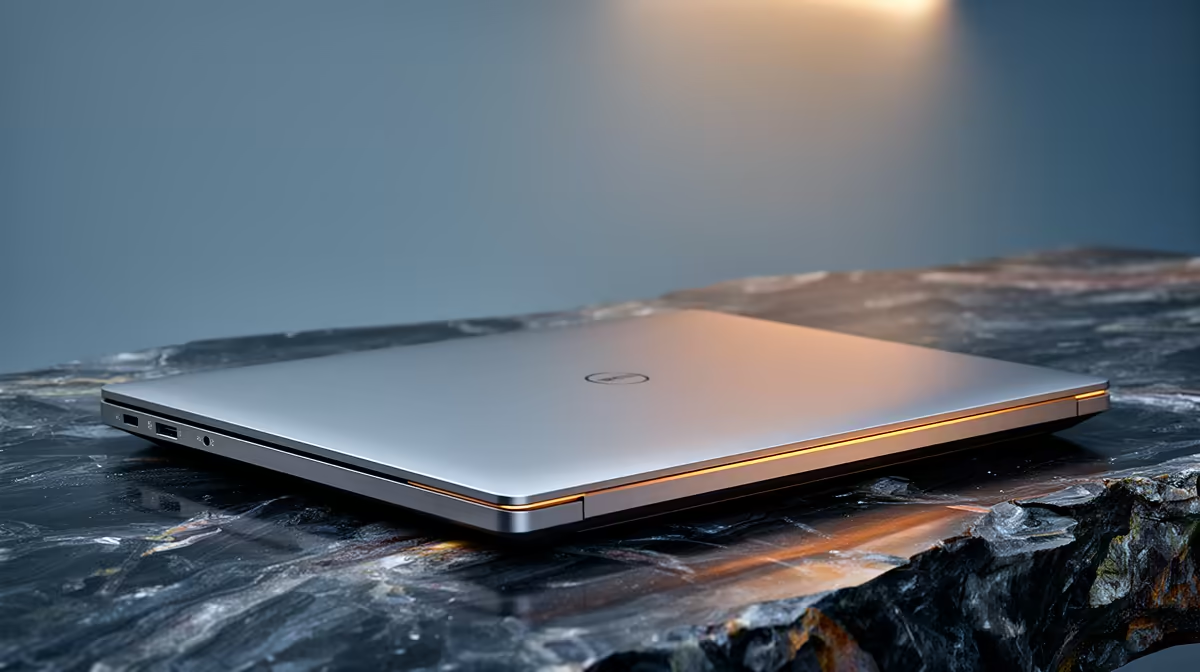
Microsoft's Copilot+ PCs are here, promising a new era of on-device AI. But for us in South Africa, a new piece of tech always comes with a crucial question: what’s the cost to our wallets... and the planet? With an unexpected outage as a constant reality, understanding the Copilot+ laptops' environmental impact in South Africa isn't just a green choice; it's a practical one. Let's dive into whether these smart machines are truly smart for our unique power situation.
The AI Power Surge: More Brains, Less Drain?
At first glance, more processing power sounds like it needs more electricity. Copilot+ PCs are designed to run powerful AI models directly on the device, not in the cloud. These new AI laptops are redefined with a special piece of hardware called a Neural Processing Unit, or NPU.
Think of an NPU as a specialist. While your main processor (CPU) and graphics card (GPU) are generalists that can do many things, the NPU is built for one job: running AI tasks with incredible efficiency. This specialisation is the key to understanding the environmental footprint of Copilot+ PCs in SA. By offloading AI work to the NPU, the laptop uses significantly less power for tasks like real-time translation, advanced photo editing, or using the new Recall feature. ⚡
Practical Reliability Considerations
The biggest win for South African users is the dramatic improvement in battery life. Because the NPU sips power instead of guzzling it, you can get more unplugged hours from your machine. This is massive when the power cuts out unexpectedly.
Here’s the breakdown of the positive environmental impact:
- Lower Energy Consumption: An efficient laptop draws less power from the grid when plugged in. Over its lifespan, this adds up to a smaller carbon footprint.
- Longer Battery Life: Less time tethered to a charger means less overall electricity usage. It also makes you more productive during Stage 4.
- Reduced Cloud Reliance: Processing AI tasks locally on the NPU, rather than sending data to and from a power-hungry data centre, further reduces the overall energy cost. This is a subtle but significant factor in the long-term Copilot+ laptops' environmental impact.
This focus on silicon-level efficiency is a huge leap forward, seen in many of the latest AMD laptops on special which also prioritise performance-per-watt.
Maximise Your Unplugged Time 🔋
In Windows 11, head to Settings > System > Power & battery. Set Power mode to Best power efficiency when you're running on battery. This tells your system to prioritise battery life over raw performance, dimming the screen slightly and throttling background processes. It's a simple click that can squeeze out precious extra minutes during a blackout.
Beyond the Plug: Manufacturing and Lifecycle 🌍
A device's environmental story doesn't start and end with its power consumption. The manufacturing process, materials used, and end-of-life recyclability all play a part. Major manufacturers are increasingly using recycled metals and plastics in their laptop chassis.
While every new device has a manufacturing footprint, choosing a machine that will last longer and consume less energy during its operational life is the most impactful decision a consumer can make. The efficiency and future-proof nature of Copilot+ PCs suggest they are built for the long haul, avoiding the need for a premature upgrade.
The Verdict: A Smarter, Greener Choice for SA?
So, what’s the final word on the Copilot+ laptops' environmental impact in South Africa?
The evidence points to a net positive. Thanks to the incredible efficiency of on-board NPUs, these machines offer a powerful computing experience with lower energy consumption and much-needed longer battery life. For a country where every watt counts, this isn't just a convenience—it's a necessity. ✨
When you're browsing the latest laptop specials for sale in South Africa, considering a Copilot+ model isn't just about cool AI features; it's a practical investment in a more power-efficient future.
Ready for an AI-Powered Future?
Copilot+ laptops offer a potent mix of intelligent features and remarkable power efficiency, making them a perfect match for South Africa's unique challenges. Explore our range of cutting-edge AI laptops and find the perfect machine to stay productive, creative, and powered on.