Chasing those buttery-smooth frame rates? Of course you are. Here in South Africa, we know every frame counts, especially in a heated online match. Today’s AI frame generation is incredible, but it’s just the beginning. Imagine not just one, but multiple AI-generated frames between each real one. That's the promise of Multi-Frame Generation, and it’s set to redefine what we consider high-performance gaming by 2026. Let's dive in. 🚀
Today's Frame Generation: A Quick Recap
Before we look to the future, let's quickly cover the present. Technologies like NVIDIA’s DLSS 3 Frame Generation and AMD’s FSR 3 Fluid Motion Frames have already revolutionised performance. They work by analysing two sequential, traditionally rendered frames and using motion vectors and optical flow data to create and insert a new, synthetic frame between them.
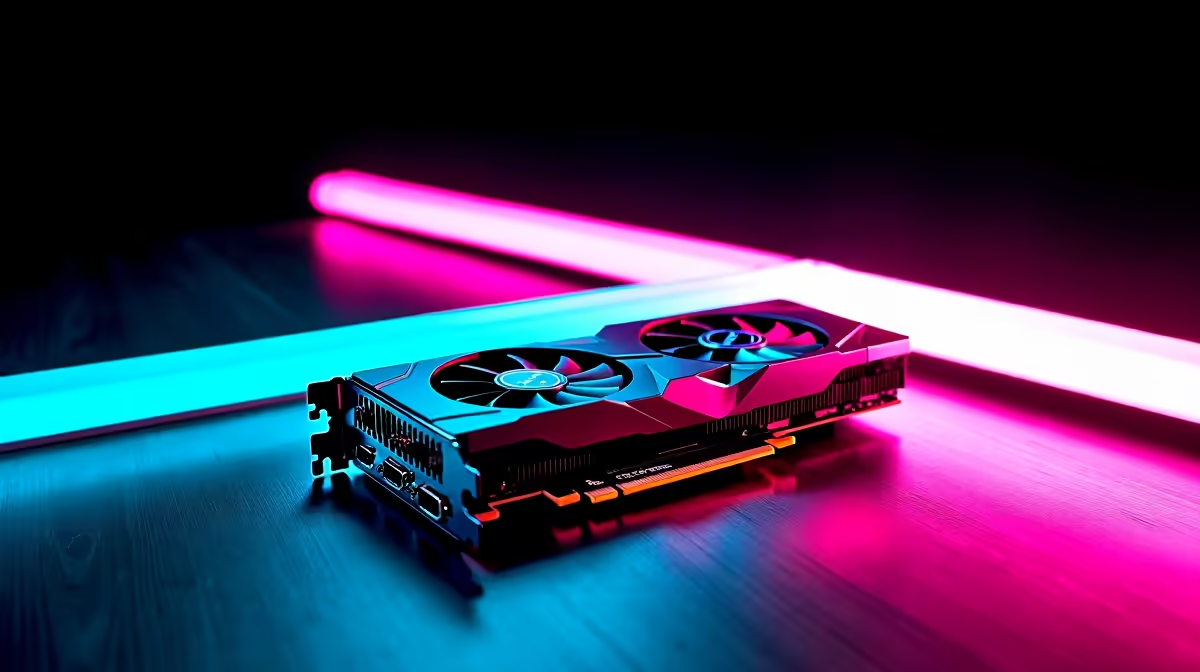
The result? A massive FPS boost that can make previously unplayable settings feel incredibly smooth. This tech is the secret sauce inside the latest NVIDIA GeForce GPUs, and it's a key feature for gamers rocking modern AMD Radeon graphics cards. Even Team Blue is in on the action with their own upscaling tech for Intel Arc graphics cards.
The Next Leap: Multi-Frame Generation Explained
So, what exactly is Multi-Frame Generation? If current tech inserts one AI frame (A → AI → B), the 2026 evolution aims to insert multiple AI frames (A → AI-1 → AI-2 → B). Think of it as doubling down on the AI's ability to predict motion and create believable in-between steps.
The Potential Upside ✨
The primary benefit is obvious: a potential for ridiculously high frame rates. We could see FPS counts that make today's 144Hz monitors look slow, pushing gaming visuals toward a level of smoothness and clarity that was once pure science fiction. This leap will require immense processing power, the kind found in the most powerful graphics cards over R15,000.
The Technical Hurdles
Of course, it's not that simple. Generating multiple frames introduces significant challenges:
- Latency: The biggest enemy of frame generation. The GPU has to wait for more data to generate more frames, which can increase input lag. Developers will need to find clever ways to mitigate this.
- Artifacts: More AI frames mean more chances for visual errors or weird glitches if the algorithm misinterprets the motion.
- Hardware Demands: The AI hardware (like NVIDIA's Tensor Cores) will need to be exponentially more powerful to handle this workload in real-time.
How Multi-Frame Gen Will Impact Your 2026 PC Build
This futuristic tech will have a ripple effect across your entire system. If you're planning a build, it's wise to consider what the future of frame generation will demand. Your GPU will be the star, but it won't be a solo performance. You'll need a balanced rig to avoid bottlenecks.
Your CPU will still need to feed the graphics card data efficiently, and you'll want plenty of fast RAM. But the unsung hero of any high-performance build is the power supply unit (PSU). These future GPUs will be power-hungry beasts. Skimping on your PSU is a recipe for instability and disaster. Investing in a reliable unit from a top brand like these Corsair power supplies is non-negotiable.
PSU Pro Tip 🔧
planning for a next-gen GPU, a high-quality, high-wattage PSU isn't just a recommendation—it's insurance. Opting for a [fully modular Corsair PSU](https: www.evetech.co.za PC-Components corsair-power-supply-78?attributes-modular=Full+Modular) not only guarantees stable power delivery but also makes cable management a breeze, improving airflow and keeping your powerful new components cool.
While we wait for 2026, you can still find the perfect graphics card for today's games by browsing our wide range of GPUs.
Beyond Gaming: Where This Technology is Headed
The impact of Multi-Frame Generation won't be limited to just gaming. Imagine watching old films, smoothly interpolated from 24fps to a crisp 120fps in real-time.
For professionals in 3D animation, architecture, and VFX, this technology could offer instant, high-frame-rate previews of complex scenes that currently take minutes to render. This will make creative workflows faster and more interactive, especially when powered by dedicated workstation graphics cards designed for these tasks. The AI processing capabilities of high-end NVIDIA cards will likely lead the charge in both the consumer and professional space.
The future is fast, smooth, and AI-powered. The only question is: will your rig be ready for it?
Ready for the Next Generation of Performance?
The road to 2026 and Multi-Frame Generation starts with a powerful rig today. Whether you're Team Green, Red, or Blue, having the right GPU is essential. Explore our massive range of graphics cards and find the perfect engine for your gaming dominance.