

Keep Gaming PC Cool: Heatwave-Proof Tips for South Africa
Keep gaming PC cool this South African heatwave with practical airflow, fan curve, thermal paste and liquid cooling tips to prevent throttling and protect components. 🌡️🛠️
Read moreMaster GPU maintenance for Stable Diffusion to ensure peak performance and longevity. This guide covers everything from cleaning and cooling to undervolting, helping you prevent burnout and protect your investment. Keep your AI art generation smooth and stable! 💻✨
So, you’re hooked. You’ve been conjuring incredible visuals from text prompts, pushing Stable Diffusion to its limits and creating digital magic. But have you noticed your PC case getting a little… toasty? Or worse, have you had a masterpiece-in-progress crash because your graphics card gave up? Proper GPU maintenance for Stable Diffusion isn’t just good practice; it’s essential for keeping your creative flow uninterrupted here in South Africa. Let's get your hardware running cool and stable. ✨
Unlike gaming, which has peaks and troughs of intensity, running Stable Diffusion is like a marathon for your graphics card. It places a constant, heavy load on the GPU core and maxes out your VRAM for minutes, sometimes hours, at a time. This sustained pressure generates a massive amount of heat. If that heat isn't managed effectively, your GPU will "thermal throttle"—slowing itself down to prevent damage, which means longer render times and potential instability.
Effective GPU maintenance for Stable Diffusion is all about managing that heat and ensuring your software is perfectly optimised.
Your PC’s biggest physical threat is dust. It clogs heatsinks and suffocates fans, trapping heat and sending temperatures soaring. A simple clean-up every few months can make a world of difference.
This simple act ensures that the sophisticated cooling systems on modern NVIDIA GeForce graphics cards can actually do their job.
Keeping your card physically clean is only half the battle. Your software setup is just as critical for stability and performance.
Graphics card drivers are constantly being updated to improve performance and fix bugs. For AI work, the choice can be important.
Use a free tool like MSI Afterburner to set a custom fan curve. Instead of waiting for your GPU to get hot before the fans spin up, you can make them react more aggressively at lower temperatures. This keeps your card cooler from the start of a render, preventing heat from building up and leading to a more stable experience.
You can't fix what you can't see. Install a monitoring tool like HWMonitor or GPU-Z to keep an eye on your GPU's temperature, clock speed, and VRAM usage during a render. As a general rule, try to keep your GPU core temperature below 85°C for sustained loads. If you're consistently hitting that ceiling, it’s a clear sign your cooling needs attention. For those running massive models or multi-day renders, sometimes only the robust cooling and massive VRAM found on specialised workstation graphics cards will do the trick.
You've cleaned your fans and optimised your drivers, but your renders are still slow, or you're constantly running out of VRAM with newer AI models like SDXL. Sometimes, maintenance can only take you so far. An upgrade might be the best step forward for your creative ambitions. If your current card is struggling to keep up, it might be time to explore the latest generation of powerful NVIDIA & ATI graphics cards designed to handle these intense workloads with ease.
Ready to Unleash Your AI Potential? Keeping your current gear in top shape is smart, but a hardware bottleneck can stop creativity in its tracks. If you're ready for faster renders and bigger models, Evetech has the perfect GPU for you. Explore our massive range of graphics cards and find the power you need to bring any vision to life.
For heavy Stable Diffusion use, a light dusting every month and a deep clean with compressed air every 3-6 months is ideal to maintain optimal GPU temperature and performance.
Continuous high loads can accelerate wear. Proper cooling, undervolting, and monitoring temperatures are crucial to preventing GPU burnout from 24/7 operation.
Aim to keep your GPU below 80°C during long Stable Diffusion sessions. Consistent temperatures above 85°C can reduce the lifespan of your graphics card.
Yes, undervolting can significantly reduce power consumption and heat without sacrificing much performance, making it a great strategy for long-term AI image generation stability.
To manage VRAM, lower your image resolution, use smaller models, or enable memory-saving arguments like `--medvram` or `--lowvram` in your Stable Diffusion settings.
Telltale signs include sudden performance drops (throttling), visual artifacts in generated images, system crashes, and fans running at maximum speed for extended periods.
Keep gaming PC cool this South African heatwave with practical airflow, fan curve, thermal paste and liquid cooling tips to prevent throttling and protect components. 🌡️🛠️
Read more
RTX 5070 Ti 16GB for video editing powers faster renders and AI-assisted workflows, speed up Premiere and Resolve exports, and optimize inference. 🎬🤖
Read more
- Assess longevity - Embrace scalable AI - Plan upgrade paths AI upscaling for gaming boosts visuals and FPS while extending GPU life, helping you future-proof your rig with smart upgrades ⚡🎮
Read more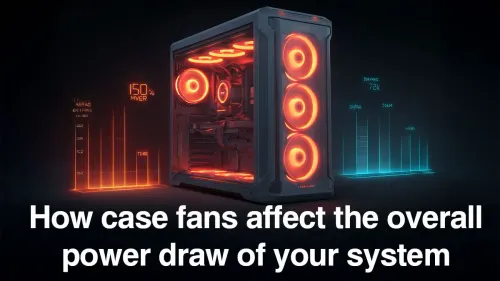
Discover how case fans impact your system's overall power consumption. 🖥️ Learn the facts and optimize your build with high-quality fans from Evetech.
Read more
RTX 5060 Ti for AI workflows delivers cost-effective tensor performance to accelerate training, inference, and data prep. Learn tuning tips, memory/driver setup, and benchmark gains to boost daily AI productivity. ⚡️💡
Read more
RX 9060 XT for machine learning: Explore whether the RX 9060 XT can handle local AI and ML tasks, plus practical tips, benchmarks, and configuration advice. ✅🔧
Read more
Discover webcams that automatically adjust light and color for crystal-clear video calls 🎥✨. Boost your streaming quality today!
Read more
Discover webcams that blend into your workflow 🎯 Capture moments while you work, stream, or create. Upgrade your setup with smart, multitasking tech!
Read more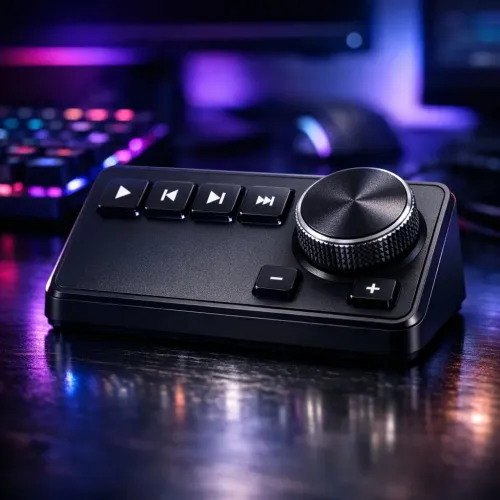
Dedicated media keys give streamers one-touch control to mute, switch scenes, clip highlights, and adjust audio — cutting task time and boosting consistency 🎛️⚡
Read more
Checklist: 1) Map keyboard actuation depth to genres 2) Step-by-step adjust settings 3) Test and tune for performance 🎮⌨️ Learn keyboard actuation depth for FPS, MOBA, RTS, and RPG to improve response and accuracy.
Read more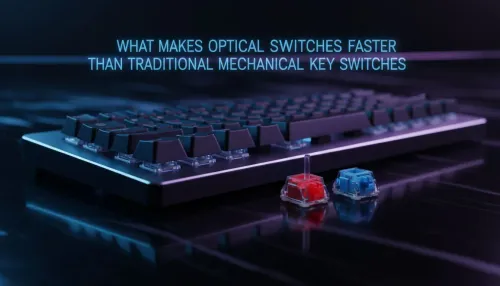
Optical switches deliver faster actuation and lower latency than traditional mechanical switches, using light-based triggers and minimal debounce to boost gaming and typing performance ⚡⌨️
Read more
Clean gaming keyboard quickly and safely in dusty or humid conditions with step-by-step tips, tool checklist, and maintenance routines to prevent corrosion and switch failure. 🧼💨
Read more