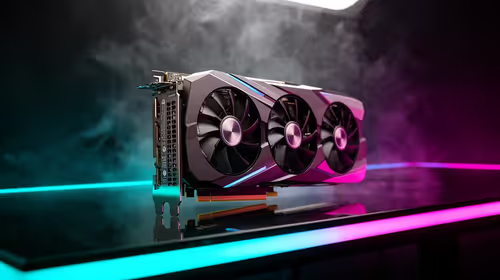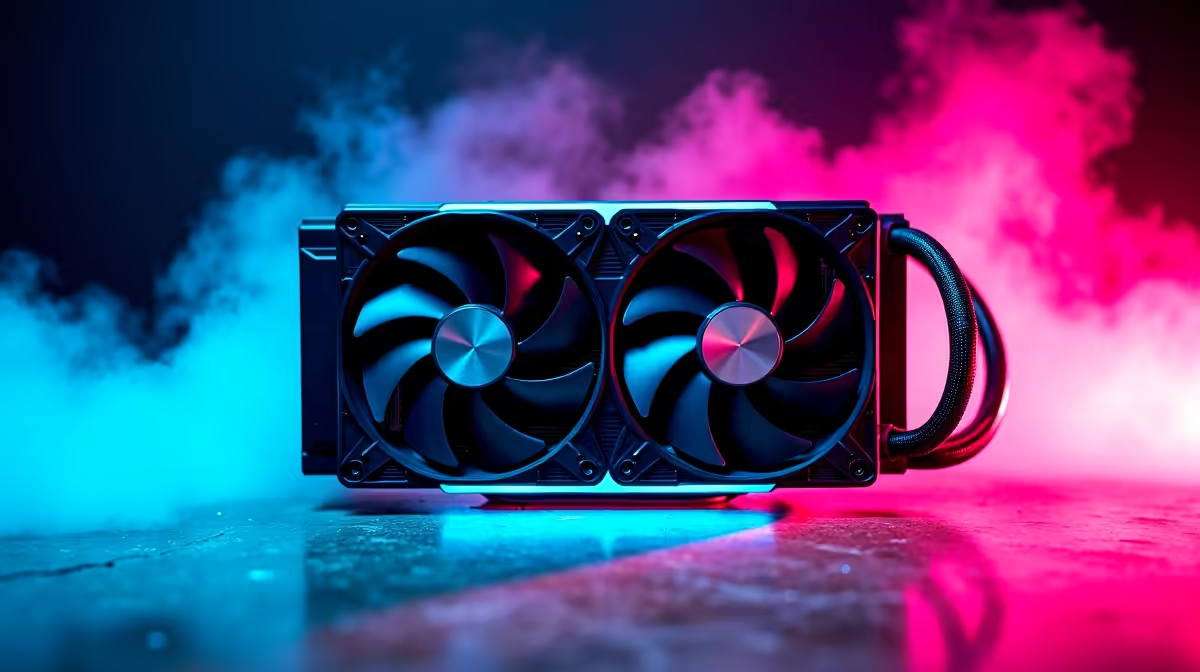
You’ve just put together the perfect R10,000 gaming rig. Lekker! But before you dive into a sweaty Apex Legends lobby, let’s talk about heat. A hot CPU means throttled frames and a shorter lifespan for your precious components. So, what’s the best cooling for R10,000 gaming PCs in South Africa? Do you stick with a beefy air cooler or go for a sleek All-in-One (AIO) liquid cooler? Let's break it down.
The Great Debate: Air Cooling vs. AIO Liquid Cooling
Choosing the right CPU cooler for your R10k build isn't just about raw performance; it's about value, reliability, and aesthetics. Both air and AIO coolers have their place, but in this price bracket, the differences are critical.
The Case for Air Coolers: Simple, Reliable Power
For decades, air coolers have been the go-to solution for a reason. They consist of a metal heatsink and a fan. Simple.
- Value for Money: A top-tier air cooler often outperforms a budget 120mm AIO for the same price or less. You get more cooling power for your rand.
- Reliability: With fewer moving parts (just the fan), there's less that can go wrong. No pumps to fail, no liquid to leak. It’s a fit-and-forget solution ideal for many budget gaming PCs.
- Performance: Don't underestimate them! Modern tower coolers with multiple heat pipes can easily tame mid-range CPUs like the Ryzen 5 or Core i5 series, which are common in this price range.
The main downside? They can be bulky, potentially causing clearance issues with tall RAM modules or narrow cases.
The Allure of AIOs: Sleek Looks & Peak Performance
AIO liquid coolers use a closed loop of liquid, a pump, and a radiator to move heat away from your CPU. They offer a clean, high-tech look that many gamers love. ✨
- Aesthetics: AIOs look incredible, especially with RGB lighting. They keep the area around your CPU socket clear, showing off your motherboard and RAM.
- Case Airflow: By moving the radiator to the edge of the case, AIOs can help exhaust heat more directly, potentially lowering overall system temperatures. This is a common strategy in many of our powerful gaming PCs under R20k.
- Peak Cooling (at a price): High-end 240mm or 360mm AIOs offer unmatched cooling performance, but these are typically overkill and too expensive for a R10,000 build's budget.
The catch is that entry-level 120mm AIOs, which fit the budget, often struggle to beat a good air cooler.
Cooling Tip: Don't Suffocate Your PC! 💨
Your fancy new CPU cooler is only as good as the airflow in your case. Ensure you have at least one intake fan at the front pulling cool air in, and one exhaust fan at the back pushing hot air out. A well-ventilated case can drop CPU temperatures by several degrees, giving you more performance for free.
Finding the Best Cooling for a R10000 Gaming PC: The Verdict
So, what’s the final call? For most R10,000 gaming PC builds in South Africa, a high-quality air cooler offers the best combination of performance, reliability, and value. You can get a fantastic air cooler that will keep your CPU frosty under load, leaving you with more cash to spend on a better GPU or SSD. This balanced approach is key, something we focus on in all our pre-built PC deals.
An AIO only starts making sense if aesthetics are your absolute top priority and you're willing to sacrifice a small amount of performance-per-rand compared to a top-tier air cooler. You'll often see premium AIOs in systems pushing past the R20,000 mark, where budgets are larger and CPUs run hotter.
Ultimately, the goal is a balanced system. The best cooling solution for your R10,000 gaming PC is one that tames your CPU without starving other components of much-needed budget. 🔧
Ready for a Perfectly Chilled Rig? Choosing the right parts can be tricky, but a well-cooled PC is a happy PC. Skip the guesswork and explore our massive range of professionally built systems with optimised airflow and balanced components. Check out the latest gaming PC deals and find the perfect machine to conquer your world.