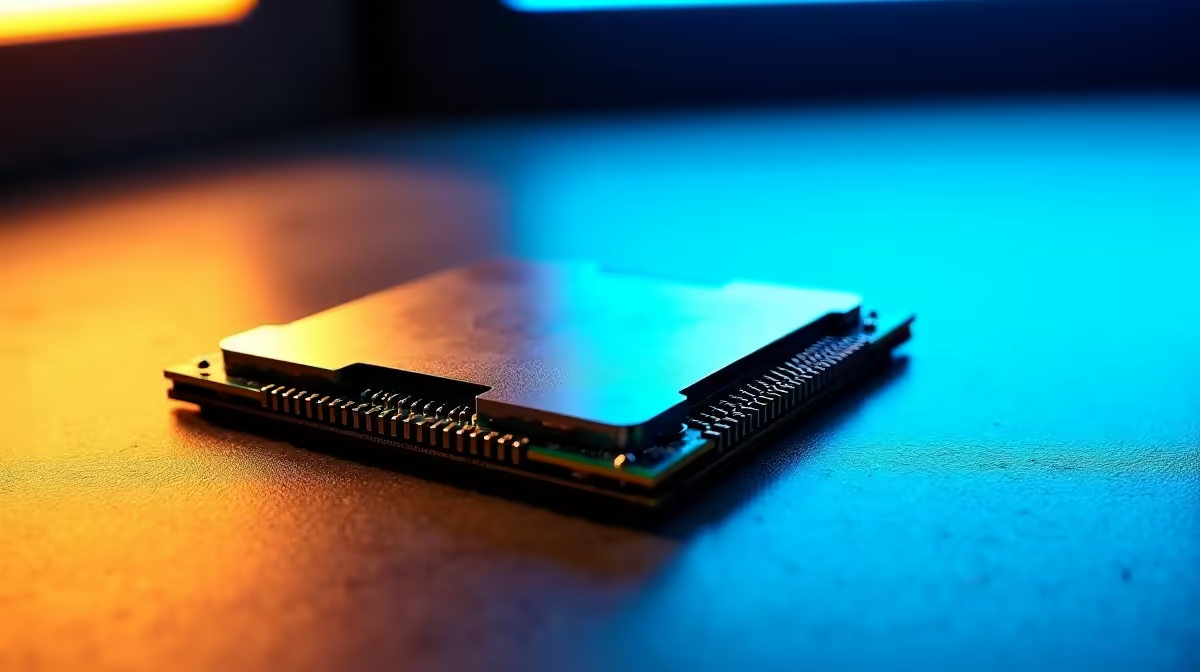
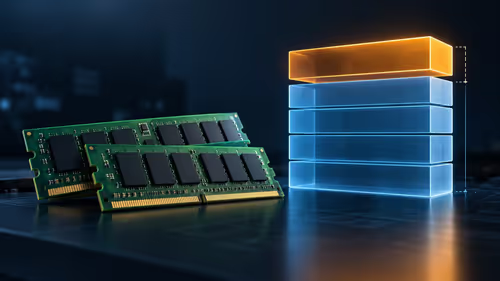
Your UPS screams its final warning. You’re in the middle of a ranked match, and everything goes dark. Sound familiar? For South African gamers, this is a weekly reality. But what if your PC could sip power instead of guzzling it? Choosing one of the best low TDP CPUs is your secret weapon, extending that precious battery backup time when you need it most. Let's dive in. 💡
Reliable Everyday Performance
First, what is TDP? It stands for Thermal Design Power, measured in watts. Think of it as the maximum heat a CPU is expected to generate under a typical workload, which directly correlates to its power consumption. A lower TDP means less power drawn from your wall, and more importantly, less strain on your UPS or inverter battery during an outage.
An efficient processor with a low TDP doesn't just save you on your electricity bill; it buys you critical minutes… or even hours… of extra uptime. It’s about building smarter, not just faster.
The Best Low TDP CPUs: What to Look For in 2025
When hunting for the best low TDP CPUs, you're looking for the perfect balance of performance-per-watt. You don't want a chip that's slow, just one that's incredibly efficient. Both Intel and AMD have fantastic options that deliver amazing performance without draining your power backup.
Intel's Efficiency Cores to the Rescue
Intel's modern architecture, especially since their 12th generation, uses a mix of powerful Performance-cores (P-cores) and super-efficient Efficiency-cores (E-cores). For everyday tasks and even lighter gaming, the E-cores handle the load with minimal power draw.
This hybrid design is brilliant for our situation. When the power cuts, your PC can rely more on these E-cores, drastically reducing its consumption. Look for non-K series chips, as they typically have a lower base TDP (like 65W) compared to their power-hungry K-series counterparts. Many modern Intel CPUs offer this incredible efficiency, with even the latest new Intel Core Ultra 9 processors in laptops leading the charge in mobile efficiency.
Decoding Intel's Power Specs ⚡
Don't just look at the 'Processor Base Power' (old TDP). Check the 'Maximum Turbo Power' (MTP) on the spec sheet. This shows the peak power draw. A CPU with a 65W base power might spike to over 150W under full load. Understanding both numbers helps you plan your power backup needs accurately.
AMD's Zen Architecture: Efficiency by Design
AMD has been a champion of efficiency for years, thanks to its Zen architecture and advanced chiplet designs. Many Ryzen CPUs offer a fantastic "Eco-Mode" in the BIOS or Ryzen Master software. With a single click, you can limit the CPU's TDP to a lower level (e.g., 65W or 45W), significantly cutting power consumption with a surprisingly small hit to gaming performance. 🔋
This makes many of AMD's latest offerings a top choice for a power-conscious build. Even their powerhouse chips like the Ryzen 9 series can be tamed to run efficiently, giving you the best of both worlds: incredible performance when the grid is stable, and extended battery life when it's not.
Final Verdict: Building for a Power-Smart Future
The best low TDP CPUs of 2025 prove that you can have both. By selecting an efficient processor from either Team Blue or Team Red, you’re not just building a PC… you’re building a smarter, more reliable rig that can handle the unique challenges we face in South Africa.
Your next upgrade shouldn't just be about higher frame rates.
Ready to Build a More Reliable Processor Setup?
An efficient CPU is your first line of defence against outages. It's the heart of a smarter PC that keeps you in the game longer. Explore our massive range of CPUs and find the perfect power-sipping processor to conquer your world.