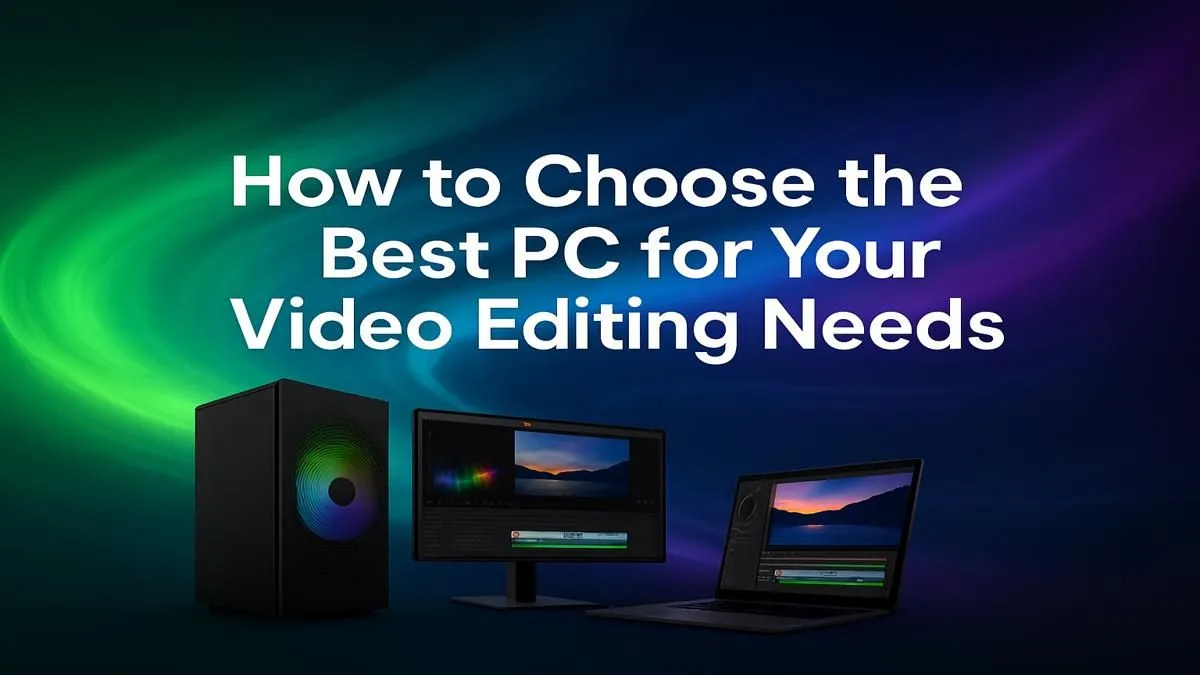
Staring at a stuttering timeline in Premiere Pro or DaVinci Resolve? We've all been there. That dreaded lag when scrubbing through 4K footage or the render time that feels longer than an unexpected outage... it’s enough to kill any creative flow. Finding the best PC for video editing in South Africa isn't just about raw power; it's about smart choices that match your workflow and budget. This guide will help you build your ultimate content creation machine. 🚀
Core Components for the Best PC for Video Editing
A great video editing PC is a balanced machine. A bottleneck in one area can cripple the entire system, no matter how powerful your other components are. Let's break down the essentials.
The CPU: Your Rig's Processing Brain 🧠
The Central Processing Unit (CPU) is the heart of your editing workflow. It handles tasks like decoding footage, running the software itself, and encoding your final export. When choosing a CPU, focus on two things: core count and clock speed.
- Core Count: More cores mean better multitasking. This is crucial for handling complex timelines with multiple video layers, effects, and colour grades.
- Clock Speed: A higher clock speed (measured in GHz) means faster performance on single-threaded tasks, like certain effects and playback responsiveness.
For a smooth editing experience, an Intel Core i7 or AMD Ryzen 7 is a fantastic starting point. You can explore a wide variety of builds powered by the latest processors in our range of Intel PC deals. If you're tackling 6K or 8K footage, stepping up to a Ryzen 9 or Core i9 will make a significant difference. Many creators find the exceptional multi-core performance in AMD Ryzen PC deals gives them an edge in render times.
The GPU: The Visual Powerhouse
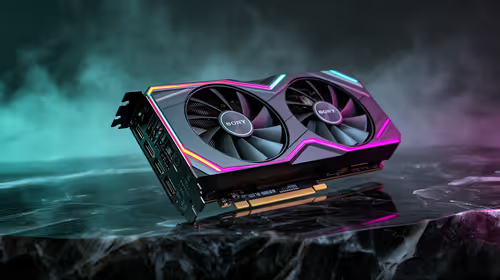
While the CPU does the heavy lifting, the Graphics Processing Unit (GPU) accelerates visual tasks. Think real-time playback of effects, colour grading, and GPU-accelerated rendering (like with NVIDIA's CUDA or AMD's OpenCL). The most important spec here is VRAM (video memory).
For 1080p editing, 8GB of VRAM is sufficient. For 4K and beyond, you should be looking at 12GB, 16GB, or even more.
NVIDIA's GeForce cards are often favoured by editors due to the robust CUDA core support in software like Adobe Premiere Pro. A PC built around a powerful NVIDIA GeForce GPU is a reliable choice for a professional workflow. However, AMD has made huge strides, and their latest cards offer incredible performance for your money, especially in programs like DaVinci Resolve. Don't overlook the power available in modern AMD Radeon gaming PCs.
Storage Strategy Pro Tip ⚡
For a truly responsive video editing PC, use a three-drive setup. Drive 1 (NVMe SSD): Your operating system and editing software. Drive 2 (NVMe SATA SSD): Your active project files, media cache, and scratch disks. Drive 3 (HDD SSD): A larger, slower drive for archiving completed projects and storing raw footage. This prevents bottlenecks and keeps everything running smoothly.
RAM and Storage: The Unsung Heroes
RAM (Random Access Memory): Think of RAM as your computer's short-term memory. Video editing eats it for breakfast. 16GB is the absolute minimum, but for a smooth 4K workflow, 32GB is the new standard. If you work with complex After Effects compositions or 8K footage, 64GB or more is a wise investment.
Storage: Speed is everything. Your boot drive and application drive should be a fast NVMe SSD. This ensures your PC starts quickly and your software is responsive. For active projects, another SSD is ideal to eliminate any bottlenecks when accessing your footage and assets.
Pre-Built vs. Custom Build: What's Right for You?
So, should you build it yourself or buy a ready-made machine?
A custom build offers total control over every component, but it requires time and technical knowledge. For many creators who just want to get to work, a professionally assembled PC is the perfect solution. It saves you the hassle of assembly and comes with a full warranty. Our selection of pre-built PC deals offers expertly balanced configurations designed for performance and reliability right out of the box. ✨
When to Consider a Workstation PC
If your livelihood depends on video editing, or you're working with extremely demanding formats, high-resolution RAW files, or complex visual effects, it might be time to step up to a dedicated workstation. These machines are built for maximum stability and sustained performance under heavy, continuous loads.
Workstation PCs often feature components like NVIDIA Quadro or AMD Radeon Pro GPUs and Intel Xeon or AMD Threadripper CPUs, which are specifically designed for professional applications. They represent the pinnacle of performance for serious creators who need a machine that will never let them down. For the ultimate setup, exploring dedicated Workstation PCs is your next logical step.
Ready to Build Your Editing Beast?
Choosing the best PC for video editing comes down to a balanced system that matches your specific workflow. From powerful pre-built rigs to ultimate custom workstations, the right machine will transform your creative process. Explore our range of powerful Workstation PCs and find the perfect high-performance machine to bring your vision to life.